
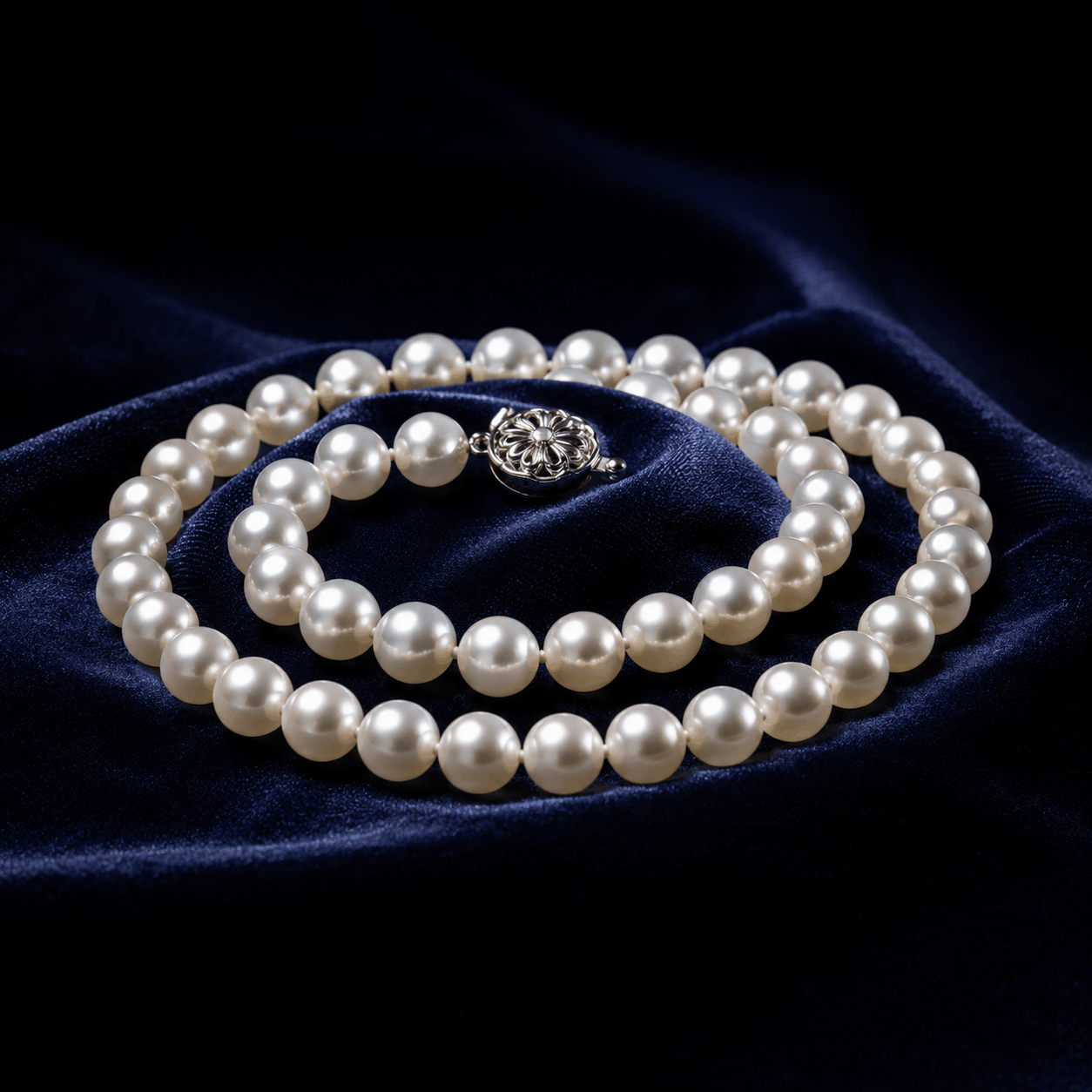
My grandmother had a single strand of Japanese Akoya pearls she wore to every important occasion for forty years. Wedding anniversaries. Graduations. Christmas dinners. Same strand every time. And every time someone asked about them. That’s the thing about these pearls — they carry a quiet authority that never goes out of style. They defined what fine pearl jewelry looks like. And nothing has replaced them in that role. So here’s everything worth knowing before you buy.
What Are Japanese Akoya Pearls
Japanese Akoya pearls are cultured in the Pinctada fucata martensii oyster — a small saltwater oyster farmed primarily along the Japanese coast. Each oyster produces just one pearl at a time. The growing cycle runs roughly 10 to 18 months. That single-pearl production combined with strict Japanese quality standards is why Akoya pearls deliver the sharpest, most mirror-like luster of any cultured pearl type. Full stop.
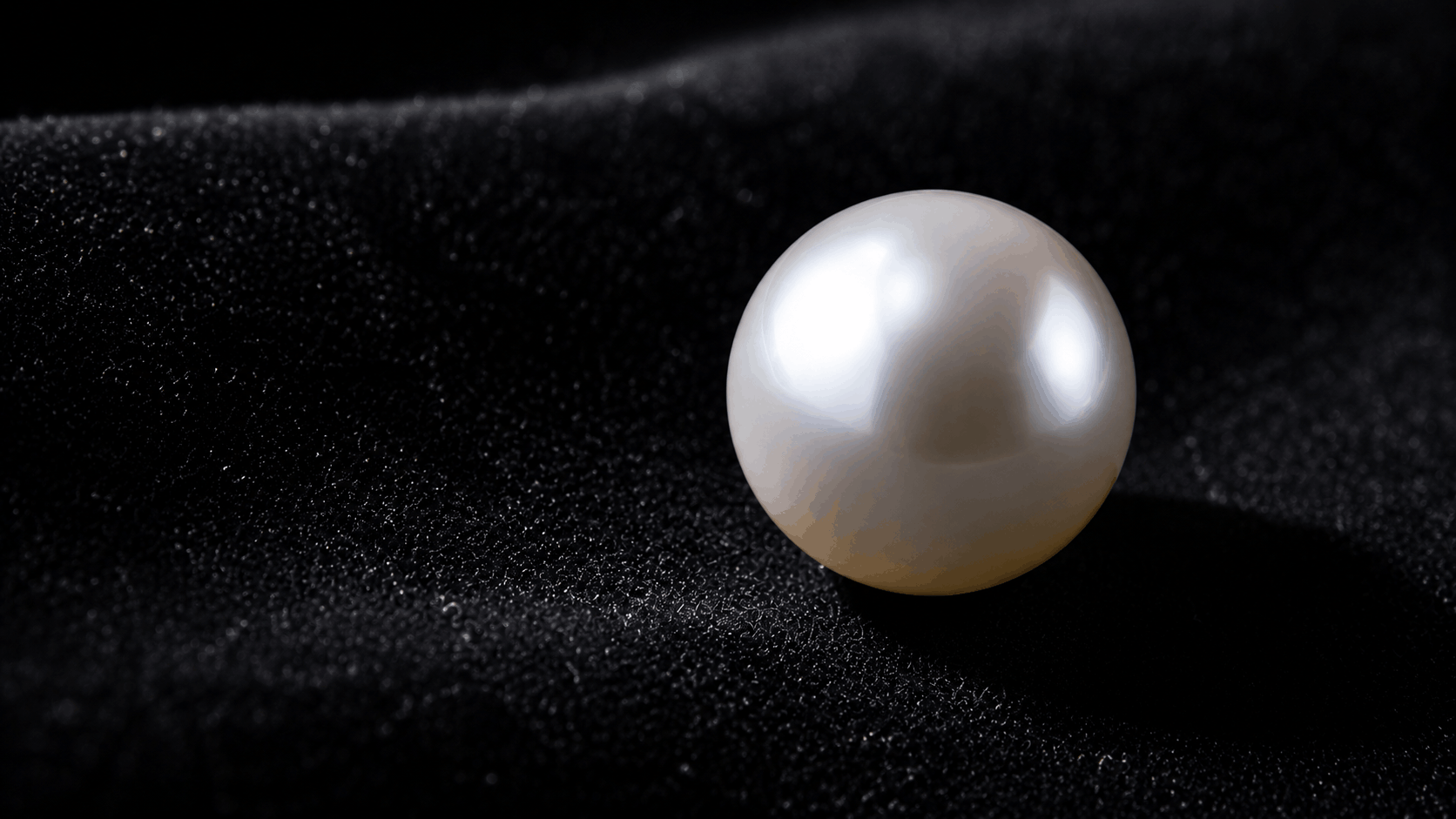
Mikimoto — the Japanese jeweler who pioneered cultured pearl farming in the early 1900s — built his entire legacy on Akoya pearls. And today they’re still the benchmark. Synonymous with quality and precision. The iconic round white pearl look that’s been the reference point for fine jewelry for over a century. Nothing else quite holds that position.
Size and Shape — Where Akoya Stands Apart
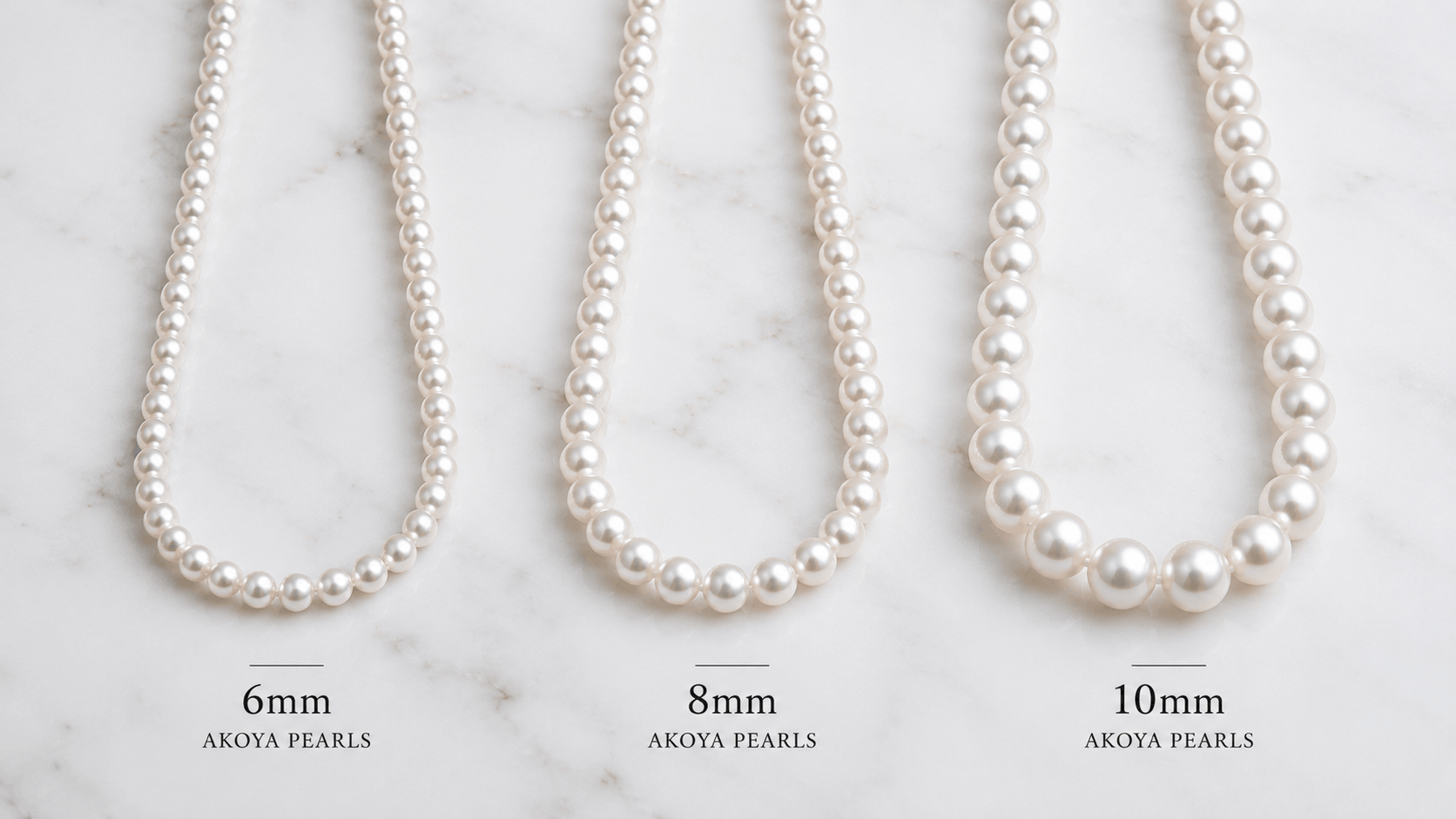
Japanese Akoya pearls typically range from 5mm to 11mm. The most popular sizes run 6mm to 8mm — substantial enough to read clearly across a room but not overwhelming. Larger sizes at 9mm to 11mm exist but are significantly rarer. So for a first purchase, 7mm to 8mm is the sweet spot. Works across occasions, outfits and ages without ever looking wrong.
Shape is where they really separate themselves. Akoya pearls are the roundest cultured pearls available. High-grade pieces roll in a perfectly straight line on a flat surface. That geometric precision is what makes a matched Akoya pearl necklace so visually striking. Every pearl sits at exactly the same diameter. Larger pearl types simply can’t match that consistency.
White vs Black Japanese Akoya Pearls
Most people think white when they think of Japanese Akoya pearls. And white is absolutely the classic. But black Akoya pearls exist too — and they’re stunning in a completely different way.
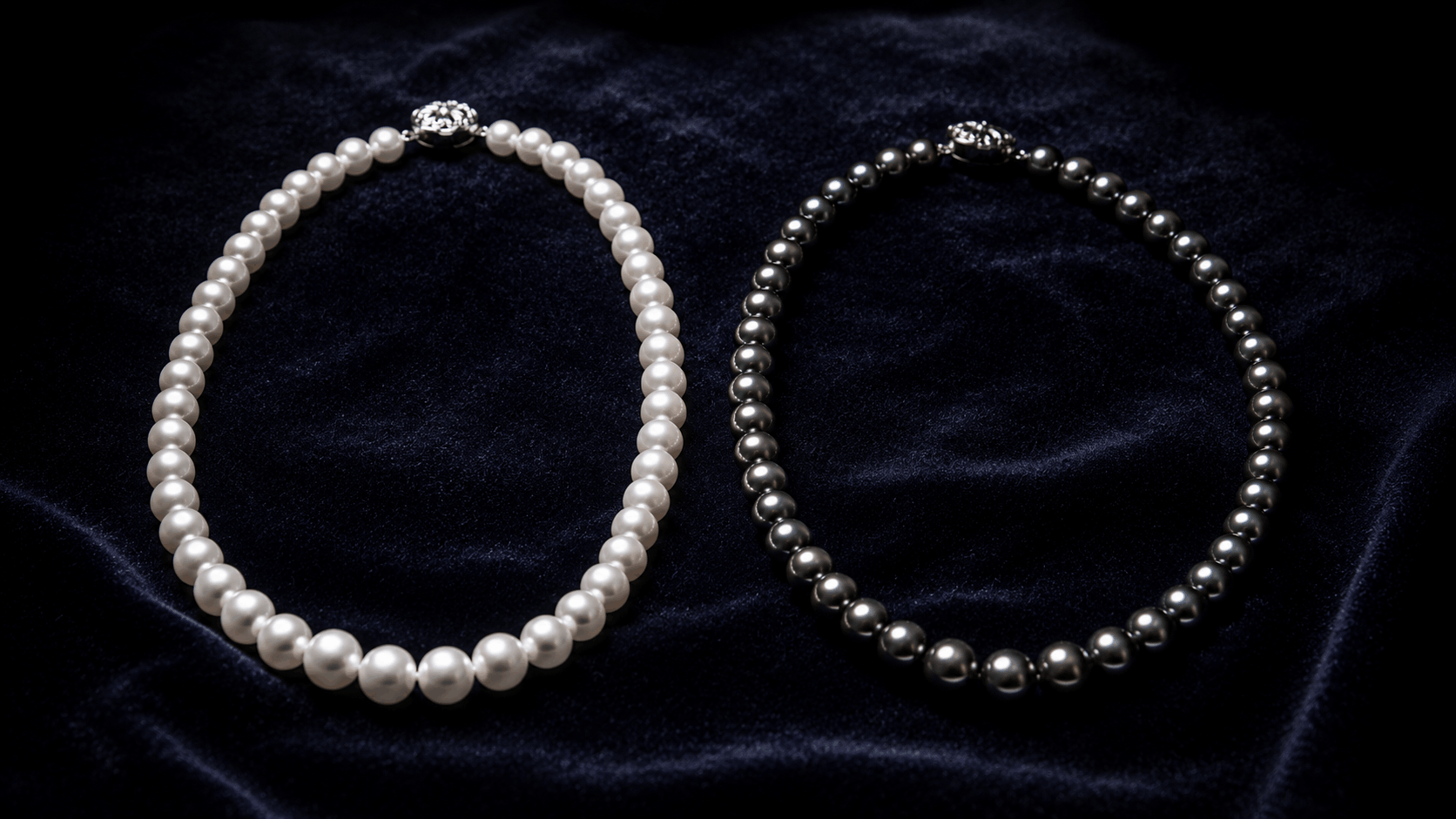
White Japanese Akoya pearls come in rose, silver and cream overtones. Rose has a warm pinkish glow that works beautifully against fair skin. Silver is the sharpest and most classic — cool, bright and extraordinary against almost any complexion. Cream runs slightly warmer and suits pink or reddish undertones particularly well. So overtone is worth thinking about before buying rather than after. A black Akoya pearl necklace or earring set reads as sophisticated and contemporary in a way white sometimes doesn’t. And at the same grade level, black Akoya pieces tend to be more accessible in price — making them an interesting entry point for buyers who want something a little different.
Grading — What the Levels Actually Mean
Japanese Akoya pearls use a quality scale running from A through AAA and AAAA at the top. Knowing what each grade means matters enormously here. At Akoya prices, buying the wrong grade is an expensive mistake.
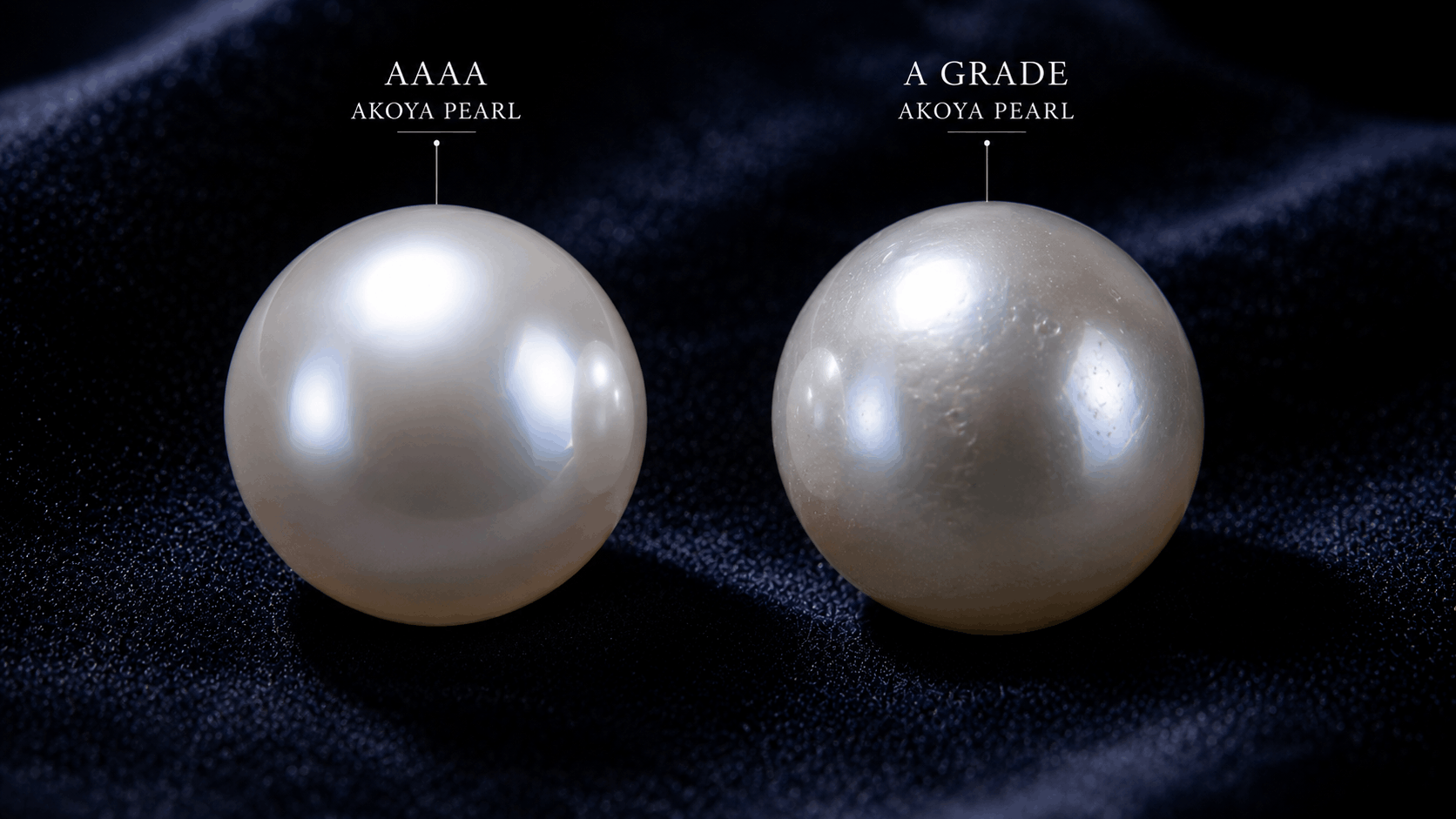
AAAA is the top tier — near-flawless surface, up to 95% defect-free, exceptional mirror-like luster and thick nacre that ensures the pearl ages well over decades. These look like they came from a museum display. AAA has high luster and rare surface defects — still genuinely beautiful and where most buyers land for investment-quality everyday pieces. Nacre is slightly thinner than AAAA but visual quality in wear is excellent. AA to A grades are entry-level — good luster, more visible surface characteristics. Fine for casual wear. Not the right choice for a piece you plan to pass down.
Japanese Akoya Pearls for Every Occasion
One of the genuinely underrated qualities of Japanese Akoya pearls is how well they adapt to different contexts. Most fine jewelry skews formal or casual. Akoya does both. Same strand, different occasion, different outfit. Still works.
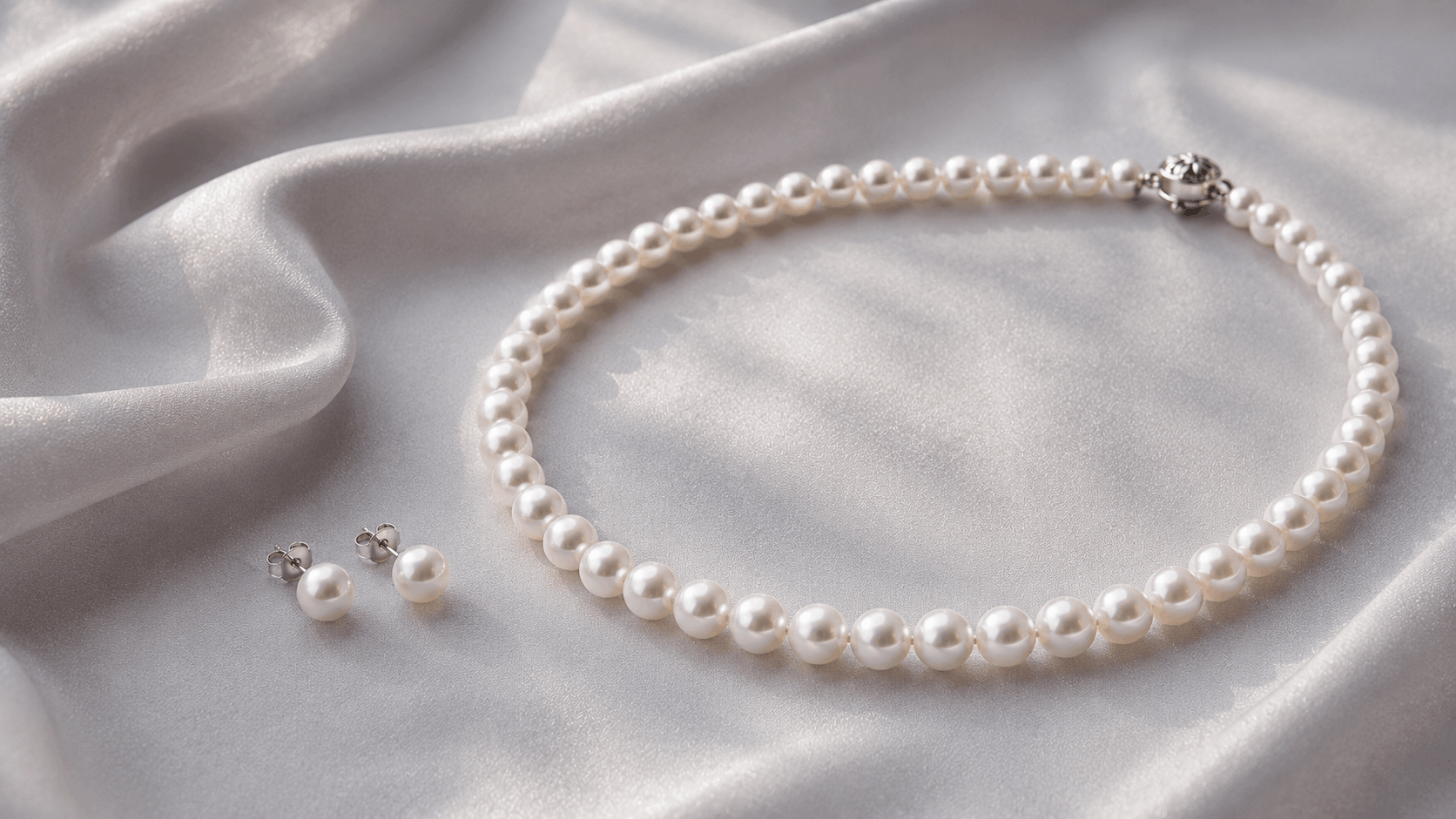
For daily wear — a pair of small 6mm to 7mm Akoya pearl stud earrings in sterling silver is probably the most wearable fine jewelry choice available. For evenings — a classic white Akoya choker against a plunging neckline or a turtleneck is a combination that’s worked for a hundred years. And for special occasions — a full AAA set in 14K yellow gold is the kind of piece that marks a moment permanently. The kind you eventually hand down.
How Akoya Compares to Other Pearl Types
Against freshwater pearls — freshwater offers excellent value and wide variety at accessible prices. But Akoya’s sharper luster, rounder shape and saltwater nacre are genuinely different. Side by side the difference is visible. Against South Sea pearls — South Sea is larger, rarer and significantly more expensive. Different size category entirely. And against Tahitian pearls — Tahitian offers dramatic dark color that Akoya doesn’t replicate. But for classic white luster and precision roundness, nothing touches Japanese Akoya pearls.
Hanadama — The Pinnacle of the Category
Within the Japanese Akoya pearl world, one designation sits above everything else: Hanadama. The word means “flower pearl” in Japanese. And it’s not marketing — it’s a certification issued by the Pearl Science Laboratory of Japan after rigorous independent testing.
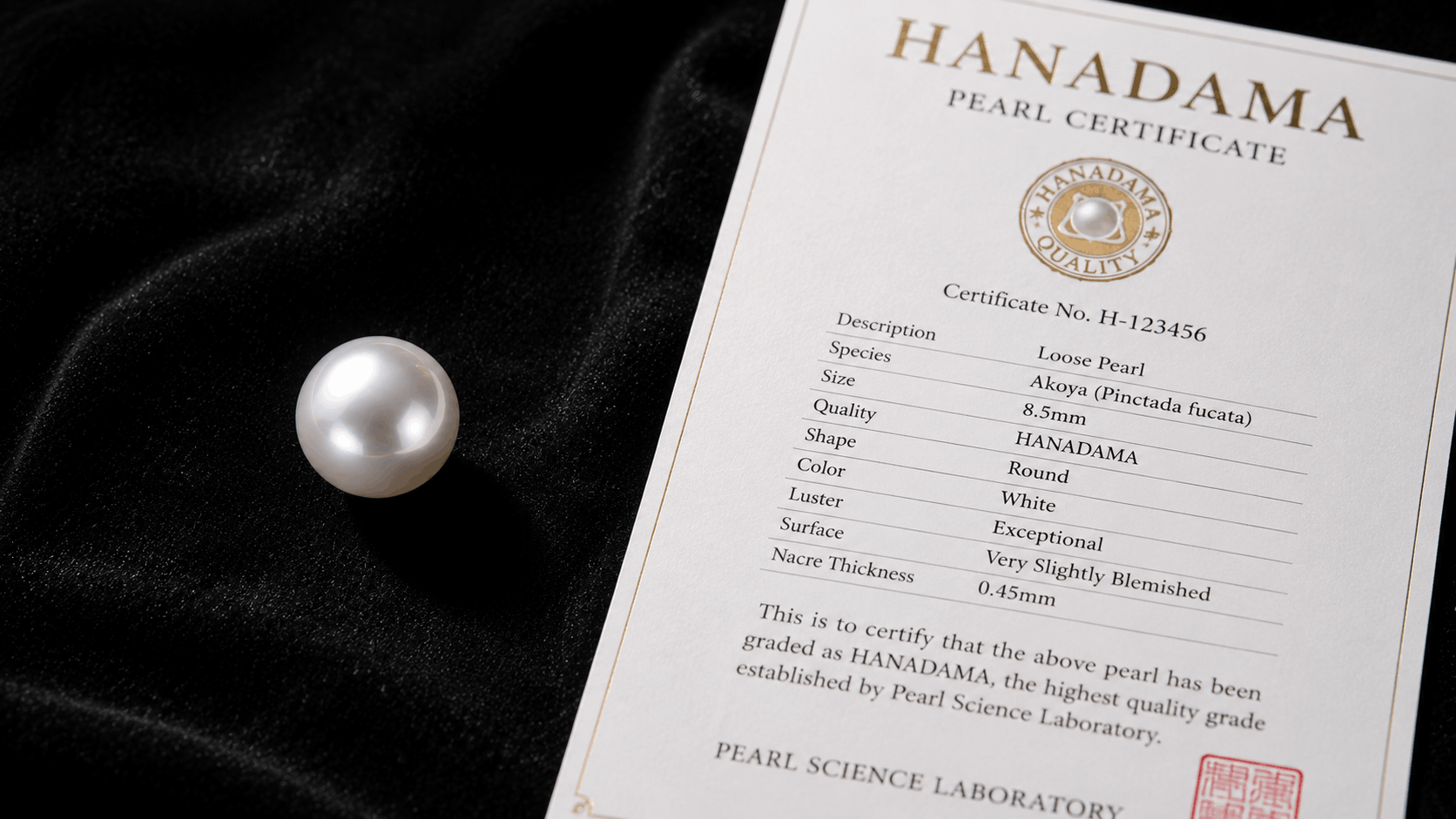
To qualify, a pearl must meet strict minimum thresholds for nacre thickness, luster intensity and surface quality — verified by x-ray and spectrographic analysis. Only a small percentage of Japanese Akoya pearls ever make it. So a Hanadama pearl isn’t just beautiful. It’s independently certified as among the finest Akoya pearls ever produced. If you’re making a significant investment and want absolute quality assurance — Hanadama is the answer.
How to Buy Japanese Akoya Pearls
A few things are non-negotiable at this level. First — always buy from a retailer who states origin explicitly as Japanese Akoya. Not “Akoya-style.” Not just “Akoya.” The Japanese farming environment and quality standards are specific and origin matters to the quality story. Second — luster and surface grade should be clearly documented. Vague descriptions without explicit grading are a red flag here more than anywhere else.
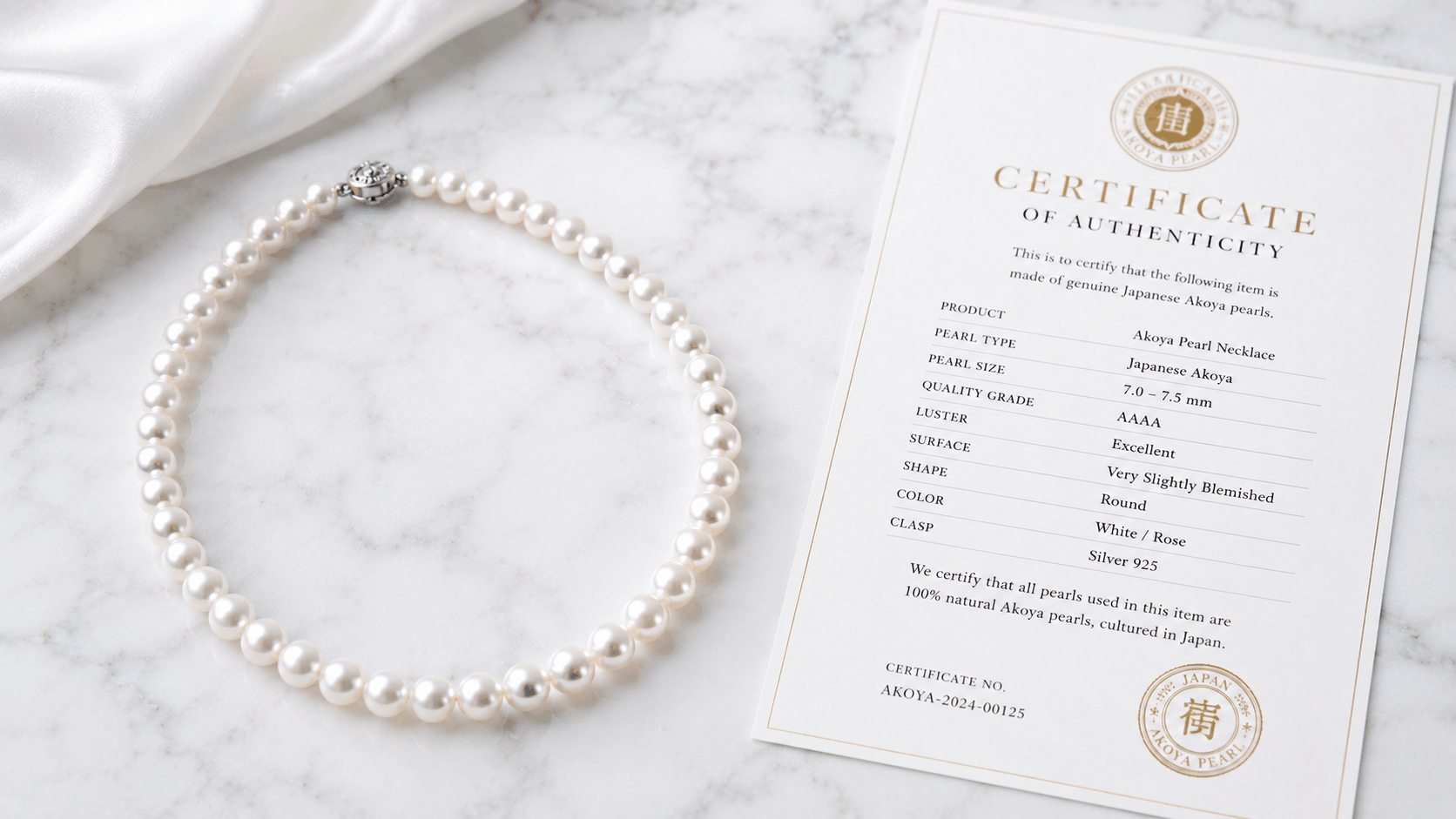
Third — ask about nacre thickness. Thin nacre looks beautiful initially but dulls as the coating wears. Thick nacre deepens with wear rather than fading. At PearlsOnly every Japanese Akoya pearl piece comes with a Certificate of Authenticity and Appraisal from a pearl expert plus a 90-day return guarantee. So you can assess it properly in real lighting before fully committing. Browse the full collection and find the piece that genuinely justifies the investment.
