
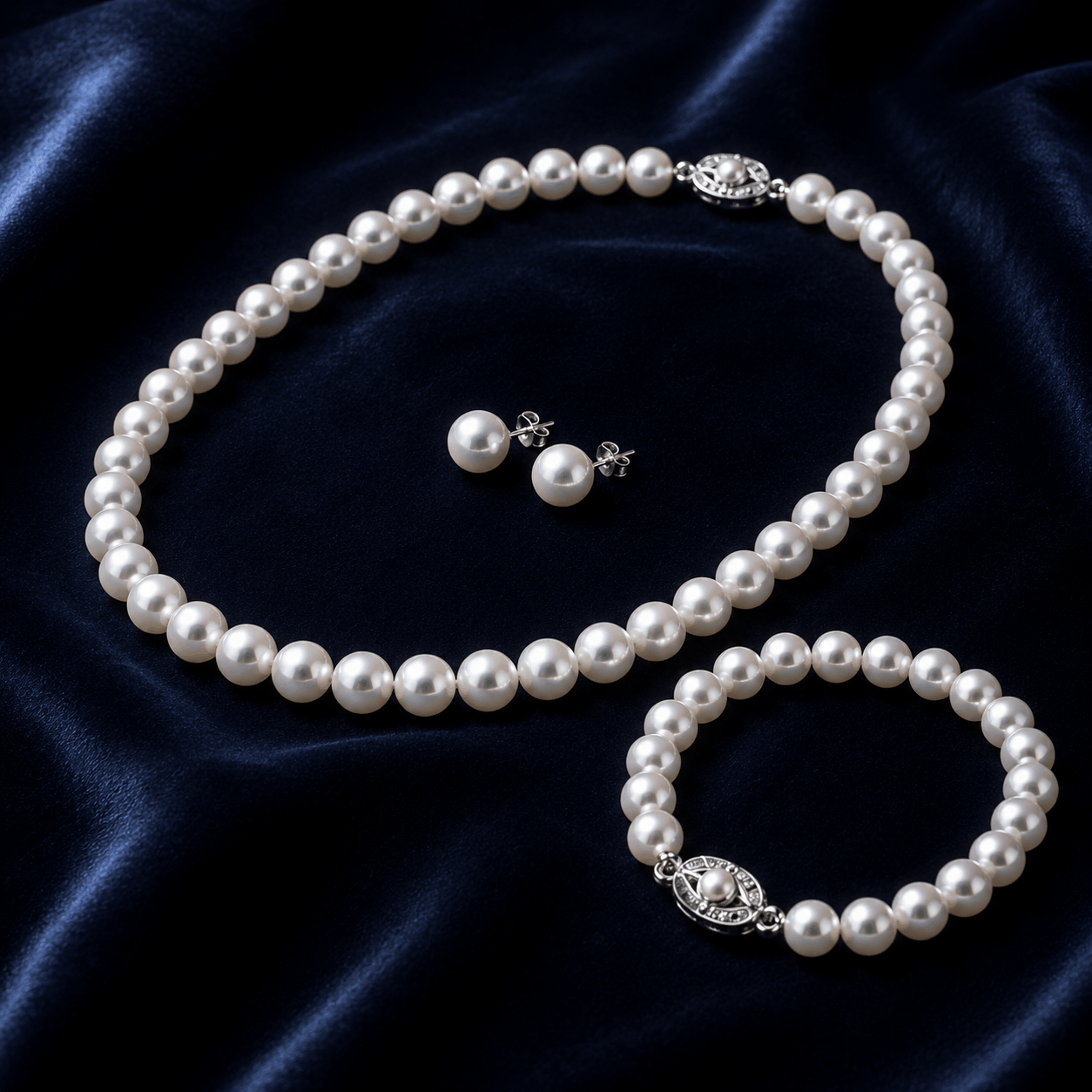
A client came in looking for a gift for her daughter’s wedding day. Didn’t know much about pearls. Just knew she wanted something classic, something genuine and something her daughter would still be wearing in thirty years. Spent about ten minutes looking at options before she saw a white Japanese Akoya set under the display light and stopped talking mid-sentence. That reaction happens a lot with Akoya sets. So here’s everything worth knowing before you buy one.
What Is a White Japanese Akoya Set
A white Japanese Akoya set is a matched collection of pearl jewelry pieces — typically a necklace, earrings and sometimes a bracelet or pendant — all using white Japanese Akoya pearls selected to coordinate in size, color, luster and overtone. The matching across every piece is what makes a genuine set different from simply owning multiple individual pearl pieces. Done well, the coordination is seamless. The necklace and earrings look like they were grown for each other. Because in a quality set, they essentially were.
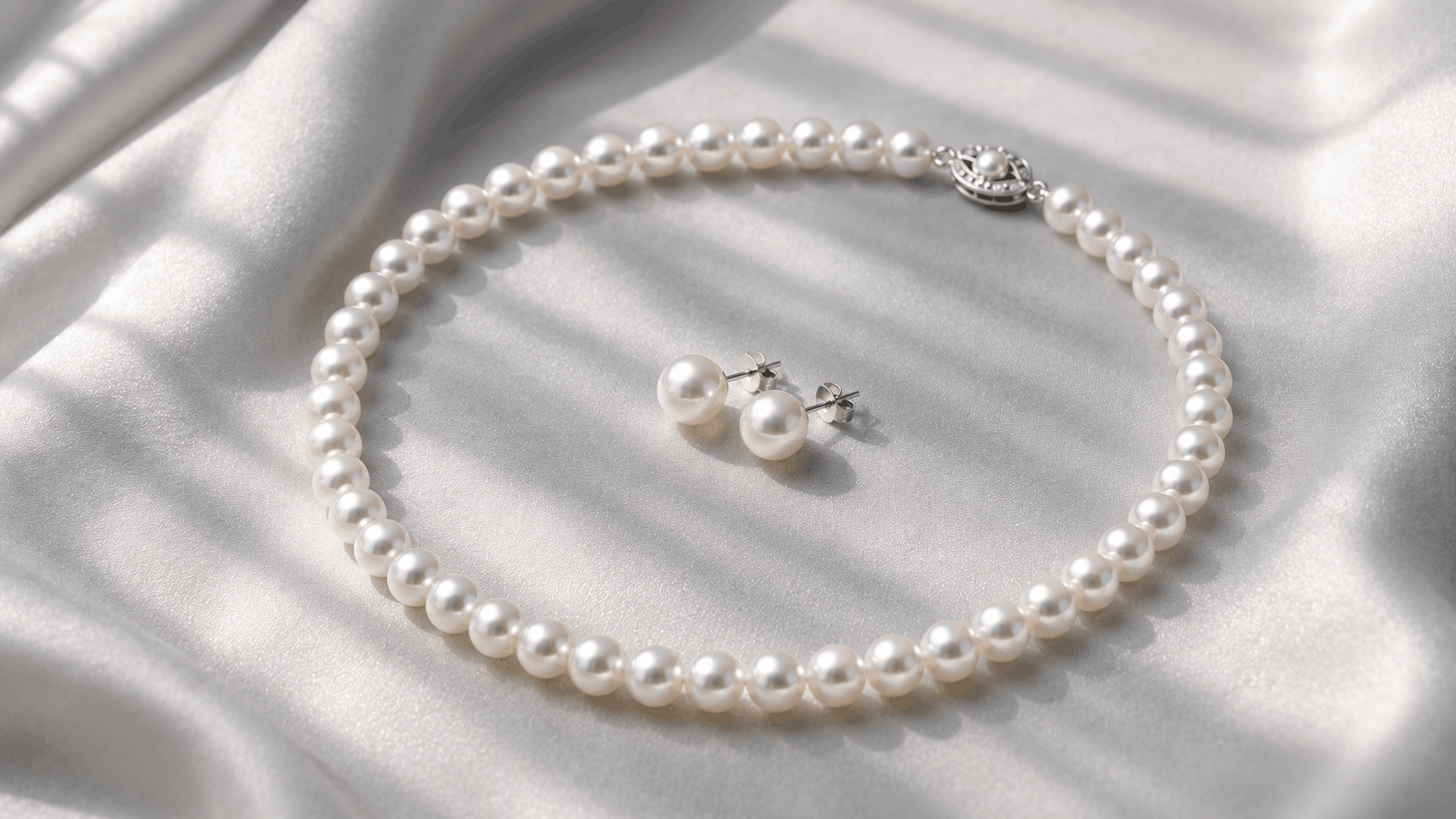
Japanese Akoya pearls are cultured in the Pinctada fucata martensii oyster in the coastal waters of Japan. Single-pearl production. A 10 to 18 month growing cycle. Cold Japanese waters that produce nacre with an exceptionally tight crystalline structure. And that structure is what creates the sharp mirror-like luster that makes a white Japanese Akoya set immediately recognizable — and immediately arresting — even across a room.
Why White Is the Most Classic and Versatile Color
White Japanese Akoya pearls sit at the center of pearl jewelry history for a reason. White is the color most people picture when they think of pearls at all — and Akoya delivers that white in three distinct overtone directions that make the color far more nuanced than it first appears.
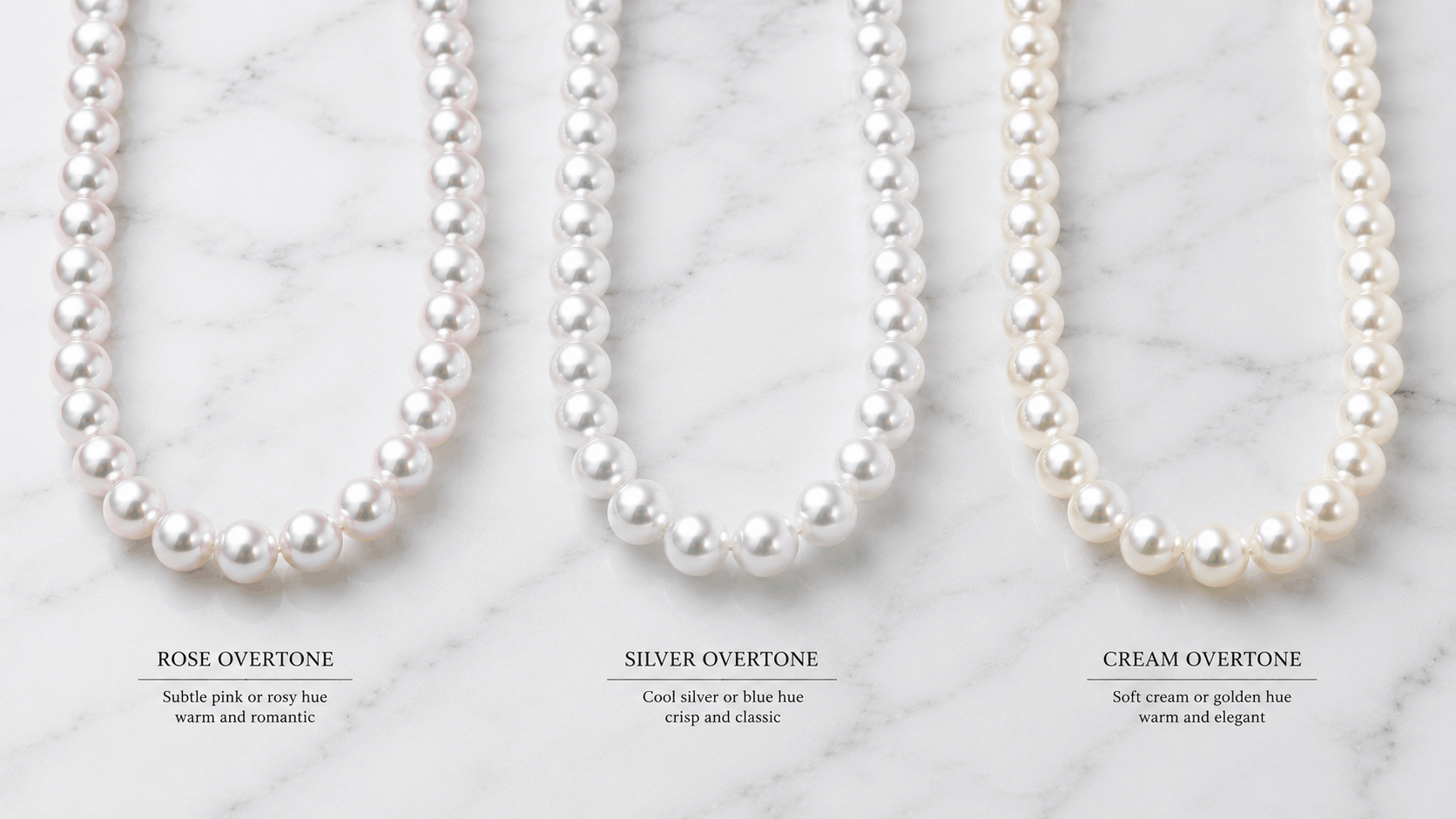
Rose overtone has a warm pinkish glow that works beautifully against fair to medium skin tones. It adds warmth without veering into cream or ivory territory. Silver overtone is the sharpest and most traditional direction — cool, bright and extraordinary against almost any complexion. This is the overtone most associated with the classic Akoya look. And cream overtone runs slightly warmer than silver — suits pink or reddish undertones particularly well and photographs beautifully against ivory or champagne fabrics. So a white Japanese Akoya set isn’t just “white” — the overtone choice is a real decision worth making deliberately rather than by default.
What’s Included in a White Japanese Akoya Set
The classic three-piece white Japanese Akoya set includes a necklace, a pair of stud earrings and either a bracelet or pendant. But configurations vary and the right combination depends entirely on how the set will be worn. For a bridal set — necklace and earrings is often the cleanest and most versatile combination. It leaves the wrists free for other styling choices and doesn’t overcrowd a bridal look. For a formal gift or special occasion piece — the full three-piece with bracelet creates a complete coordinated look from neckline to wrist that reads as genuinely considered rather than assembled piece by piece.
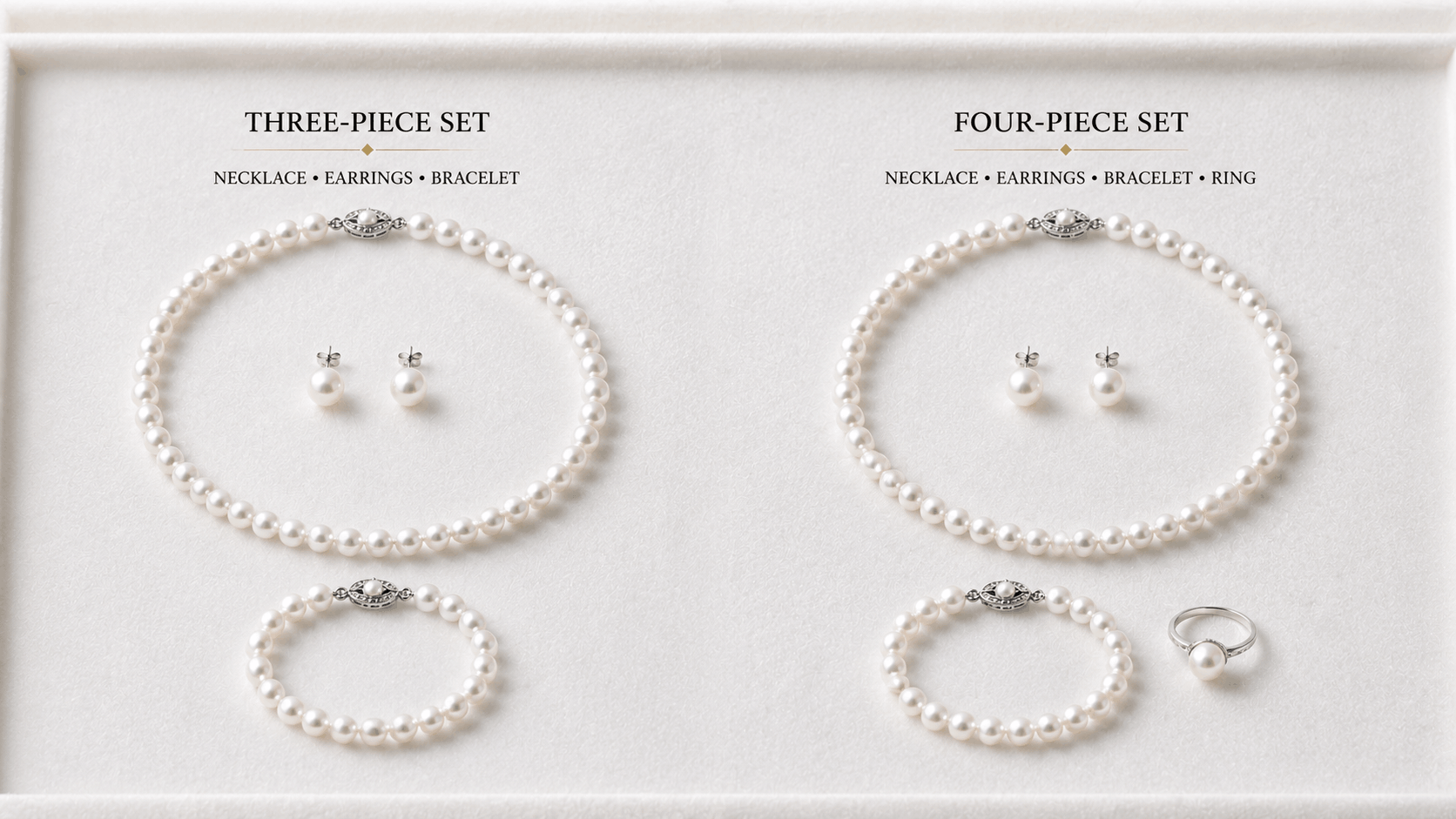
Some white Japanese Akoya sets include a pendant instead of a bracelet — giving the wearer a strand for formal occasions and a pendant for daily wear. That flexibility is worth thinking about before choosing a configuration. Two very different looks from one purchase. And four-piece sets that include a ring exist too — though ring sizing adds a complication that the other pieces don’t, so always confirm sizing options before buying any set with a ring included.
Luster — Why It Matters More Here Than Anywhere
Luster matters in every pearl category. But in a white Japanese Akoya set, it’s the whole point. White gives nowhere to hide. There’s no dramatic overtone or dark color complexity to compensate for weak nacre — not like Tahitian or South Sea pieces. So what you see is entirely about nacre quality. And a top-grade set in excellent luster is genuinely one of the most impressive things in fine jewelry.
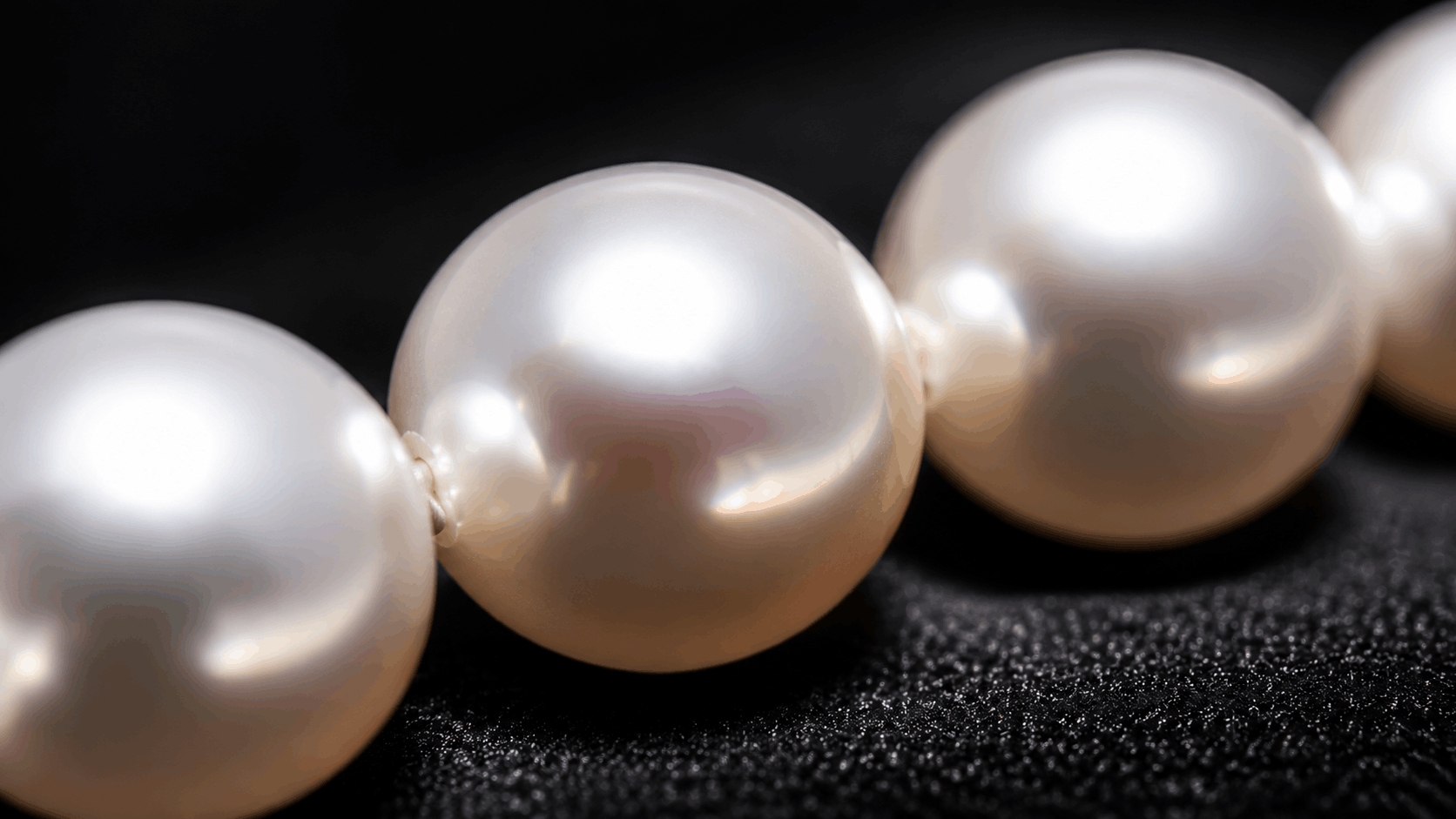
What to look for: each pearl should show a sharp reflection on its surface under natural light. Almost mirror-like. Luster should be consistent across every piece in the set. A necklace with strong luster paired with earrings that look softer reads as mismatched immediately. So look at every piece under the same lighting conditions before committing. Inconsistency between pieces is the most common quality issue in pre-packaged sets at lower price points.
Choosing the Right Size
Pearl size affects both the visual presence of the finished look and the price considerably. The most popular range runs from 6mm to 8mm. At 6mm to 7mm the set reads as delicate and refined. Suits finer features and buyers who prefer understated jewelry. A 7mm to 8mm set hits the practical sweet spot for most buyers. Substantial enough to register clearly in photographs. Refined enough for daily wear without feeling overdressed.
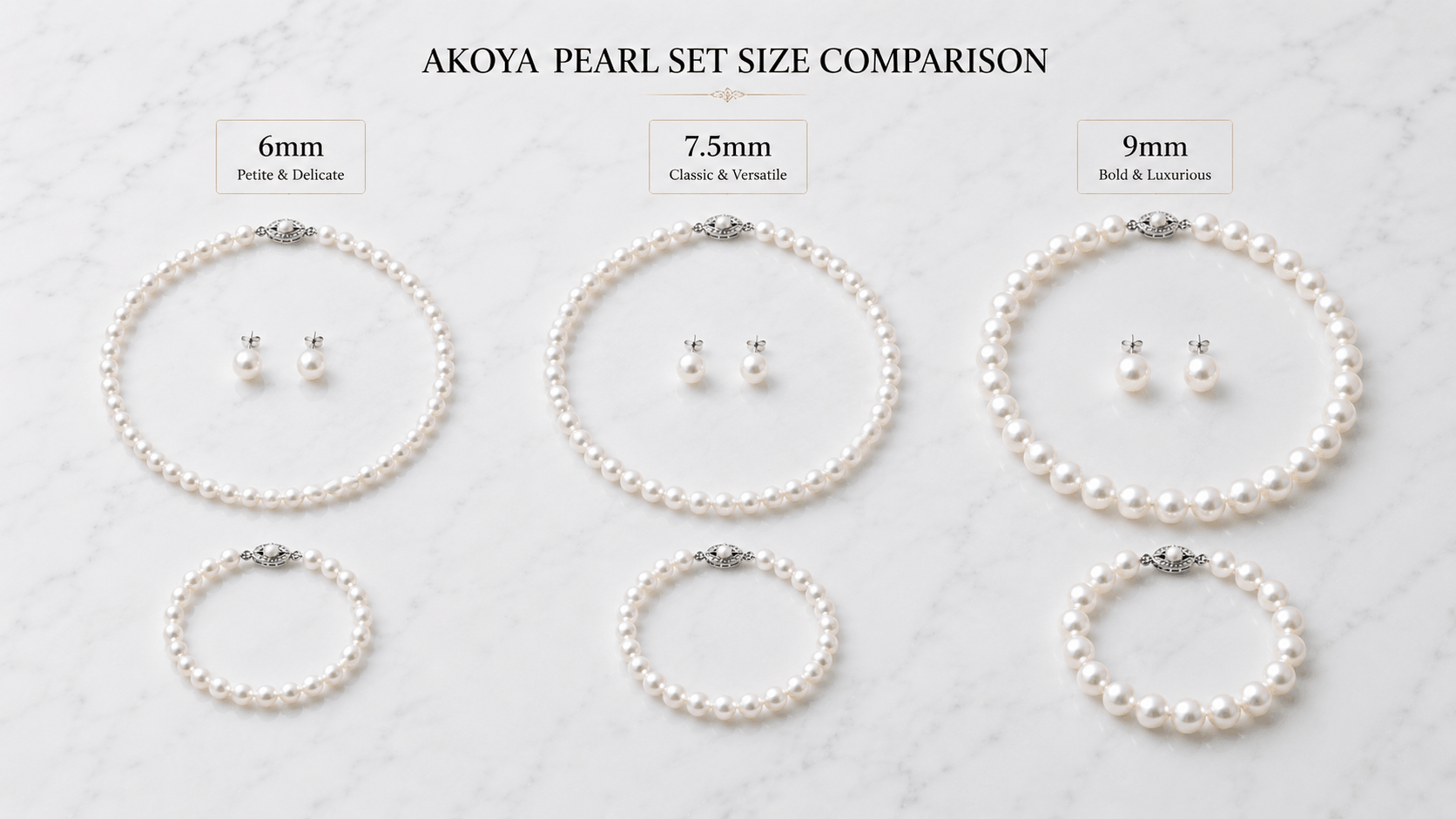
Larger sets at 8mm to 9mm and above are genuinely impressive. Rarer, significantly more expensive and the natural choice for buyers who want real presence. For bridal use specifically, 7mm to 7.5mm is where most pearl specialists default. Photographs extraordinarily well. Works beautifully with most dress necklines. And the earring size should always coordinate with the necklace pearl size — typically matching or within 0.5mm. A significant size mismatch undermines the whole coordinated effect a set is meant to create.
When to Wear a White Japanese Akoya Set
The white Japanese Akoya set is the most occasion-versatile pearl set available. And that versatility is a big part of why it’s been the default fine pearl jewelry gift for significant occasions across cultures for over a century. For weddings — as the bride, as the mother of the bride or as a gift to the bridal party — a white Japanese Akoya set is the single most appropriate and most reliably beautiful pearl jewelry choice available. The classic white color works with any dress shade from bright white through ivory and champagne. And the luster photographs extraordinarily well under the kind of lighting typical of wedding photography.
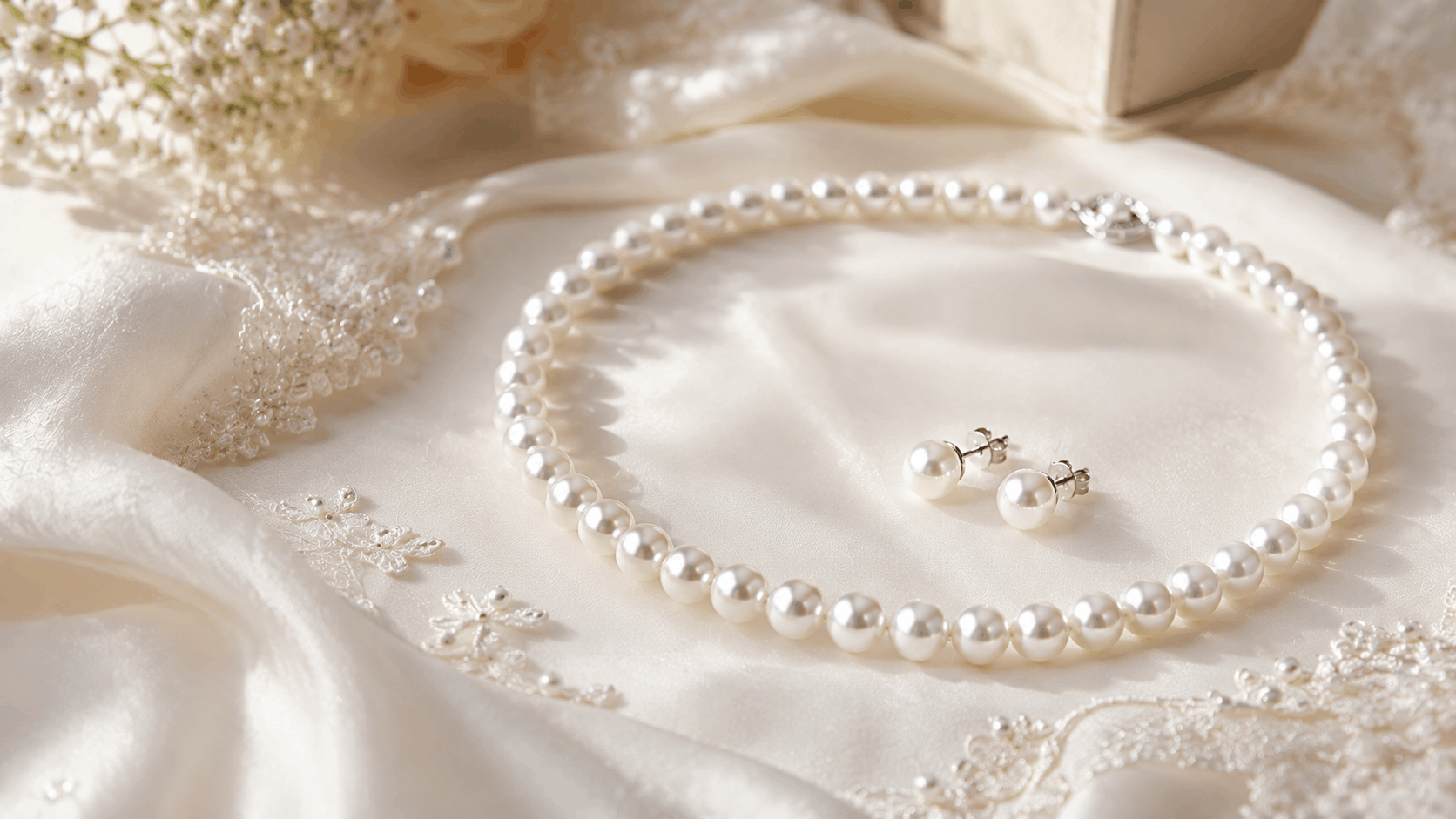
For formal occasions — galas, graduations, anniversary dinners — a white Akoya set creates exactly the right level of considered elegance without overcrowding a look. For gifting — significant birthdays, milestone anniversaries, career achievements — a white Japanese Akoya set reads as both genuinely luxurious and genuinely thoughtful. It’s a piece that says the occasion mattered. And for daily professional wear — a necklace and earring combination in 6mm to 7mm worn to work is one of the most quietly authoritative jewelry choices available. Polished. Confident. Never overdone.
White Japanese Akoya Set vs Other Pearl Sets
How does a white Japanese Akoya set compare to other options in the pearl set category? Against freshwater pearl sets — freshwater offers excellent value and wide color variety at significantly lower prices. But Akoya’s sharper luster, rounder shape and saltwater nacre quality are genuinely different at equivalent grades. The luster difference side by side is visible and significant. So for buyers who specifically want the sharpest, most classic white pearl look, freshwater isn’t quite the same thing.
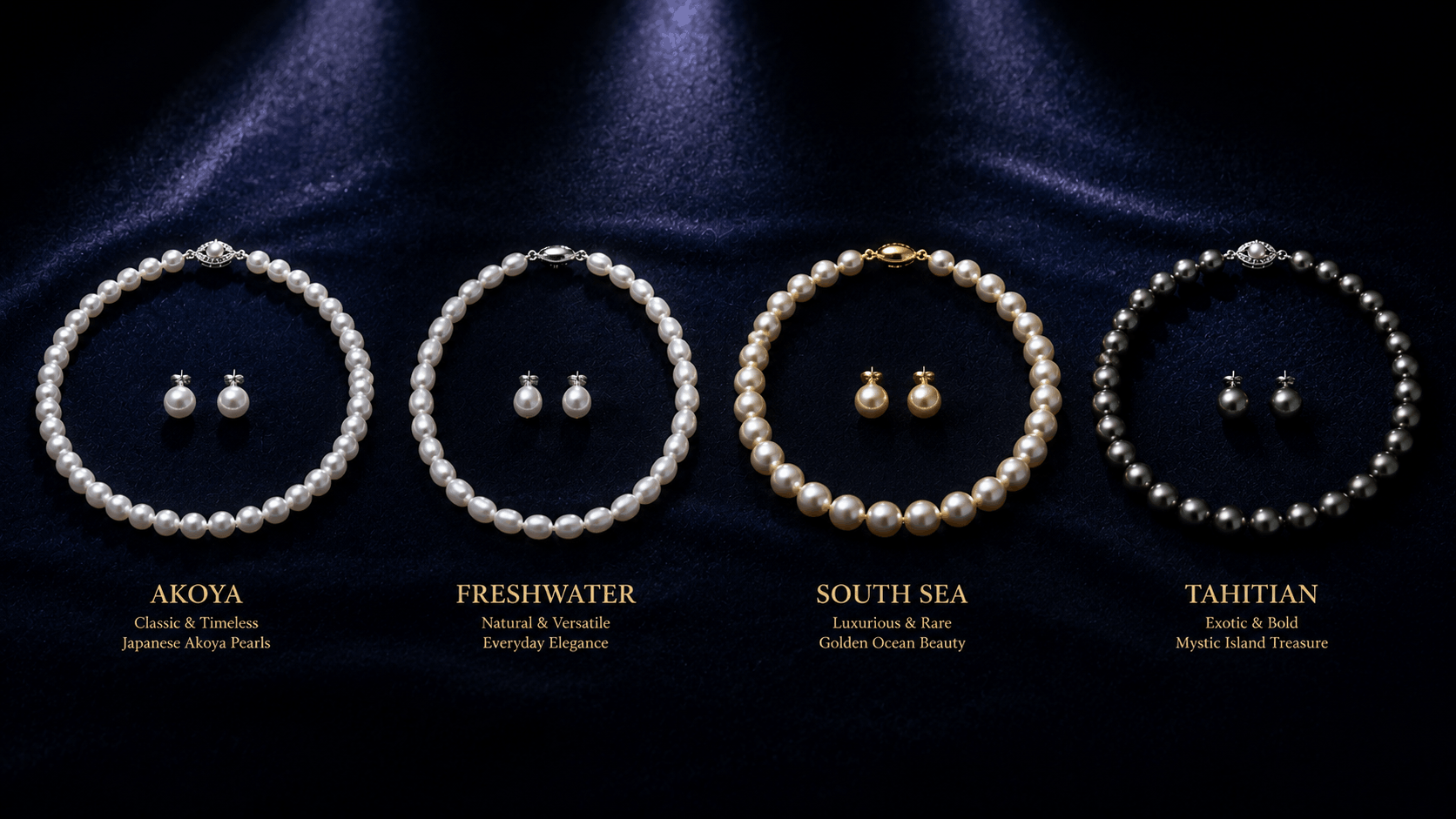
Against South Sea pearl sets — South Sea runs larger, rarer and considerably more expensive. Different size category entirely. And against Tahitian pearl sets — Tahitian offers dark dramatic color that a white Akoya set doesn’t replicate. Both are exceptional. But they serve very different style needs. The white Japanese Akoya set occupies the classic end of the pearl set market — the choice when you want the most recognizable, most versatile and most timeless pearl set available.
How to Choose a White Japanese Akoya Set the Right Way
A few things are non-negotiable when buying at this level. First — verify origin as Japanese Akoya. Chinese Akoya pearls exist and are a different product with generally softer luster and thinner nacre. Japanese farming standards and water conditions are specific and they matter to the finished quality. Second — luster and surface grade should be explicitly documented for every piece in the set. Not just the necklace. Every piece. Vague descriptions without grade specifics are a red flag.
Third — check matching quality across the set. The necklace pearls and earring pearls should be within 0.5mm in size and closely matched in overtone and luster. A retailer confident in their matching quality shows this clearly in product photography and documentation. And fourth — buy from a retailer with a meaningful return window. At PearlsOnly every white Japanese Akoya set comes with a Certificate of Authenticity and Appraisal from a pearl expert plus a 90-day return guarantee — so you can assess every piece properly in real lighting before fully committing. Browse the full collection and find the set that genuinely justifies every penny.
