
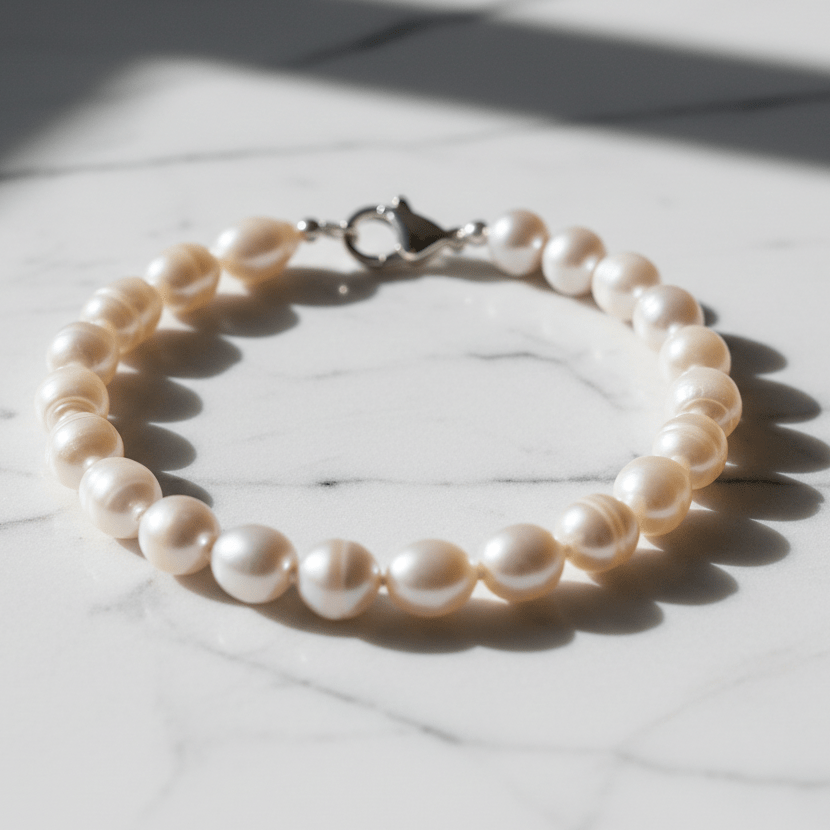
A real pearl bracelet is an investment. Not the fake stuff. Not imitations. Actual pearls grown in oysters or mussels. Moreover, there’s a huge difference between real and fake. Once you know what to look for? You’ll spot it every time.
I’ve seen too many people buy “pearl” bracelets that aren’t real. They think they scored a deal. But honestly? Fake pearls look cheap up close. They wear like garbage. Basically worthless. So let me show you how to avoid getting scammed.
What Makes a Real Pearl Bracelet Authentic
Here’s the thing about real pearls. They’re organic gems grown inside living creatures. Oysters or mussels create nacre around an irritant. Layer by layer. This process takes years. Consequently, real pearls have this depth and complexity that fakes can’t match. Furthermore, each pearl bracelet made with genuine pearls is unique. No two are exactly alike.
Fake pearls are manufactured. Usually glass or plastic coated with pearly paint. They’re made in factories in minutes. So they look uniform. Too perfect. Too identical. In contrast, real pearl bracelets show natural variation. Slight differences in size, shape, color. That’s how you know they’re real.
Testing Real Pearl Bracelets: The Tooth Method
This is the easiest test you can do. Gently rub a pearl against your front teeth. Real pearls feel slightly gritty or sandy. That’s the nacre texture. Basically, you’re feeling those microscopic layers. Meanwhile, fake pearls feel smooth. Glassy. No texture at all. This test works every time.
However, be gentle. Don’t scrape hard or you might damage the pearl. Just a light rub is enough. Additionally, make sure your teeth are clean first. Food particles can throw off the test. So quick rinse, then test. Simple as that.
Visual Clues of Authentic Real Pearl Bracelets
Real pearl bracelets have luster. That inner glow that seems to come from inside the pearl. Not just surface shine. Depth. Richness. Furthermore, the luster should be consistent but not identical across all pearls. Some variation is natural and actually proves authenticity. Check this by holding the bracelet under light. Turn it slowly. Watch how the pearls glow.

Surface imperfections are actually good signs. Real pearls usually have tiny marks, bumps, or irregularities. Perfectly smooth pearls across an entire bracelet? Probably fake. Similarly, look at the drill holes. Real pearls show layers of nacre in the hole. Fake pearls show solid color or obvious coating. So inspect those holes carefully.
Weight Difference Matters
A real pearl bracelet has weight to it. Pearls are solid nacre. They feel substantial in your hand. Not heavy exactly. But present. Noticeable. In contrast, fake pearl bracelets feel light. Hollow. Cheap basically. This weight test works especially well if you can compare real and fake side by side.
Temperature also matters. Real pearls feel cool when you first put them on. They warm up gradually from your body heat. Meanwhile, fake pearls feel room temperature immediately. They don’t have that initial coolness. So pay attention to how the bracelet feels against your wrist initially.
Types of Real Pearl Bracelets Available
Freshwater pearl bracelets offer great value. These are genuine pearls grown in freshwater mussels. More affordable than saltwater varieties but still real. Additionally, freshwater pearls come in tons of natural colors. White, pink, peach, lavender—all real, all beautiful. Great starting point for first-time buyers.
Akoya pearl bracelets are the classic choice. These saltwater pearls from Japan have incredible luster. Perfectly round. Very traditional look. However, they cost more than freshwater. Meanwhile, South Sea and Tahitian pearl bracelets are luxury options. Larger pearls, unique colors, premium prices. But if you want the best, these are it.
Checking the Clasp and String
Real pearl bracelets use quality clasps. Usually solid gold or sterling silver. The clasp should feel sturdy and close securely. Consequently, cheap metal clasps often indicate fake pearls. Similarly, check the stringing. Quality real pearl bracelets have silk thread with knots between each pearl. These knots prevent pearls from rubbing together. Also, if the string breaks, you only lose one pearl instead of all of them.
The knots should be neat and consistent. Messy knotting or no knots at all? Red flag. Furthermore, real pearl bracelets often have a small tag or certificate. Not always. But reputable sellers provide documentation for authentic pearls. So ask for it.
Real Pearl Bracelet Price Reality Check
Here’s the truth. Real pearl bracelets cost money. Not crazy expensive necessarily. But not dirt cheap either. If you see a “pearl bracelet” for $20, it’s fake. Period. Real pearls have value. Therefore, they’re priced accordingly. Even freshwater pearl bracelets start around $50-100 minimum for decent quality.
Be wary of deals that seem too good. “80% off real pearls!” Probably not real. Additionally, compare prices across reputable sellers. If one price is dramatically lower than others, question why. Real pearls hold consistent value across the market. Huge discounts usually mean fake products.
Where to Buy Authentic Real Pearl Bracelets
Buy from specialized pearl retailers. Companies that focus specifically on pearls know their product. They stake their reputation on authenticity. Furthermore, they typically offer guarantees and documentation. In contrast, random jewelry stores or online marketplaces are riskier. Anyone can claim pearls are real.
Ask questions before buying. Where do the pearls come from? What type are they? Can you provide certification? Reputable sellers answer these easily. Sketchy sellers dodge or get vague. So trust your instincts. If something feels off, it probably is.
Caring for Your Real Pearl Bracelet
Real pearls need proper care. Put your bracelet on last. After lotion, perfume, hairspray—everything. Those chemicals damage nacre over time. So jewelry goes on last always. Easy rule that protects your investment. Afterward, wipe with a soft cloth after wearing. Removes oils and keeps the luster fresh. Takes five seconds.
Store separately from other jewelry. Harder gems scratch pearls easily. Keep your real pearl bracelet in a soft pouch. Away from diamonds and metal pieces. Additionally, get it restrung every year or two if worn regularly. The silk thread weakens. Professional restringing prevents breaks and lost pearls. Most jewelers do this reasonably.
Making Your Purchase Decision
A real pearl bracelet should come with some form of documentation. Certificate of authenticity, origin information, pearl type details. Not always a fancy certificate. But something in writing. Consequently, this protects you and proves what you bought. Keep this documentation safe with your jewelry.
Don’t rush the decision. Take your time. Examine the bracelet carefully. Do the tooth test. Check the weight. Look at the luster. If the seller won’t let you inspect closely, walk away. After all, you’re investing in real pearls. You deserve to verify authenticity before buying. Trust yourself and do your homework.
