
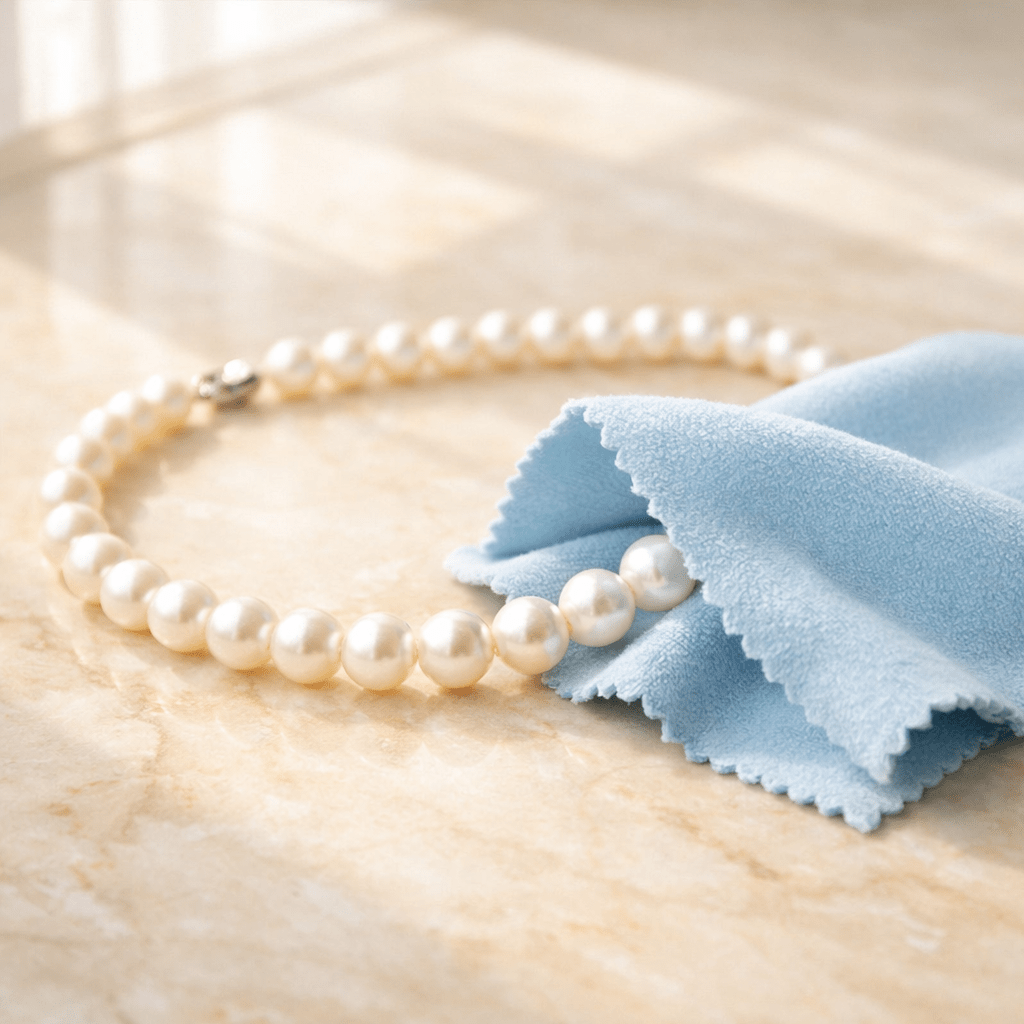
Here’s what nobody tells you about how to clean pearls without ruining them—it’s mostly about what NOT to do. My aunt destroyed a vintage strand trying to “brighten” them with lemon juice. Watched the surface literally bubble and pit. Another friend threw hers in an ultrasonic cleaner with her gold chains. Pearls came out looking frosted, like someone had sandblasted them. Both irreversible. Both heartbreaking. Learning to clean pearls without ruining them starts with understanding they’re not regular jewelry.
Pearls are weird. Organic. Basically compressed layers of the same stuff that makes seashells. This means they react to things that would be fine for diamonds or sapphires. Acids dissolve them. Harsh cleaners strip away their luster. Even some “gentle” jewelry products wreck them. But once you know what pearls actually are, keeping them clean becomes obvious rather than scary.
Why Cleaning Pearls Without Ruining Them Needs Different Thinking
A pearl rates maybe 3 on hardness scales. Copper pennies are about the same. Your fingernail is softer but not by much. So yeah, pearls scratch easily. That gorgeous iridescent coating everyone loves? Called nacre. Sometimes thick as a millimeter on expensive South Sea pearls. Other times paper-thin on cheap ones. Every time you clean wrong, you’re removing microscopic bits of that coating. Do it enough and suddenly your pearls look chalky instead of glowing.

The calcium carbonate thing matters too. Remember those volcano projects in school with vinegar and baking soda? Similar chemical reaction happens when acidic cleaners touch pearls. The surface fizzes away. Creates permanent damage. People use products with acid all the time without realizing—regular jewelry cleaners, even some “pearl-safe” formulas. Check ingredients. If you see any kind of acid listed, that bottle stays far away from your pearls.
Stuff That Destroys Pearls When You’re Trying to Clean Them
Ultrasonic cleaners are convenient for regular jewelry. Drop everything in, turn it on, done. Except those vibrations crack pearls. Loosen them from settings. I’ve seen it happen—pearls come out looking cloudy from microscopic fractures running through the nacre. Can’t fix that. Ever. Same with steam cleaners. The heat makes nacre brittle. Pressure pushes pearls right out of their mountings if the glue has weakened even slightly.

Those jewelry cleaning solutions under everyone’s sink? Almost all have ammonia. Strips natural oils from pearls that keep them lustrous. Your pearls come out clean, sure. Also dull and lifeless. The damage builds over time too. First cleaning might seem fine. By the fifth time you’re wondering why your pearls don’t shine anymore. Many formulas also include mild acids for silver tarnish removal. Those acids eat pearl surfaces just like straight vinegar would.
Baking soda gets recommended constantly online. “Natural” and “gentle” they say. Nope. It’s abrasive. Scratches nacre. Same with toothpaste, which I’ve actually seen people suggest. Maybe works on your teeth. Terrible idea for pearls. Even some jewelry polishing cloths are too rough. You need truly soft materials—microfiber or very soft cotton only.
The Actually Safe Method to Clean Pearls Without Ruining Them
Get a cloth damp with plain room-temperature water. Not soaking wet—damp. Wipe each pearl. Turn them around. Get all the surfaces. That’s it. Takes thirty seconds for a whole strand. This removes body oils, makeup transfer, dust. Everything that accumulates from normal wearing. Works for 90% of regular cleaning situations and carries zero risk.

Slightly dirtier pearls need soap. Real baby shampoo—the no-tears kind that’s genuinely mild. One drop in a cup of lukewarm water. Dip your cloth in. Wring it thoroughly so it’s barely damp. Wipe each pearl. Then use a different clean cloth with just water to remove soap residue. The entire process takes maybe two minutes even for long necklaces. Keep the string as dry as possible because silk absorbs moisture like crazy and that causes problems.
How to Clean Pearl Necklaces Without Ruining the String
Always lay necklaces flat on a towel. Never clean them hanging up. Wet string plus gravity equals stress points that eventually snap. Work section by section. Few pearls at a time. This prevents overwetting any single area. The towel catches drips and provides soft surface so nothing gets scratched.

Those knots between pearls hide dirt. Body oils soak into silk thread. Use barely-damp cotton swabs for knot areas. Roll gently around each one. Don’t scrub because that frays thread. Light pressure lifts away grime without damage. The knots serve a purpose too—if string breaks, only one pearl falls off instead of scattering everywhere. Keep them clean but treat carefully.
Drying requires actual patience. Leave the necklace flat for hours. Overnight is better. Pearls dry fast but string needs time. Humid weather means longer drying. Never store anything even slightly damp. Mildew grows in closed jewelry boxes. Smells awful and weakens thread further. So wait. Do literally anything else. Come back when everything is completely dry. Proper technique when you clean pearls without ruining them includes thorough drying time.
Cleaning Pearl Earrings and Rings Without Ruining Them
Earrings collect makeup like magnets. Foundation, powder, concealer—transfers throughout the day. Hair products spray everywhere too. Clean these after every few wearings, not just when they look dirty. Buildup happens gradually and gets harder to remove if you wait weeks. The metal parts—posts, hooks, settings—those can tarnish. That tarnish will stain the pearl where metal touches nacre. Clean metal with appropriate cleaner but keep those chemicals completely away from the pearl itself.

Pearl rings face brutal daily abuse. Hand washing constantly. Touching everything. Lotion. Cooking. All affects the pearl. The underside against your palm gets the worst buildup because nobody sees it. Turn the ring over during cleaning. That bottom surface needs more attention than the top. Check around prongs or bezel settings too. Grime hides in crevices and traps moisture against pearl. Cotton swabs work perfectly for tight spots. When you clean pearls without ruining ring settings, extra attention to these hidden areas matters.
Dealing With Stubborn Messes When You Clean Pearls Without Ruining Them
Perfume stains show as yellowish discoloration. The alcohol damages nacre on contact. No complete fix exists once it happens. But you can make it less obvious. Dampen cloth with plain water. Add tiniest soap amount—barely any. Dab very gently at the stain. No rubbing. No pressure. Multiple light sessions beat one aggressive attempt. The stain might lighten but probably won’t disappear. This is why putting pearls on last, after perfume and hairspray, is an actual rule worth following.

Dull pearls that lost shine might just have surface film. Regular gentle cleaning sometimes brings back luster that seemed gone. After normal cleaning, take completely clean dry cloth and lightly buff each pearl. Small circles. Almost no pressure. You’re removing remaining film, not polishing in traditional sense. If this doesn’t help, the dullness is probably nacre degradation. That needs professional assessment because home methods won’t fix structural damage.
Sticky residue from price stickers or tape is annoying but fixable. Don’t pick at it with fingernails. Definitely don’t use rubbing alcohol or adhesive remover—those chemicals damage pearls worse than residue ever could. Dampen just that spot with water. Let it sit few seconds to soften adhesive. Then roll residue off gently with cloth or fingertip. Might take several tries. Slow beats destructive every time with pearls. Patience helps you clean pearls without ruining them when dealing with stubborn problems.
When Professionals Should Clean Pearls Without Ruining Them Instead
Annual professional cleaning makes sense for valuable pieces. Find jewelers who specialize in pearls specifically—not all have this expertise. They’ll have solutions formulated for organic gems. Tools designed for delicate work. Most importantly, they know the line between clean enough and too much cleaning. They’ll inspect everything too. Check if pearls are secure. Look at string condition. Catch small issues before they become expensive disasters.

Restringing happens more than people expect. Wear a pearl necklace regularly—like once weekly—and plan on restringing every year or two. Silk stretches with wear even when it looks fine. It picks up oils and moisture that weaken fibers. Don’t wait until you see string between pearls when wearing the necklace. By then it’s stretched dangerously and could break any moment. Professional restringing during cleaning keeps everything secure and proper-looking.
Daily Habits That Reduce How Often You Clean Pearls
Put pearls on last. This single rule prevents most cleaning challenges. Do makeup. Spray perfume and hairspray. Let everything dry. Then add pearls. Take them off first when you’re home too. Before removing makeup. Before washing face. Before cooking. Minimizes how much crud actually gets on pearls initially. Less exposure means less buildup means gentler cleaning needed.

Wipe pearls after every wearing. Quick pass with soft dry cloth takes ten seconds. Removing fresh oils before they set makes enormous difference long-term. This habit means rarely needing water cleaning at all. Pearls stay lustrous naturally because nothing builds up on surface. Store them in soft pouches or lined boxes after wiping. Away from other jewelry that scratches. Never plastic bags—pearls need air circulation or they deteriorate faster.
What Happens After You’ve Damaged Pearls Already
Light scratches sometimes improve with professional polishing. Skilled jeweler works on nacre very carefully to minimize visible scratching. This removes material though. Only works if pearl has thick enough nacre to spare. Thin nacre means polishing isn’t option—you’d polish through to nucleus underneath. Jeweler assesses whether attempting repair makes sense or makes things worse. Results vary dramatically based on specific damage and pearl quality.
Severe damage—dissolved nacre, deep pitting, complete luster loss—is usually permanent. The pearl is compromised and professional work won’t restore it. However, if it’s one pearl in multi-pearl piece, replacement might work. Jeweler sources matching pearl and swaps it. Requires good luck because finding perfect matches is challenging, especially for vintage pieces or unusual types. Sometimes close enough is best you’ll get. Still better than one obviously ruined pearl in otherwise beautiful strand.
Building Your Pearl Cleaning Kit
Buy microfiber cloth pack and dedicate them exclusively to pearls. Don’t use for anything else. Wash regularly in unscented detergent—no fabric softener because that leaves residue. Keep several so clean ones are always available. Cotton swabs for detail work around settings and knots. One bottle plain baby shampoo living in your jewelry area. Small bowl for mixing cleaning solution when needed. Soft towel for laying necklaces flat during cleaning and drying. That’s everything required.

Notice what’s missing. No specialty pearl cleaners. No polishing compounds. No chemical solutions. No powered devices. Simple tools mean safer cleaning with delicate items like pearls. Every fancy product is another chance for something going wrong. Basics work reliably. Your great-grandmother cleaned her pearls with soap and water. They lasted long enough to reach you. Same approach works perfectly today when you want to clean pearls without ruining their beauty.
Different Pearls Need Different Care Levels
Freshwater pearls generally have thicker nacre. These tolerate slightly more vigorous cleaning—though “vigorous” stays gentle by normal jewelry standards. More margin for error with quality freshwater strands. South Sea and Tahitian pearls also tend toward thick nacre when they’re good quality. Akoya pearls are trickier. Nacre is often thinner, particularly on less expensive strands. Extra gentleness needed with Akoyas. Very light pressure. Minimal moisture. Quick drying.
Vintage pearls require maximum caution. Nacre has aged. More brittle than decades ago. Older pearls often started with thinner nacre anyway—quality standards were different back then. Stringing material is definitely compromised even if looking okay. Vintage silk has weakened over time regardless of careful storage. Clean vintage pearls as rarely as possible using gentlest methods. Consider professional cleaning instead of home care if piece is valuable or sentimental. Risk isn’t worth saving few dollars on professional service. Understanding pearl type variations helps you clean pearls without ruining different varieties appropriately.
