
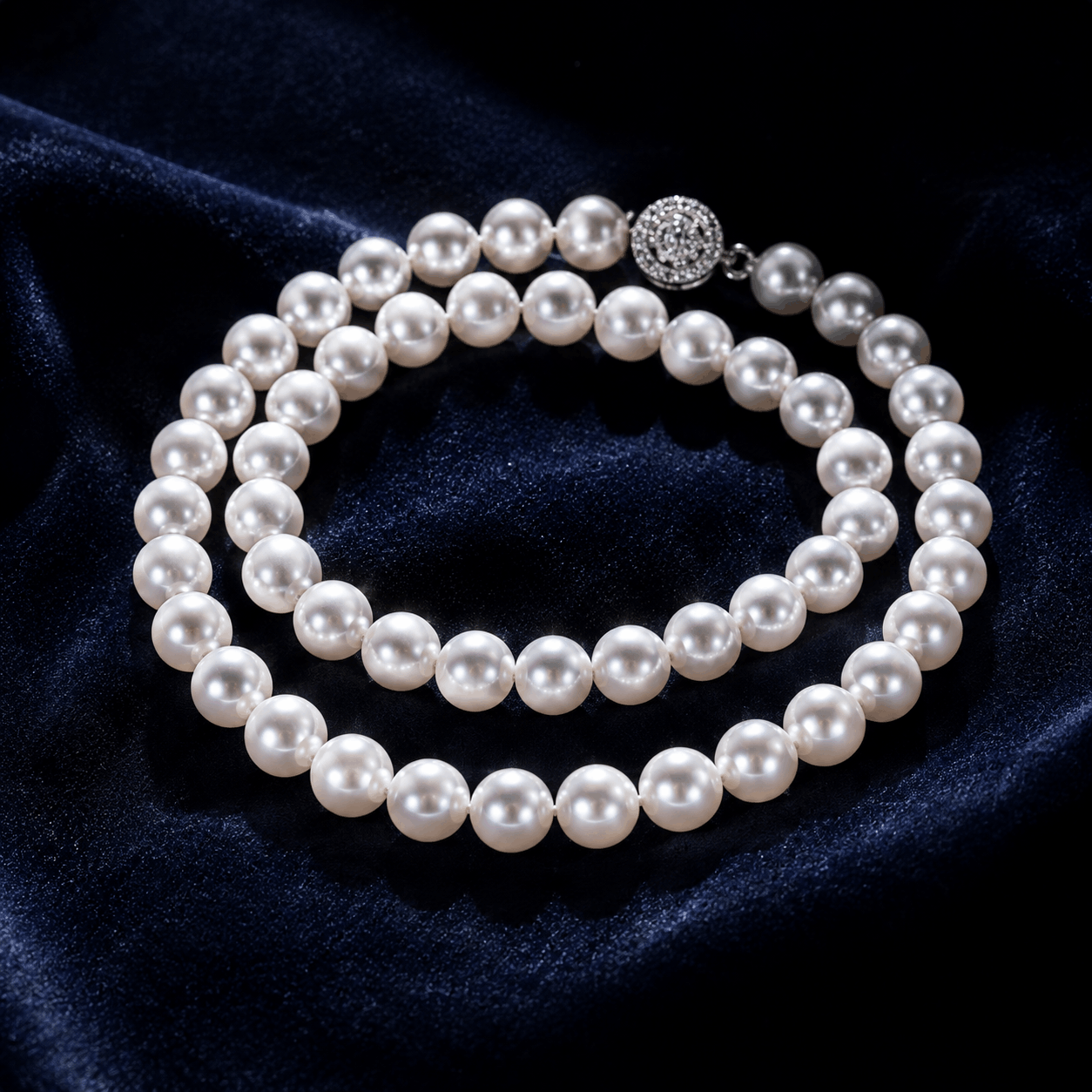
My aunt wore the same Japanese Akoya pearl necklace to every important event for thirty years. Graduations. Weddings. Christmas dinners. Never changed it. Never needed to. And every single time, someone asked about it. That’s the thing about a Japanese Akoya pearl necklace — it doesn’t try to impress. It just does. Effortlessly. Every time. So here’s everything worth knowing before you choose yours.
What Makes a Japanese Akoya Pearl Necklace Special
The Japanese Akoya pearl necklace earned its reputation for one reason above all others: luster. Specifically that sharp mirror-like luster that reflects light with a clarity and precision no other pearl type quite replicates. It comes from the Pinctada fucata martensii — a small saltwater oyster farmed primarily along the Japanese coast. Cold Japanese waters, single-pearl production and a 10 to 18 month growing cycle produce nacre with an exceptionally tight crystalline structure. And that structure is what creates the luster. The thing that makes people stop and ask.
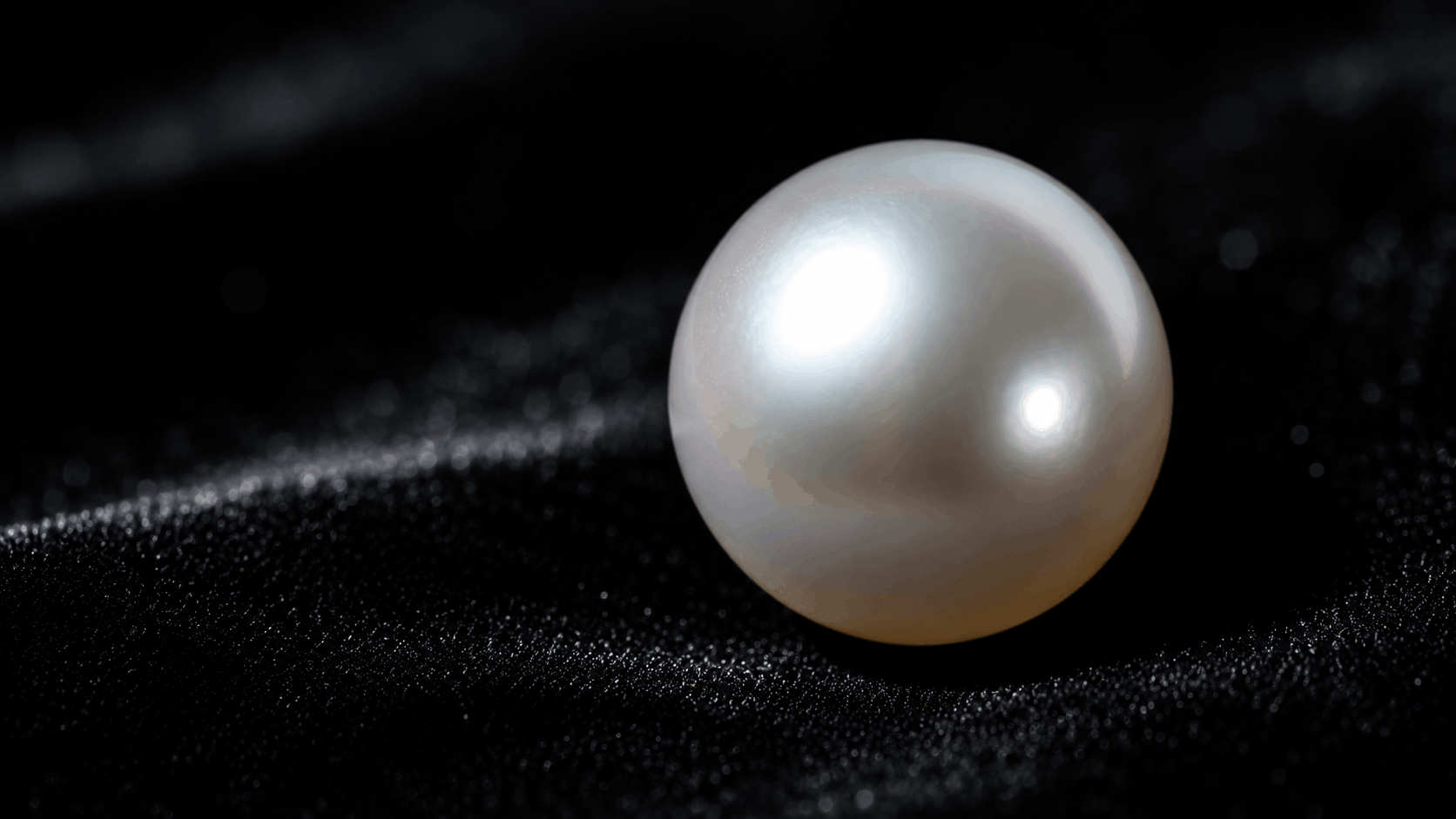
But beyond luster, a Japanese Akoya pearl necklace offers something just as important — consistency. Perfect roundness across every pearl in the strand. Tight size graduation from the clasp pearl to the center. Overtone uniformity that makes the whole piece read as a single coordinated object rather than a collection of individual pearls. Getting all of that right across 40 to 50 individual pearls requires real skill and significant time. So when you hold a well-matched strand, what you’re holding isn’t just beautiful — it’s genuinely difficult to achieve.
Sizes — Finding Your Match
Size is the first decision most buyers face — and it matters more than most people realize before trying pieces on. Japanese Akoya pearl necklaces typically run from 5mm to 11mm. So the most popular range sits between 6mm and 8mm — substantial enough to register clearly in photographs and across a room, refined enough for daily wear without feeling overdressed for any occasion.
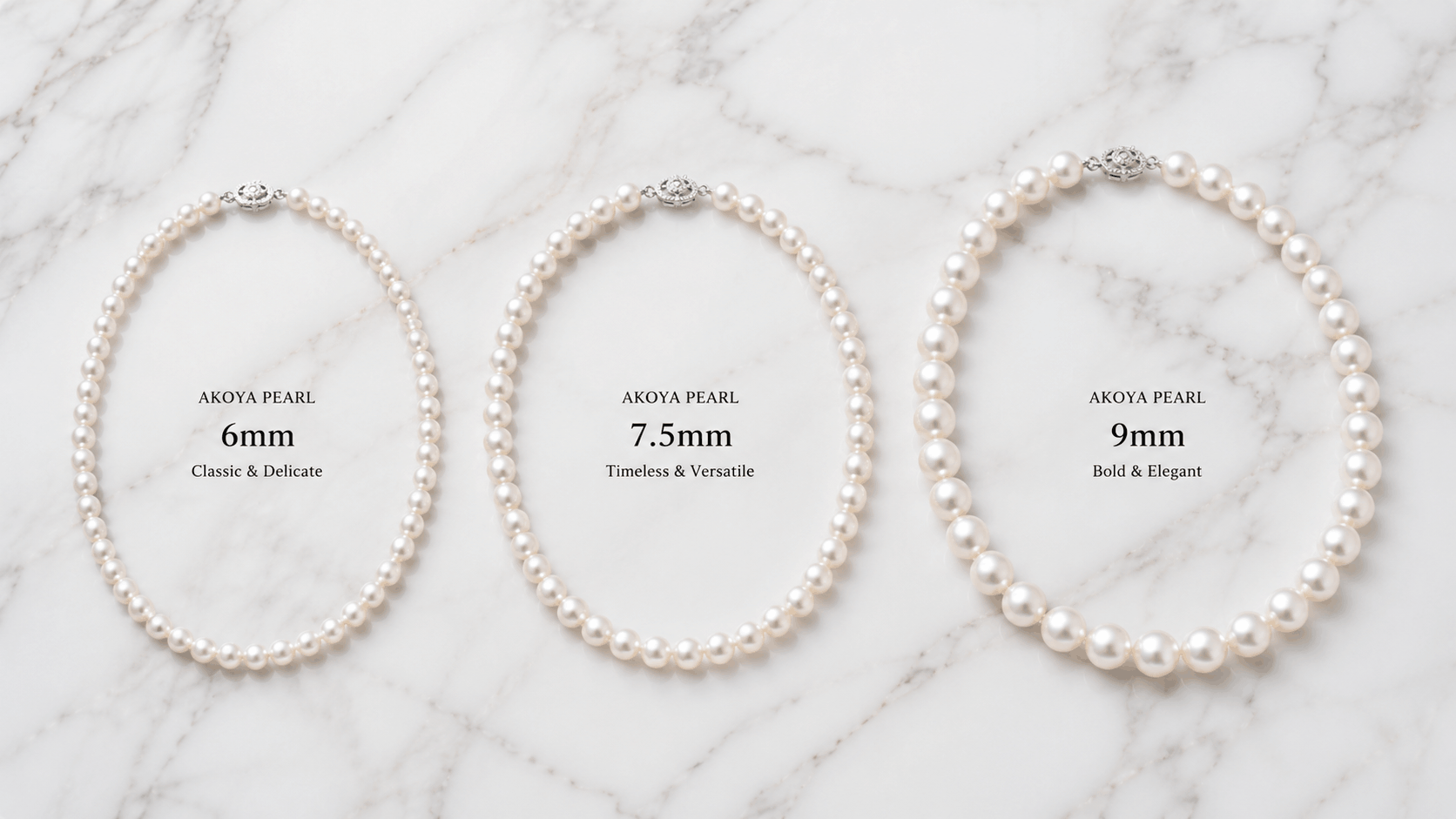
Smaller at 5mm to 6mm reads as delicate and refined. Works beautifully for petite features or buyers who prefer understated jewelry. And 8mm to 9mm moves into statement territory — still classic, but with noticeably more presence. Larger sizes at 9mm to 11mm are genuinely impressive — rarer, significantly more expensive and the natural choice for buyers who want real scale. For a first Japanese Akoya pearl necklace, 7mm to 7.5mm is what most pearl specialists recommend. Photographs beautifully. Works across virtually every occasion. And the size reads as classically right without being either too delicate or too bold.
White Akoya Pearl Necklace — Overtones and Color
White is the color most people picture when they think of a Japanese Akoya pearl necklace. But white Akoya pearls come in three distinct overtone directions — and the choice between them matters more than most buyers realize going in.
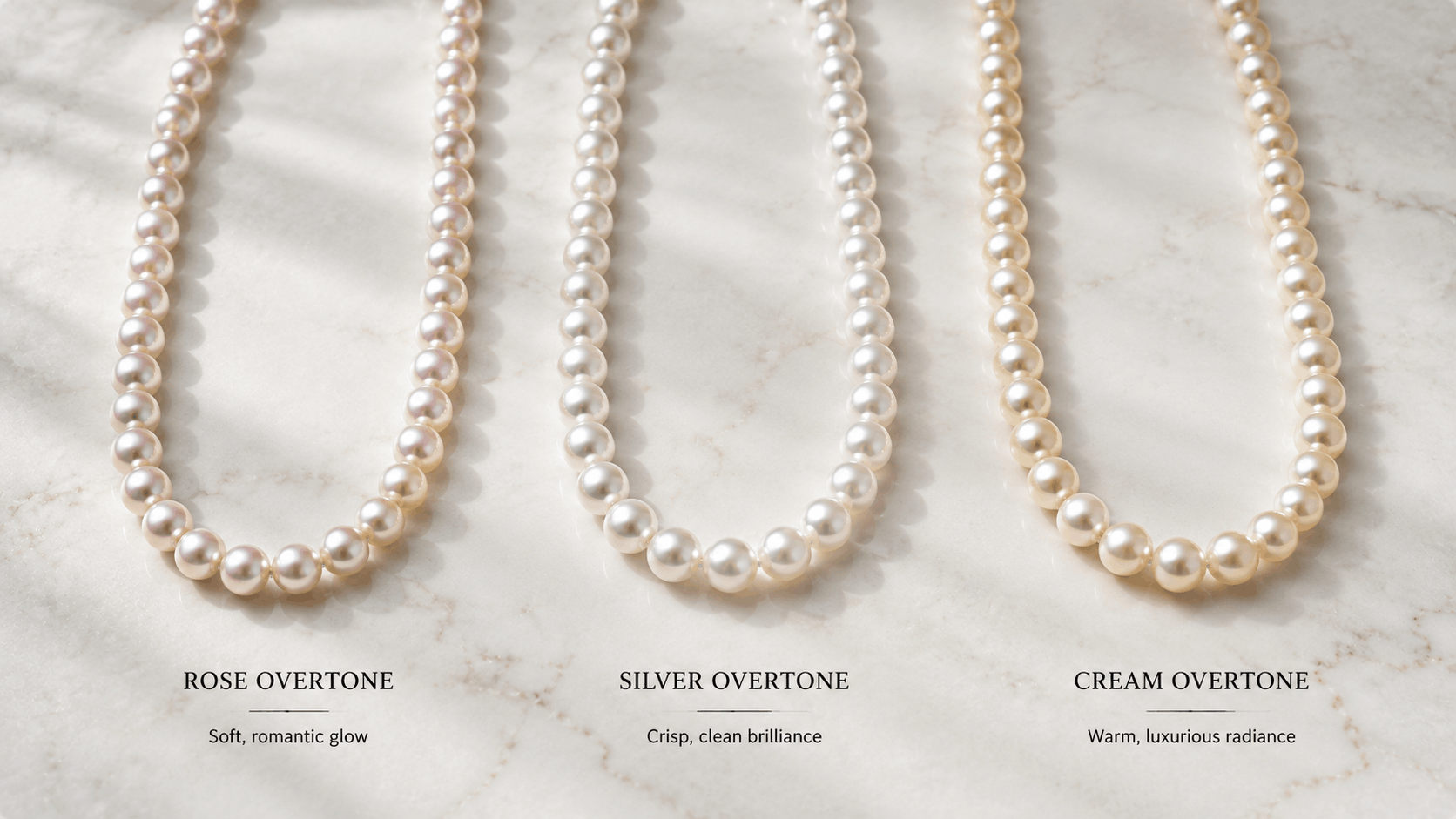
Rose overtone has a warm pinkish glow that suits fair to medium skin tones beautifully. It adds warmth to the classic white without veering into cream territory. Silver overtone is the sharpest and most traditional — cool, bright and extraordinary against almost any complexion. This is the overtone most closely associated with the iconic Akoya look. And cream overtone runs slightly warmer than silver — suits pink or reddish undertones particularly well and photographs beautifully against ivory or champagne fabrics. So choosing a white Akoya pearl necklace isn’t just choosing white. It’s choosing which version of white works best for the wearer and the occasion.
Black Japanese Akoya Pearl Necklace — The Contemporary Choice
Most people default to white when thinking about a Japanese Akoya pearl necklace. But black Akoya pearl necklaces exist — and they’re genuinely stunning in a completely different direction. Black Akoya pearls carry blue, green or silver overtones over a dark body color. Entirely different in character from Tahitian dark pearls — smaller, more refined — but with that same exceptional Akoya luster quality that makes the category so distinctive.
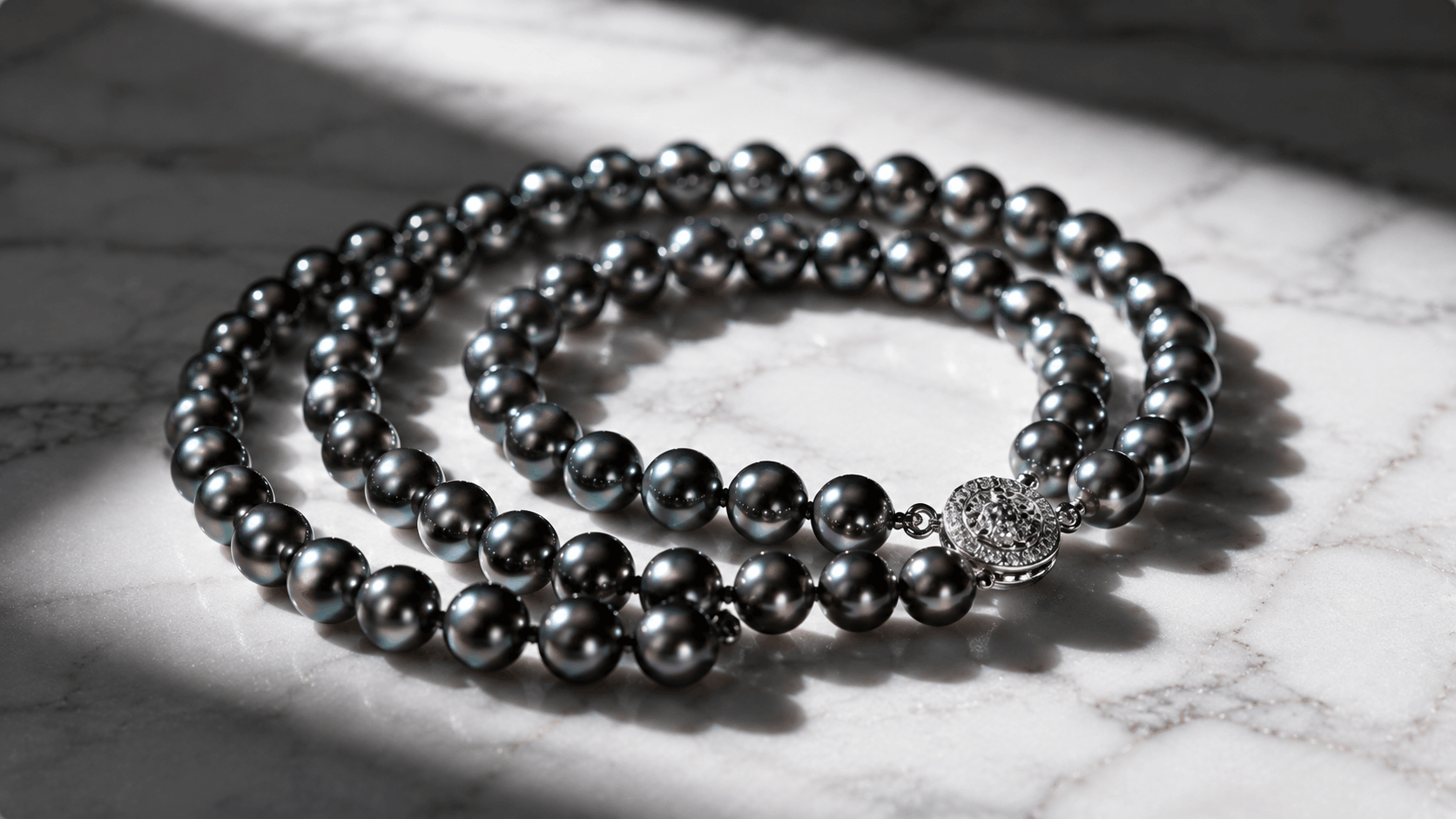
A black Akoya pearl necklace reads as sophisticated and contemporary in a way white sometimes doesn’t. Works particularly well with white gold and platinum settings where the cool metal echoes the dark pearl’s blue-silver overtones. And at equivalent grades, black Akoya necklaces tend to sit at more accessible price points than white — making them an interesting entry for buyers who want Akoya quality with something less expected.
Length Guide — Which One Works for You
Length affects the whole look of a Japanese Akoya pearl necklace as much as size does. And each length works differently depending on neckline, occasion and personal style. So it’s worth understanding the options before committing.
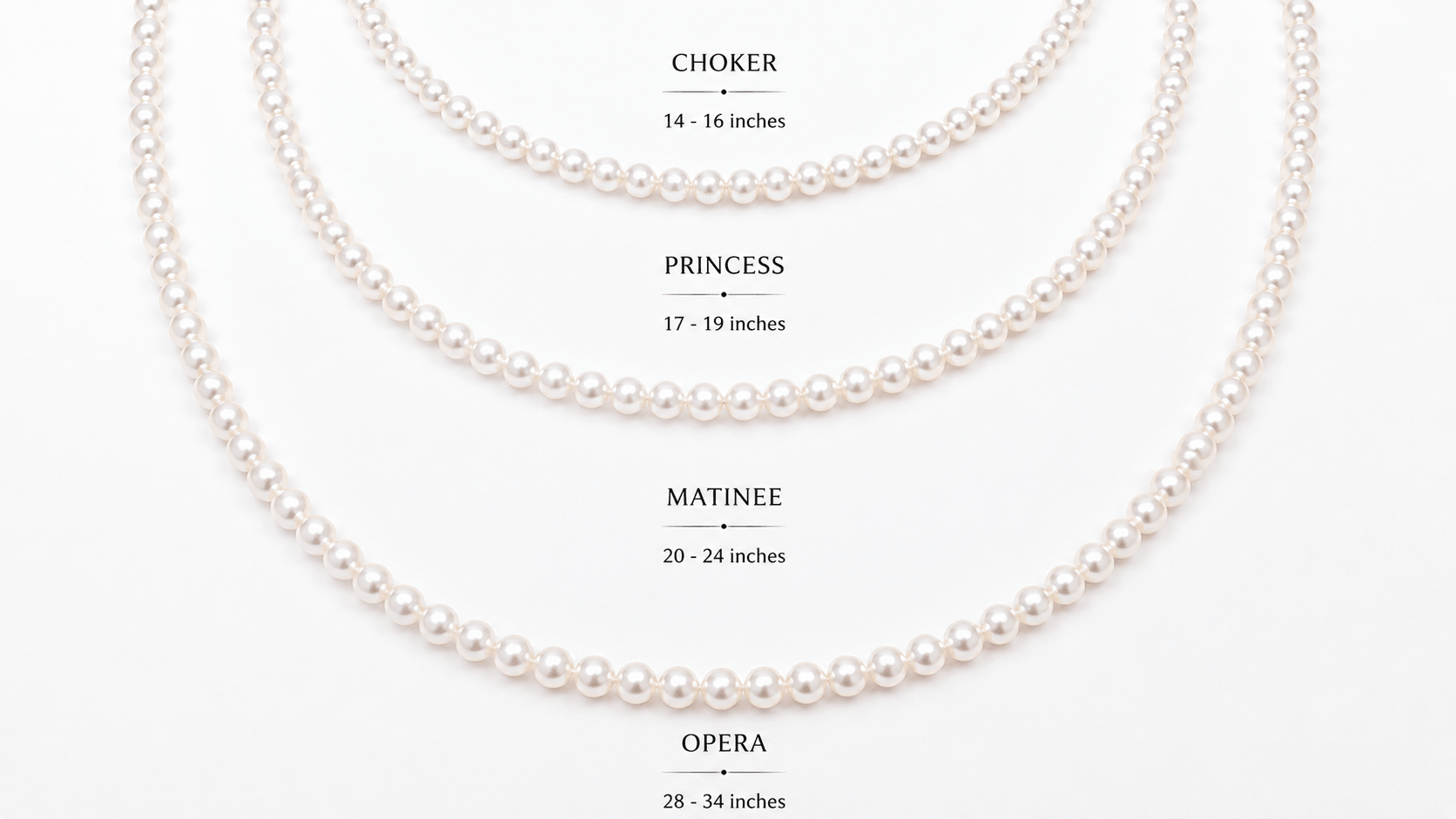
Choker at 14 to 16 inches sits just below the collarbone — the most classic Akoya pearl necklace position and genuinely one of the most flattering. The tight luster reads perfectly at collarbone level against any neckline. Princess length at 17 to 19 inches is the most universally worn and the standard length most Akoya necklaces come in as default. Works across virtually every neckline and occasion without adjustment. Matinee at 20 to 24 inches creates a longer drop — more presence, works particularly well with business attire and formal occasions where you want the necklace to lead the look. And opera at 28 to 36 inches exists in Akoya too — less common but extraordinarily impressive in matched quality at that length, where the consistency of luster across a longer strand becomes its own achievement.
Quality Grades — What They Mean at This Level
Understanding grading before buying a Japanese Akoya pearl necklace isn’t optional — it’s essential. At Akoya price points, buying the wrong grade is a genuinely expensive mistake that’s hard to undo after the fact.
AAAA is the absolute pinnacle. Near-flawless surface across every pearl in the strand, up to 95% defect-free area, thick nacre and that extraordinary mirror-like luster that makes top-grade Akoya so immediately recognizable. AAA is one step down — still exceptional quality, high luster, rare surface characteristics only visible under close inspection. This is where most serious buyers land for investment-quality everyday pieces. And AA to A grades are entry-level — more visible surface marks and softer luster. Fine for occasional wear. But not the right choice for a Japanese Akoya pearl necklace you plan to wear constantly or pass down over time.
Hanadama — The Finest Japanese Akoya Pearl Necklace Available
Within the Japanese Akoya pearl necklace world, one certification sits above all standard grading: Hanadama. The word means “flower pearl” in Japanese. And it’s not a marketing phrase — it’s an independent certification issued by the Pearl Science Laboratory of Japan after rigorous testing including x-ray and spectrographic analysis of nacre thickness, luster intensity and surface quality.
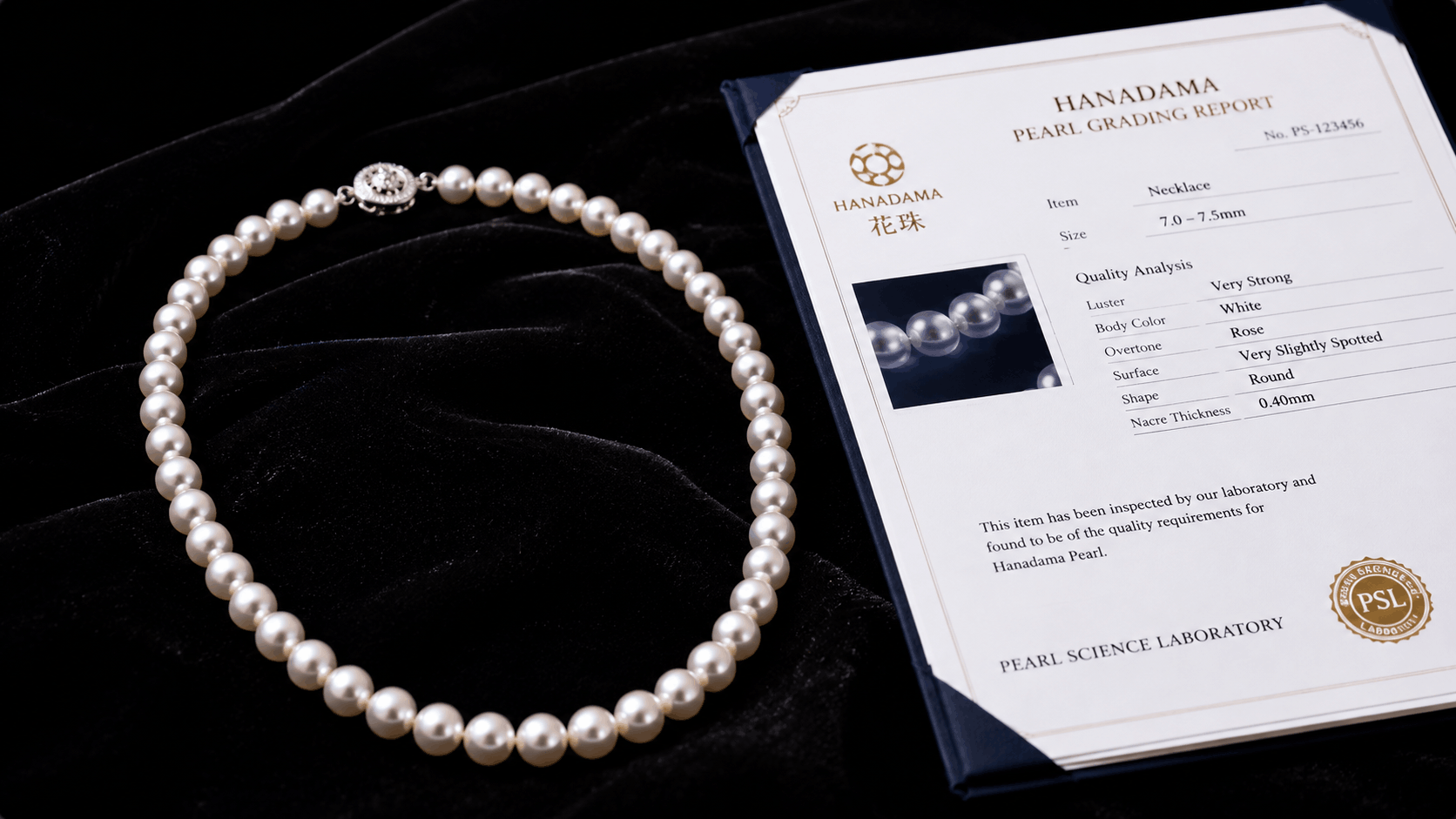
Only a small percentage of Japanese Akoya pearls ever qualify. So a Hanadama pearl necklace isn’t just beautiful — it comes with independently verified quality at the absolute top of what the Akoya category produces. If you’re making a significant investment, want complete quality assurance and plan to keep the piece for decades — Hanadama is the definitive answer. The price premium reflects something real. And so does what you’re getting for it.
How to Choose a Japanese Akoya Pearl Necklace
A few things are non-negotiable when buying at this level. First — verify origin explicitly as Japanese Akoya. Chinese Akoya pearls exist and are a different product — generally softer luster, thinner nacre. Japanese farming standards and water conditions are specific and they matter significantly to the finished quality. Second — luster and surface grade should be explicitly documented. Not just “high quality” as a descriptor. The actual grading criteria stated clearly and verifiably.
Third — check nacre thickness. Thin nacre looks beautiful initially but dulls as the outer coating wears with regular use. Thick nacre deepens rather than fading. And fourth — buy from a retailer with a meaningful return window. At PearlsOnly every Japanese Akoya pearl necklace comes with a Certificate of Authenticity and Appraisal from a pearl expert plus a 90-day return guarantee — so you assess the piece properly in real lighting before fully committing. Browse the full collection and find the strand that genuinely justifies every penny.
Caring for a Japanese Akoya Pearl Necklace
Akoya pearls are robust for their size — but they need basic care to stay beautiful over decades. The rule that applies across all pearl jewelry applies here too: put the necklace on last when getting ready and take it off first. Perfume, hairspray and cosmetics dull nacre over time. And with Akoya’s tight crystalline surface structure, that dulling shows more immediately than with other pearl types.
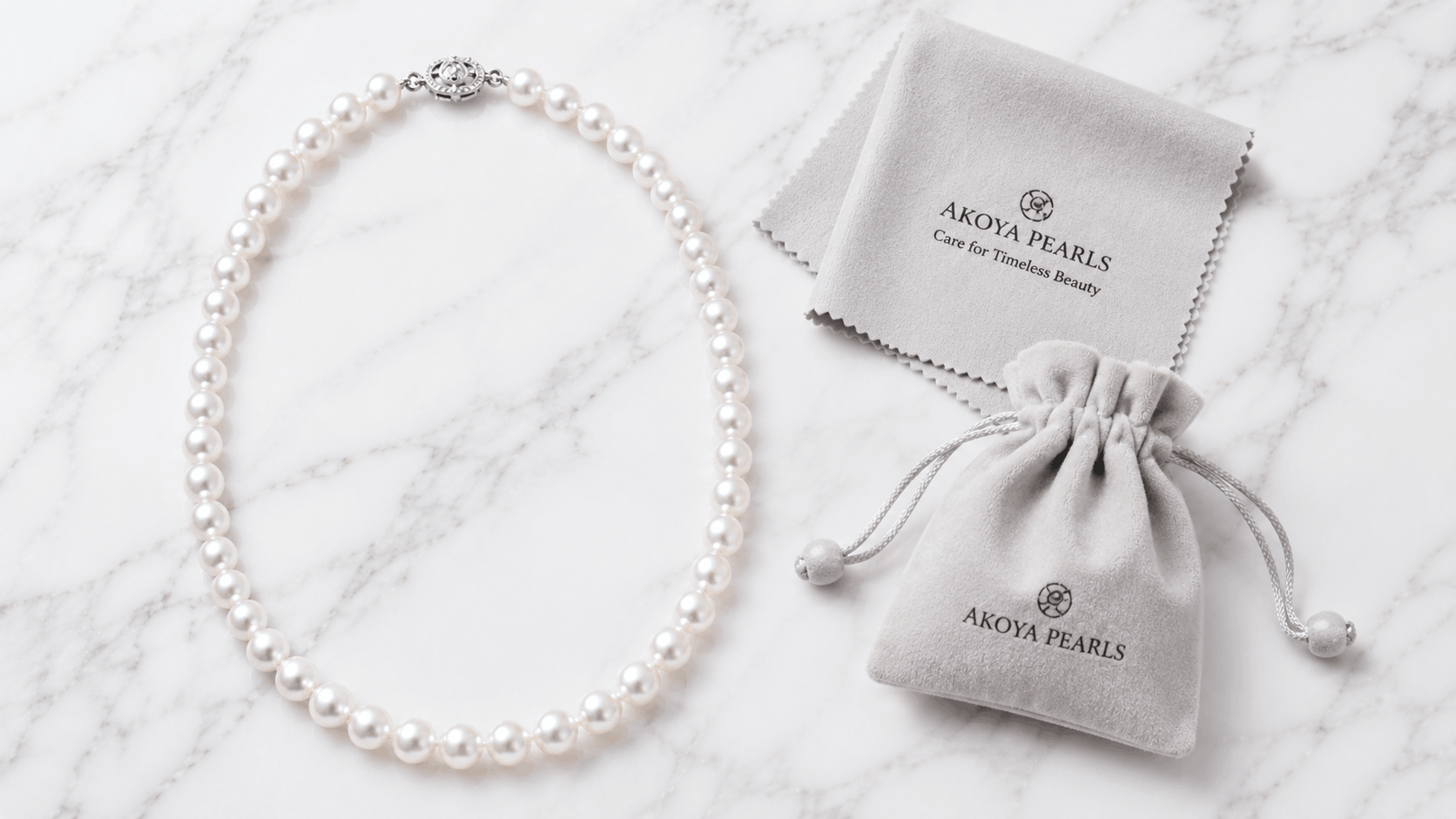
Wipe the strand gently with a soft damp cloth after each wear. Store it flat or hanging rather than coiled in a pile with other jewelry. And get the silk thread restrung every two to three years if worn regularly. Thread weakens quietly over time. A broken Japanese Akoya pearl necklace scattering individual pearls across a floor is an entirely avoidable situation — and with a piece this beautiful, it’s worth the basic maintenance. Store separately from harder jewelry that can scratch the nacre surface. And enjoy it often. Pearls that get worn regularly develop a warmth that pearls sitting in boxes simply don’t.
