
Spent years selling and sourcing pearls from different parts of the world. Japanese Akoya. Tahitian black. Freshwater from China. All beautiful in their own way. But pearls of Australia are genuinely in a different category. The size. The nacre thickness. The luster quality. Nothing else in the pearl world comes close to what comes out of Australian waters. So if you’ve been wondering what makes Australian pearls so special — and why they cost what they do — here’s the honest answer.
Where Pearls of Australia Actually Come From
Australian pearls come from one oyster species — the Pinctada maxima. It’s the largest pearl-producing oyster in the world. Found in the remote coastal waters of Western Australia’s Kimberley region and the Northern Territory. These aren’t farmed in densely stocked commercial operations. Each oyster is individually nucleated and tended over two to three years before harvest. Wild spat collection means the oysters start life naturally in the ocean. So pearls of Australia carry genuine wild origin — not just a marketing claim.
Broome in Western Australia is the historic centre of Australian pearl farming. Pearl diving in Broome dates back to the 1880s. At its peak, Broome supplied 80% of the world’s mother of pearl shell. Today the industry has evolved into sustainable cultured pearl farming — but the location, the water quality and the oyster species remain exactly the same. So when you buy pearls of Australia from Broome farms, you’re buying into more than a century of unbroken expertise.
What Makes Pearls of Australia Different
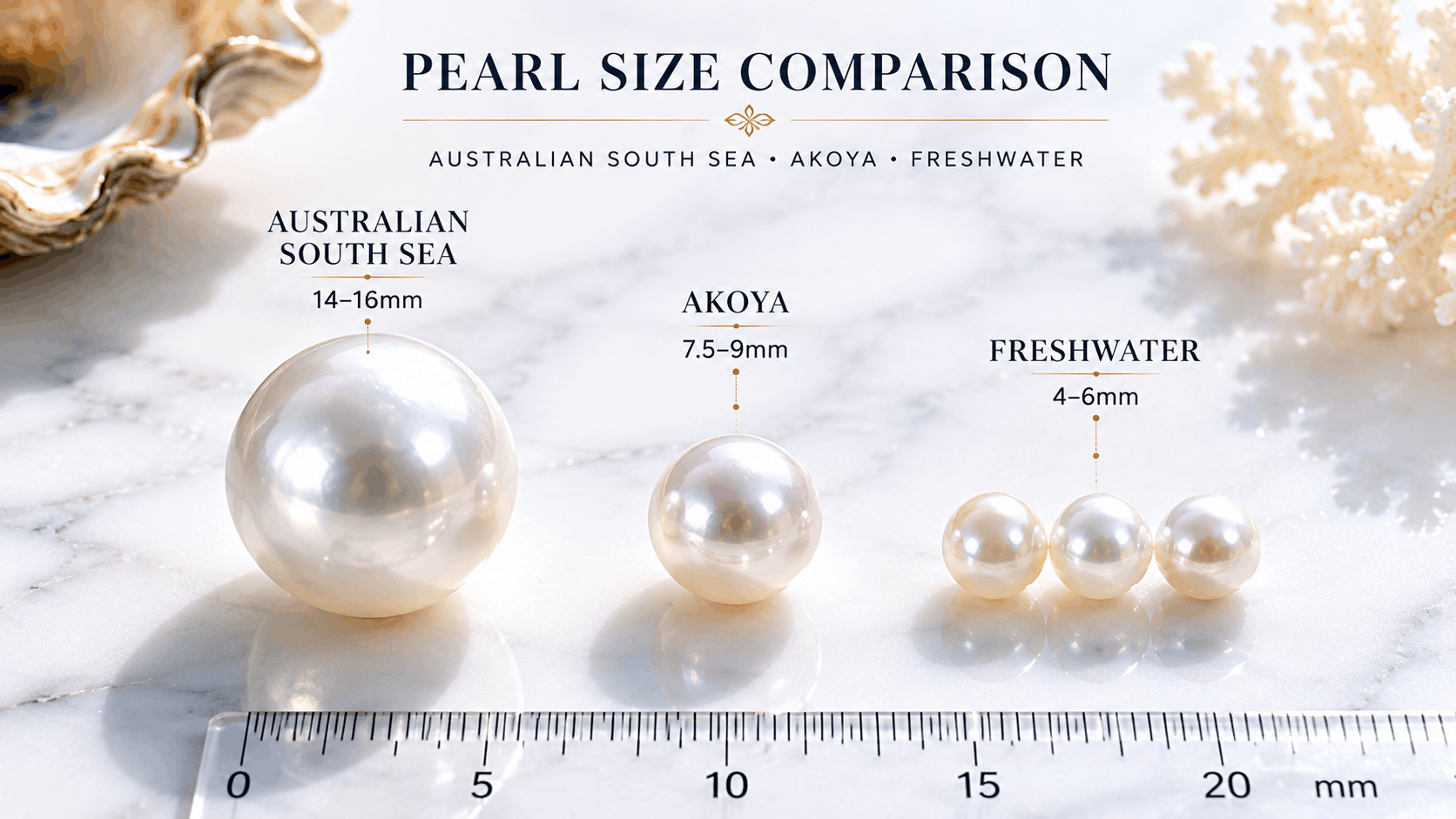
Size is the first thing. Pearls of Australia regularly reach 10mm to 18mm in diameter. That’s significantly larger than Japanese Akoya pearls which max out around 9mm. And larger than freshwater pearls which rarely exceed 11mm in quality grades. The Pinctada maxima simply grows bigger pearls than any other oyster species. That size difference isn’t subtle — it’s immediately visible and it’s one of the main reasons Australian South Sea pearls command premium prices globally.
Nacre thickness is the second major differentiator. Pearls of Australia develop nacre layers over two to three years of growth. The result is nacre thickness that can reach 2mm to 6mm — dramatically thicker than Akoya pearls which average 0.35mm to 0.7mm. Thick nacre means two things. First, the pearl looks better. That deep satiny luster with the soft internal glow comes directly from thick nacre layers refracting light. Second, the pearl lasts. Thin nacre peels and chips over time. Thick nacre improves with age and wear — developing deeper luster the more it’s used. So pearls of Australia don’t just look better. They age better too.
The Colours of Australian Pearls
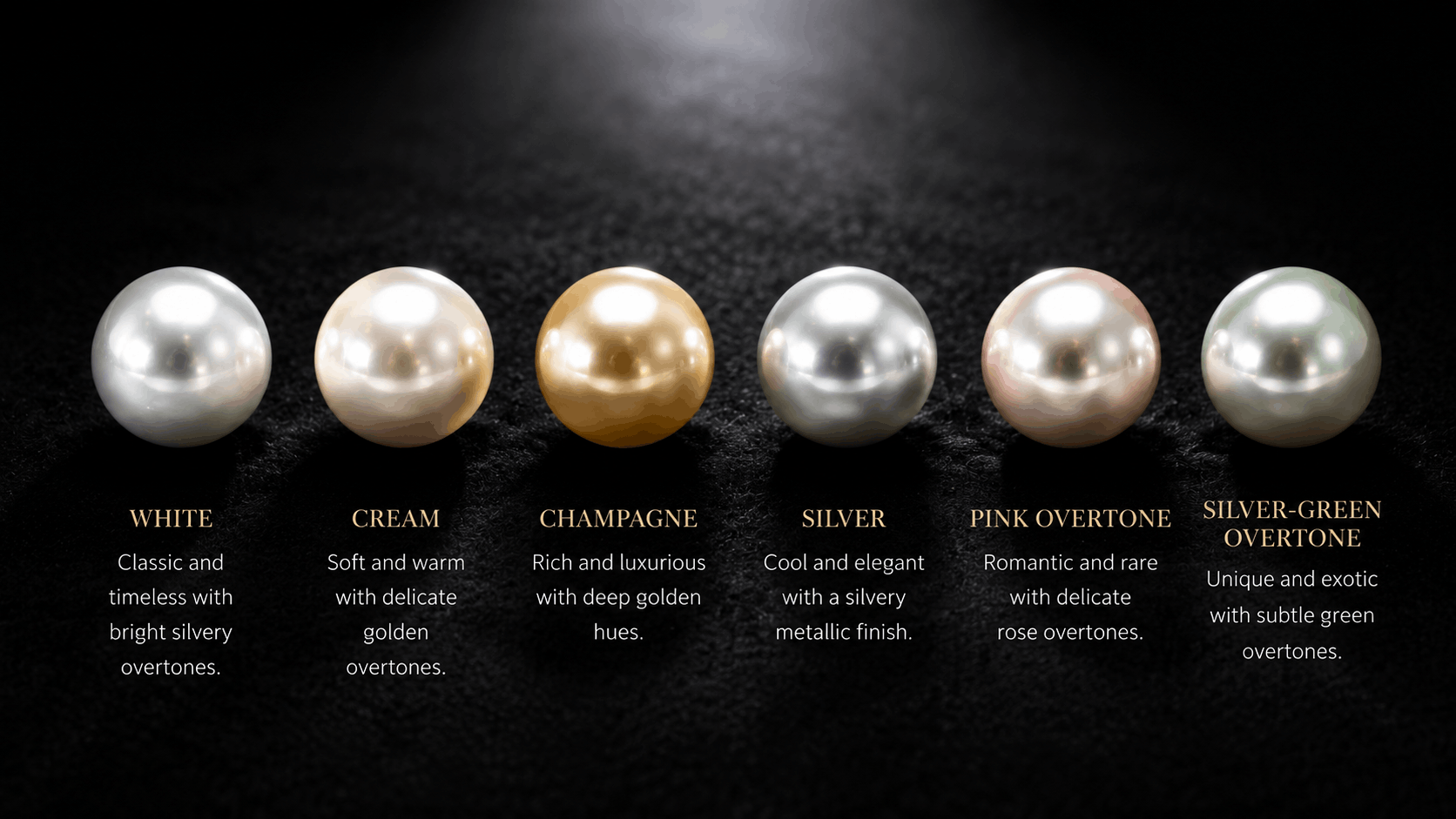
White and silver are the classic pearls of Australia colours. But the full range is wider than most people realise. Cream and warm ivory. Soft champagne. Silver with green overtone. Pure white with pink or silver overtone. Each colour and overtone combination is entirely natural — no treatments or enhancements applied. So what you see is exactly what the oyster produced. That natural colour integrity is increasingly rare in the global pearl market and it’s something Australian pearl farmers actively protect.
Golden South Sea pearls from the Philippines and Indonesia are often grouped with Australian pearls in the South Sea category. They come from the same Pinctada maxima oyster species. Similar size and nacre quality. But the gold colour — ranging from pale champagne to deep 24-karat gold — comes from a different genetic strain of the oyster. Deep natural gold without enhancement is rare and commands significant premiums. So if you see golden South Sea pearls at unusually low prices, the colour has almost certainly been treated.
Pearls of Australia vs Other Pearl Types
Japanese Akoya pearls are the classic comparison. Smaller — typically 6mm to 9mm. Sharper, more mirror-like luster. Less nacre depth than Australian pearls but extraordinary surface brilliance. So Akoya pearls are the choice for crisp, traditional pearl jewellery. Hanadama Akoya — the top certified grade — represents the pinnacle of this type. But for sheer size and nacre depth, pearls of Australia remain unmatched.
Tahitian pearls offer the dark colour range — peacock green, silver, charcoal, deep grey. Grown in French Polynesia’s black-lipped oyster. Similar size to Australian pearls but naturally darker. So Tahitian pearls are the choice when you want drama and contrast rather than the classic warm luminosity of Australian South Sea. And freshwater pearls from China offer the widest range of shapes, sizes and colours at the most accessible price points — great for everyday wear and layering but without the nacre depth or size of pearls of Australia.
How Australian Pearl Farming Works
Wild Pinctada maxima spat are collected from the ocean — not bred in hatcheries. This preserves the natural genetic diversity and environmental adaptation that produces superior pearl quality. Each oyster is then individually nucleated — a skilled technician inserts a nucleus bead and a piece of mantle tissue from a donor oyster. This process requires years of training to do well. A poorly nucleated oyster rejects the nucleus. A well-nucleated one grows a pearl around it over the next two to three years.
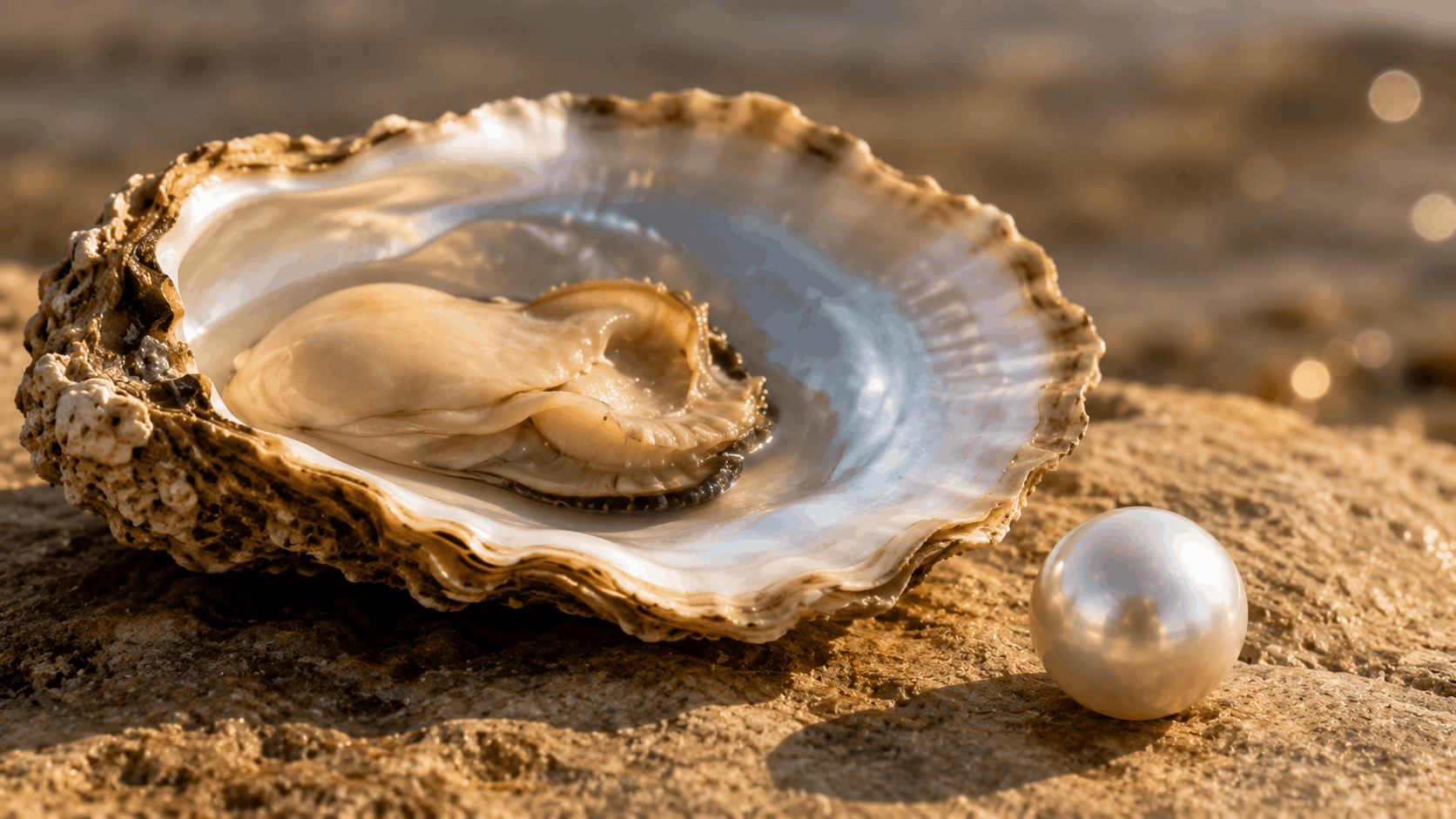
During the growth period, oysters are regularly cleaned, health-checked and rotated to different water depths and locations. Water quality in the Kimberley region is exceptional — remote, unpolluted and rich in the plankton that oysters need to produce quality nacre. So the farming environment directly impacts pearl quality. That’s why pearls of Australia from the Kimberley coast consistently outperform South Sea pearls from less pristine environments.
Buying Pearls of Australia with Confidence
Always ask for grading documentation. Reputable Australian pearl sellers provide certificates stating pearl type, size, luster grade, surface quality and nacre thickness. If a seller can’t provide this, that’s a red flag regardless of how beautiful the pearl looks. Size, luster and nacre thickness together tell the whole quality story — don’t buy without knowing all three.
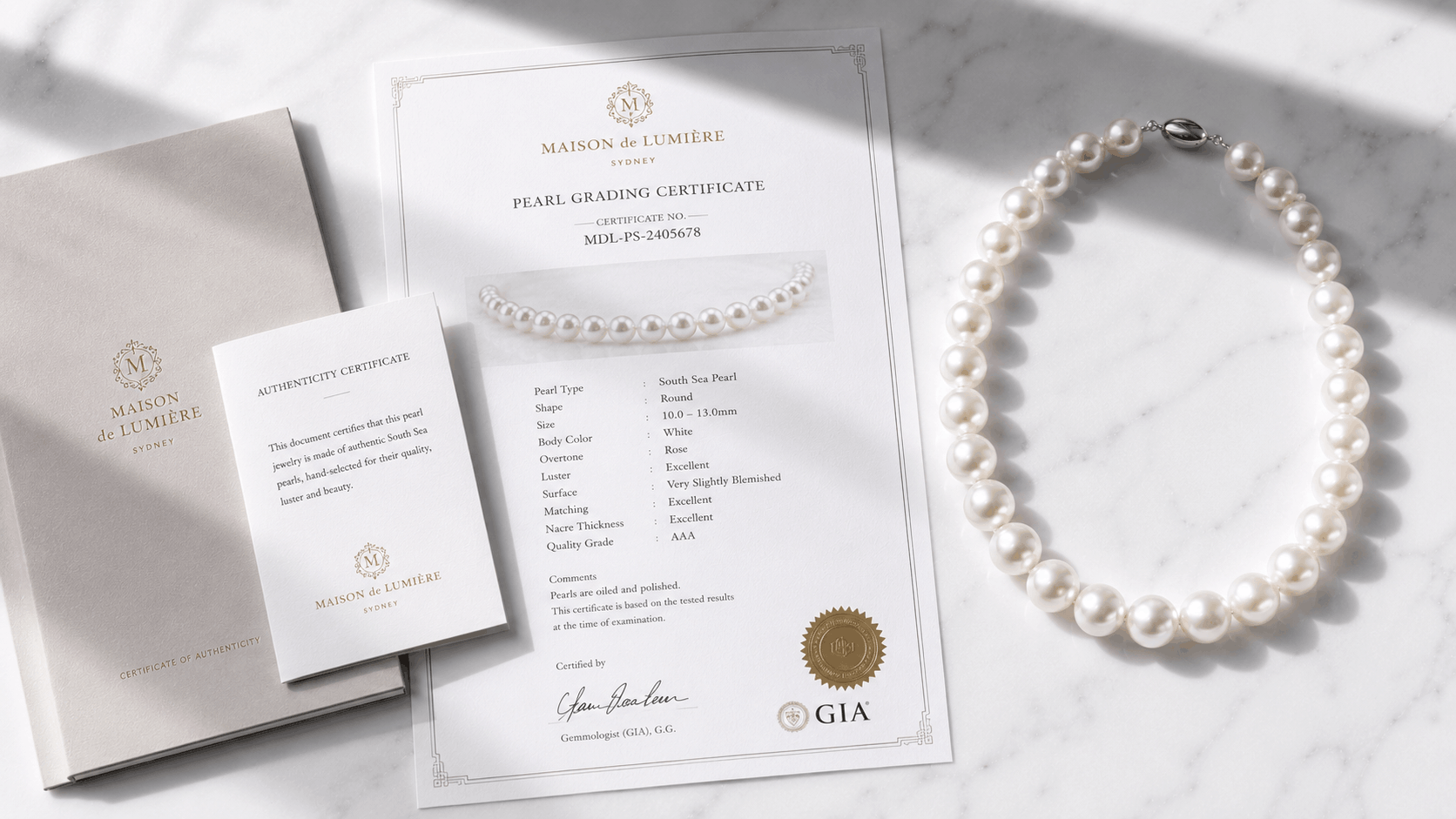
Compare prices carefully too. Pearls of Australia vary enormously in price based on size and grade — a 10mm AA South Sea pearl and a 14mm AAA South Sea pearl are not remotely comparable in value. So always compare like with like. At PearlsOnly.com.au, every piece comes with full grading documentation, a certificate of authenticity and a 90-day return guarantee. So you know exactly what you’re buying — and you’re protected if it doesn’t meet expectations. Browse the full collection of pearls of Australia and find the piece that’s genuinely worth your investment.
