
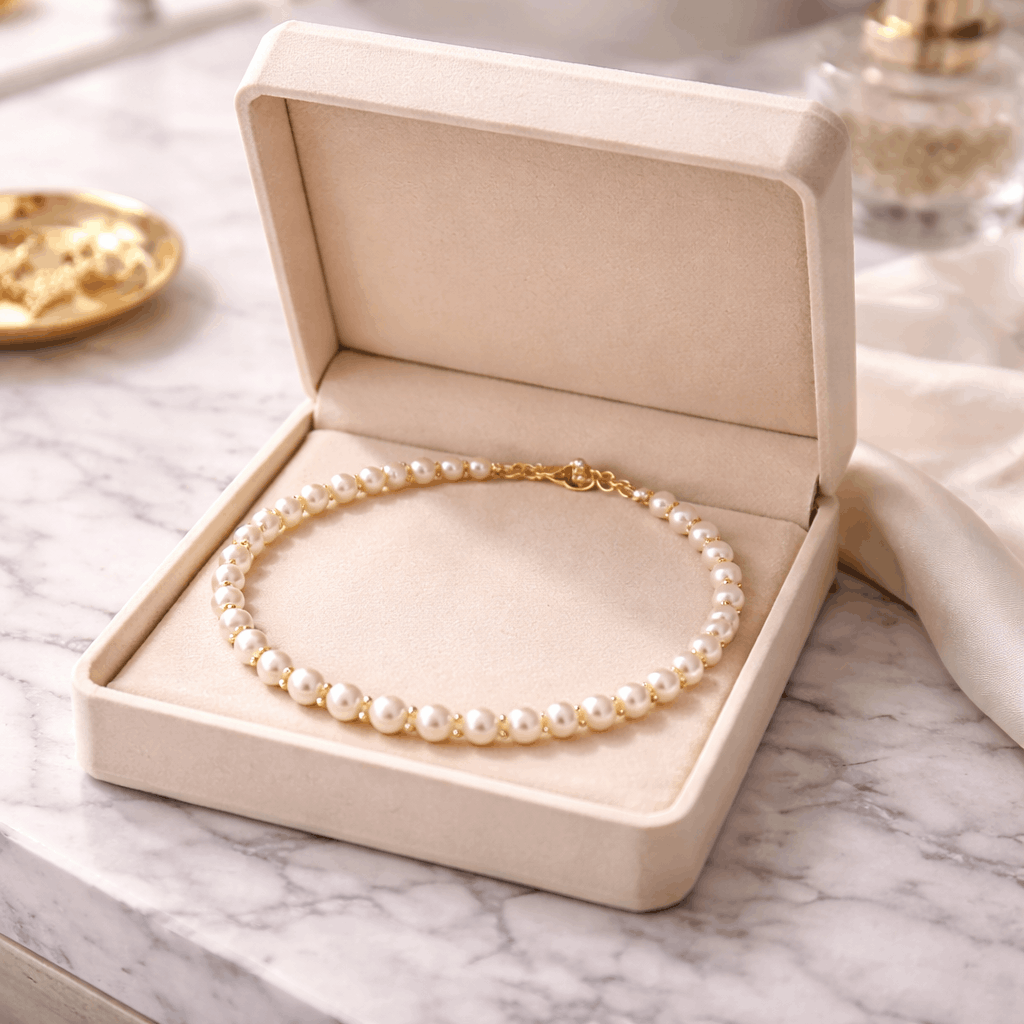
Went jewelry shopping with my sister last month. She wanted pearls for her anniversary. The salesperson started going on about “luster grade” and “nacre thickness” and all this technical stuff. My sister’s eyes glazed over within like two minutes. We left without buying anything because she felt totally overwhelmed by all the jargon. This happens constantly when people want to buy pearl necklace jewelry but don’t actually know what matters versus what’s just sales talk.
Thing is, buying pearls doesn’t have to be that complicated. Jewelry stores love making it sound super technical so you feel like you need their expertise. Really though? Just learn a few key factors that determine quality and value. Once you get those basics down, shopping becomes straightforward. I’m breaking down what you actually need to know before you buy pearl necklace jewelry. Skipping the confusing jargon. Just practical stuff that helps you make a smart purchase.
Why Buy Pearl Necklace as an Investment
Pearl necklaces never really go out of style, you know? Your grandmother wore them. You can wear them now. Eventually your daughter might wear them. That whole timeless thing actually holds up with classic pearl necklaces—they work across generations without looking dated. Plus they’re super versatile. Dress them down with jeans or up with formal stuff.
Quality pearls hold their value too, which costume jewelry definitely doesn’t. Real pearls maintain worth and sometimes even appreciate over time. These are pieces you’ll keep for decades and maybe pass down eventually. When you buy pearl necklace jewelry from legit sources, you’re investing in something that lasts rather than trendy stuff that looks cheap in five years.
Pearl Necklace Types to Buy
Different pearl types have wildly different price tags. Freshwater pearls are your most budget-friendly option. Usually $50-300 for a decent strand. These come from freshwater mussels, mostly grown in China. Perfect for everyday wear or when you’re just getting into pearls. Freshwater pearls give you real pearls at prices that won’t destroy your budget.
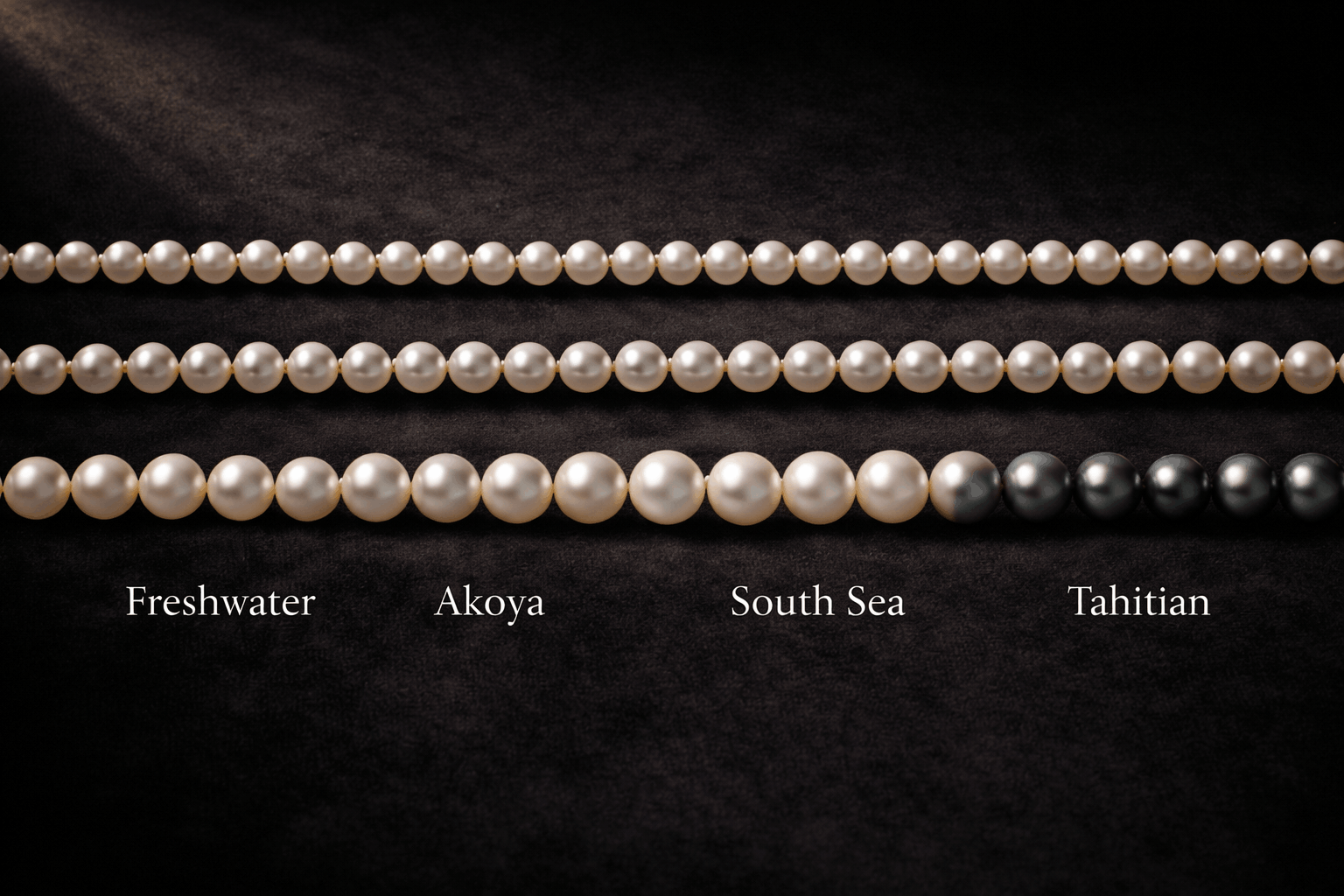
Akoya pearls are saltwater ones from Japan. Known for that crazy shine and perfectly round shapes. These run anywhere from $300 to $3,000 and up depending on size and quality. South Sea and Tahitian pearls sit at the luxury end. Often $2,000 to $20,000 or even more. Larger sizes, rare colors, top-tier quality. When you’re ready to buy pearl necklace jewelry, knowing these categories helps you figure out what’s realistic for your budget.
Quality Factors When You Buy Pearl Necklace
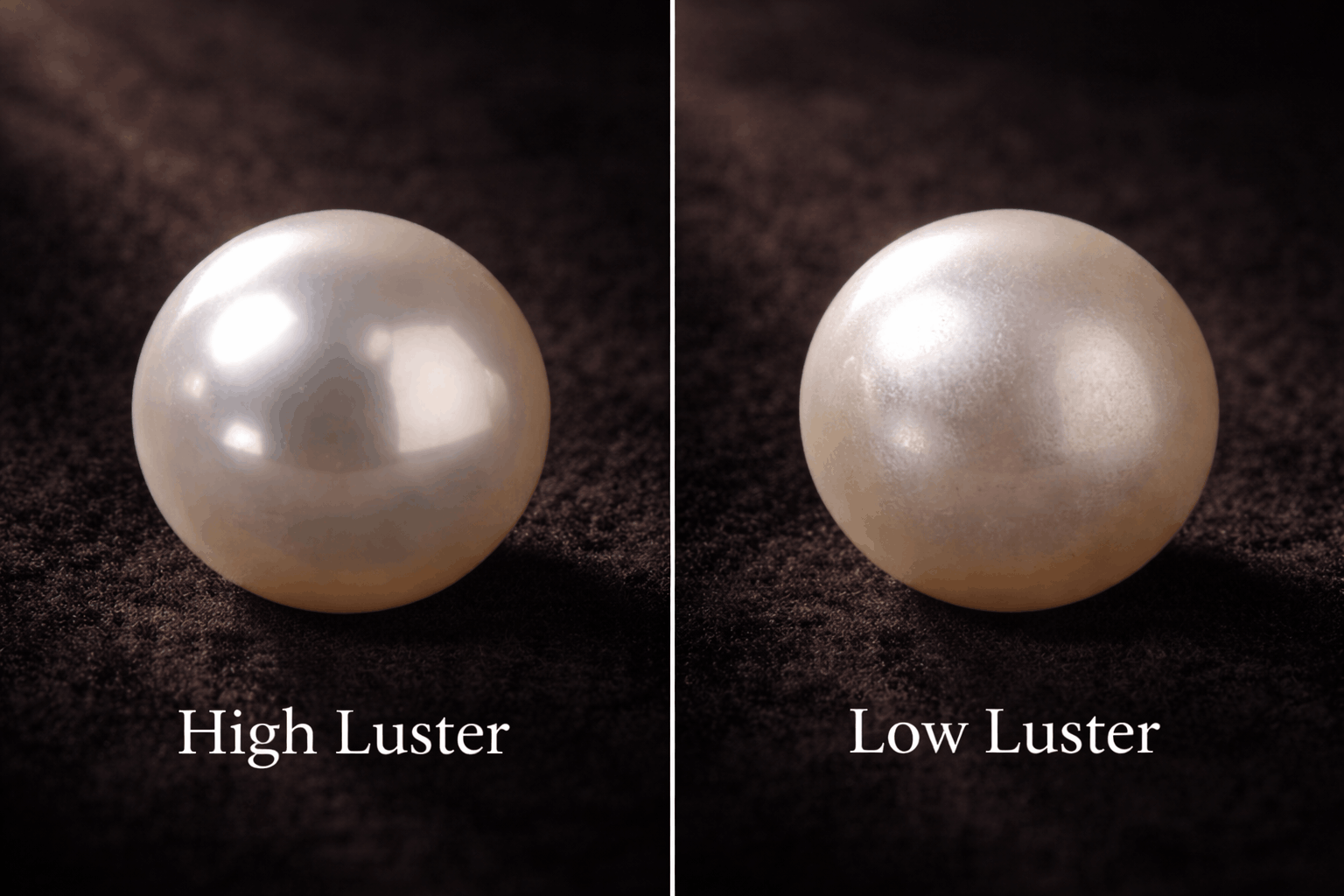
Luster matters most when you buy pearl necklace jewelry. High luster pearls have this mirror-like shine where you can basically see your reflection. Dull ones look chalky and cheap. Good luster makes pearls glow in this really beautiful way. Hold the strand up to light and check how sharp the reflections are. Sharp and bright means excellent luster that’s worth paying extra for.
Surface quality counts too. Look at each pearl for blemishes, spots, weird irregularities. Perfectly clean pearls are super rare and expensive. Minor blemishes you can only spot up close? Normal for mid-range pearls. But obvious bumps or tons of spotting should mean a lower price. Size impacts cost too—larger pearls are exponentially rarer so they jump in price fast.
Pearl Necklace Length Guide
Length changes everything about how it looks and where you’ll actually wear it. Choker length (14-16 inches) sits high on your neck. Very elegant and formal vibes. Princess length (18 inches) is most versatile—hits right at your collarbone, works with basically any neckline. This is what most people should buy pearl necklace in first since you’ll wear it constantly.
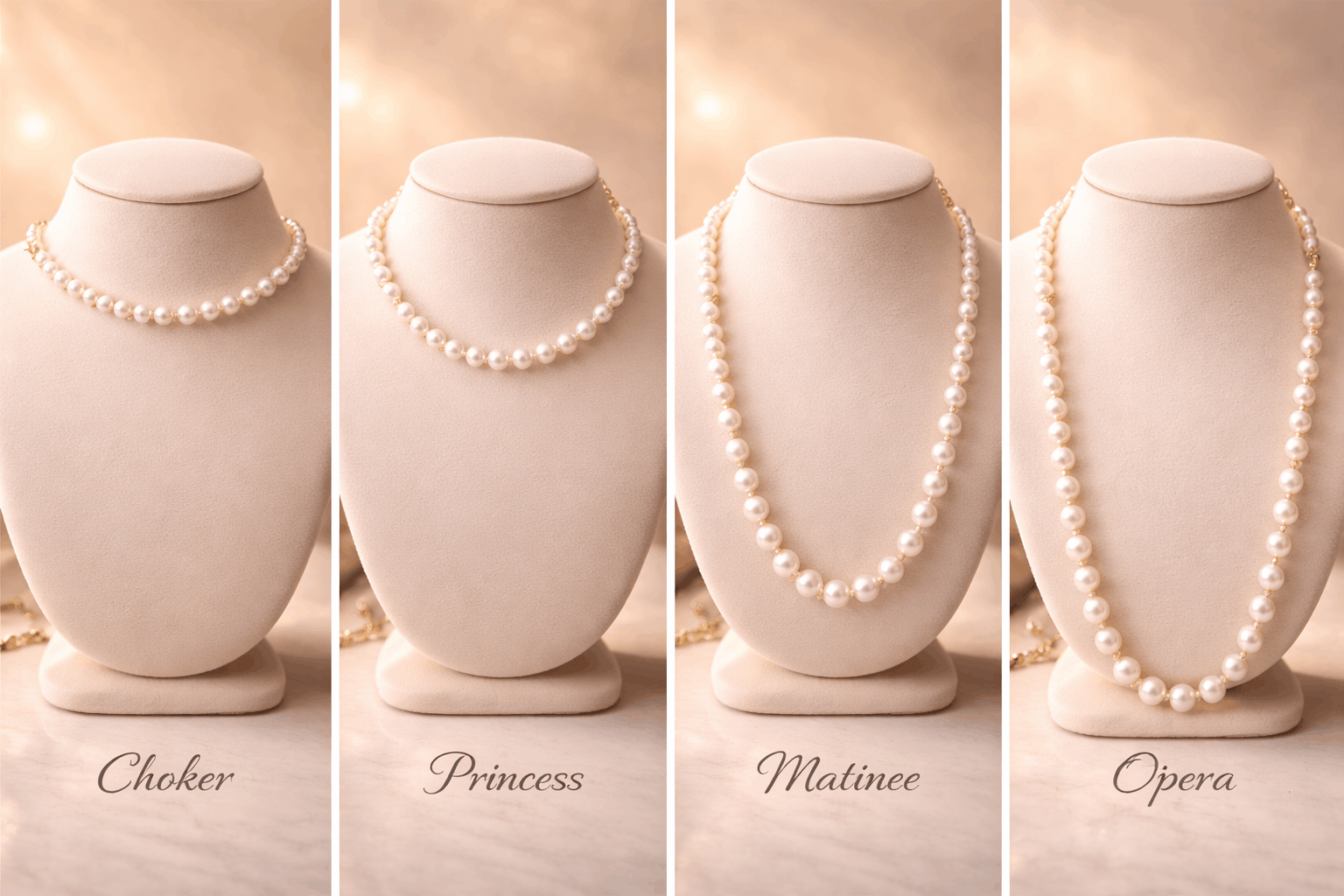
Matinee length (20-24 inches) hangs lower on your chest. Great with V-necks or when you want something more dramatic. Opera length (28-36 inches) is long and makes a statement. You can wear it as one long strand or double it up. Think about what’s actually in your closet and how you dress daily. Buying the right length means you’ll reach for it regularly instead of having it collect dust.
Size Guide for Pearl Necklaces
Smaller pearls around 6-7mm create these delicate, understated necklaces perfect for throwing on every day. They also cost less, making them solid starter pieces when you’re building a collection. Medium pearls (7-9mm) hit that sweet spot between noticeable and wearable. Most versatile size for something you’ll wear to various occasions.
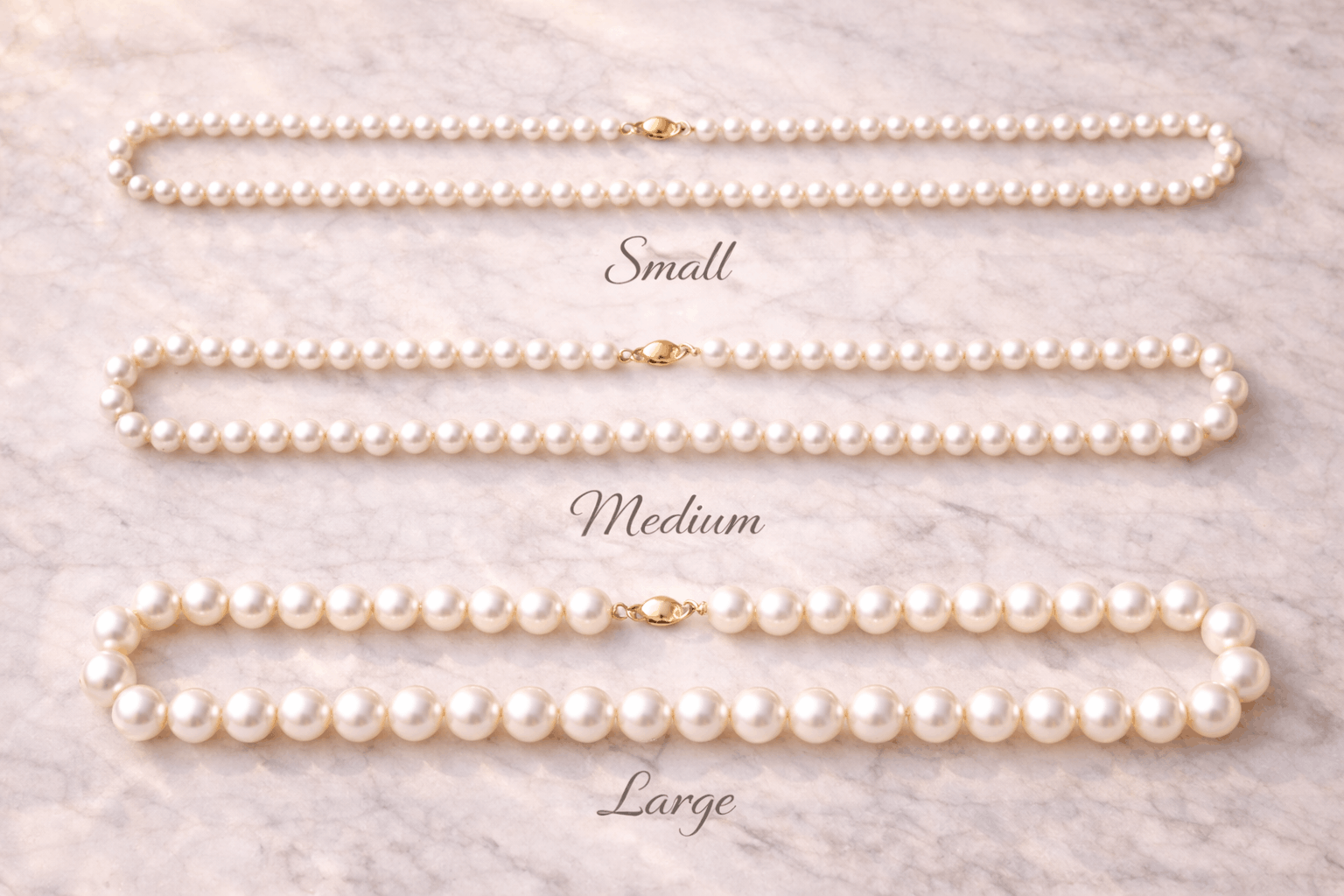
Larger pearls—9mm and bigger—make serious statements and photograph really well. Perfect for special events or if bold jewelry is your thing. But they’re heavier to wear and way pricier. When you’re deciding what size to buy pearl necklace in, think about when you’ll actually wear it. Daily? Go smaller. Special occasions only? You can go larger and more dramatic.
White vs Colored Pearl Necklaces to Buy
White and cream pearls are classic for a reason. They go with literally everything you own. Any outfit, any season, any event. If you’re only buying one strand, white or cream is the safest bet. White pearls work for business stuff, weddings, casual weekends—basically everything.
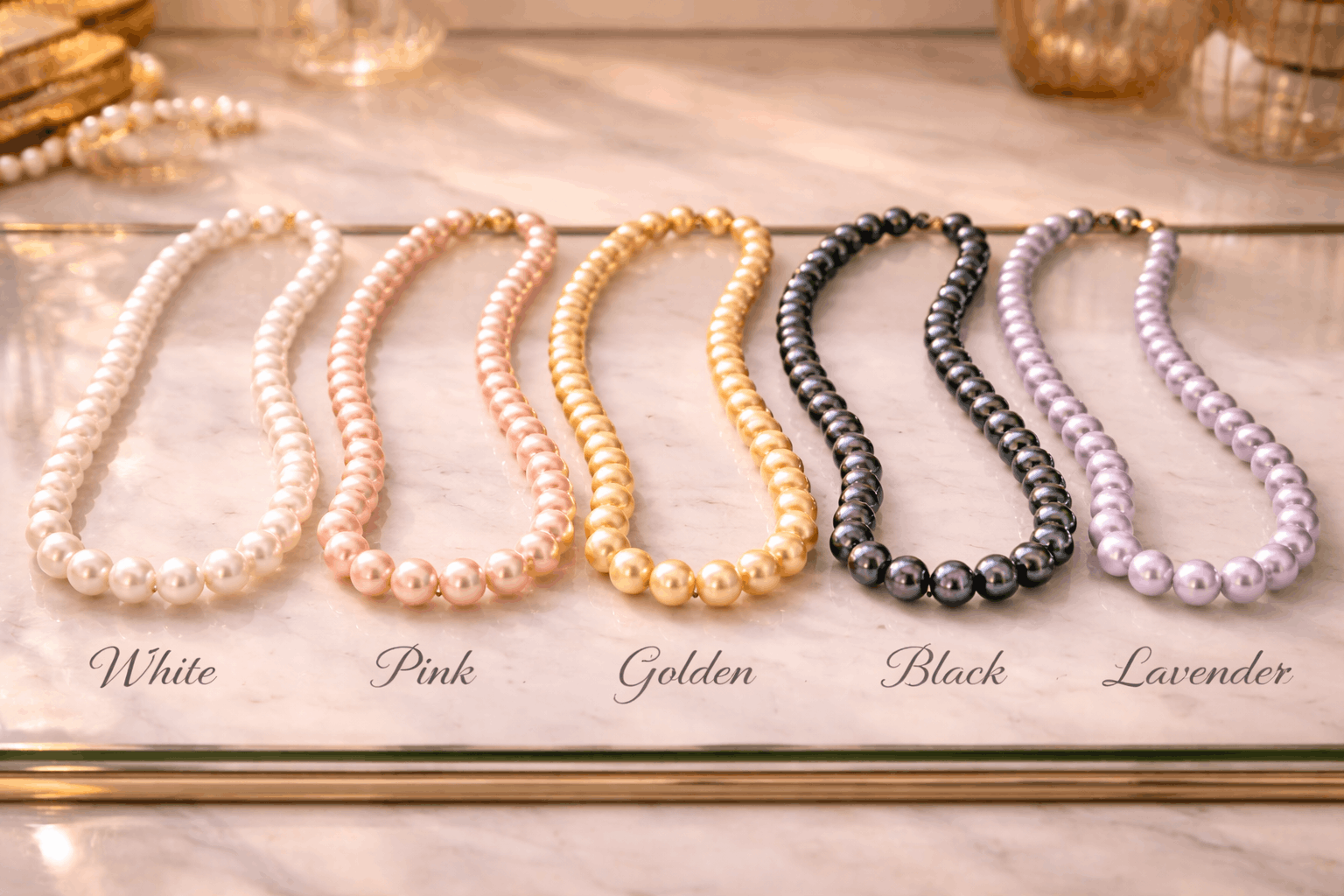
Colored pearls add way more personality though. Pink ones bring romantic warmth. Golden pearls have this rich elegance that works great with fall tones. Black Tahitian pearls create dramatic modern looks. Lavender pearls are unexpected and gorgeous. When you buy pearl necklace jewelry in colors, think about what’s already in your wardrobe. Pick shades that actually complement what you wear most.
Where to Buy Pearl Necklace Jewelry
Buying from reputable pearl specialists usually beats department stores for quality and value. Companies focusing only on pearls understand what matters and offer better selection. Online pearl retailers often have competitive prices since they’re not paying for fancy retail space. Just make sure they show detailed quality info, clear photos, and have solid return policies.
Estate sales and auctions can score you deals on vintage pearls. But you need to know what you’re looking at or bring someone who does. Skip buying from random sellers on marketplaces without any authentication. When you buy pearl necklace jewelry, stick with established jewelers who stand behind what they sell and offer some quality guarantee.
Pearl Necklace Pricing Guide
Pearl necklaces range crazy wide—under $100 to over $100,000 depending on type, size, and quality. Freshwater strands usually run $50-500. Akoya pearls typically cost $300-5,000. South Sea and Tahitian can go $2,000-50,000 or way higher. These are broad ranges though. Specific pricing depends on how all the quality factors combine.
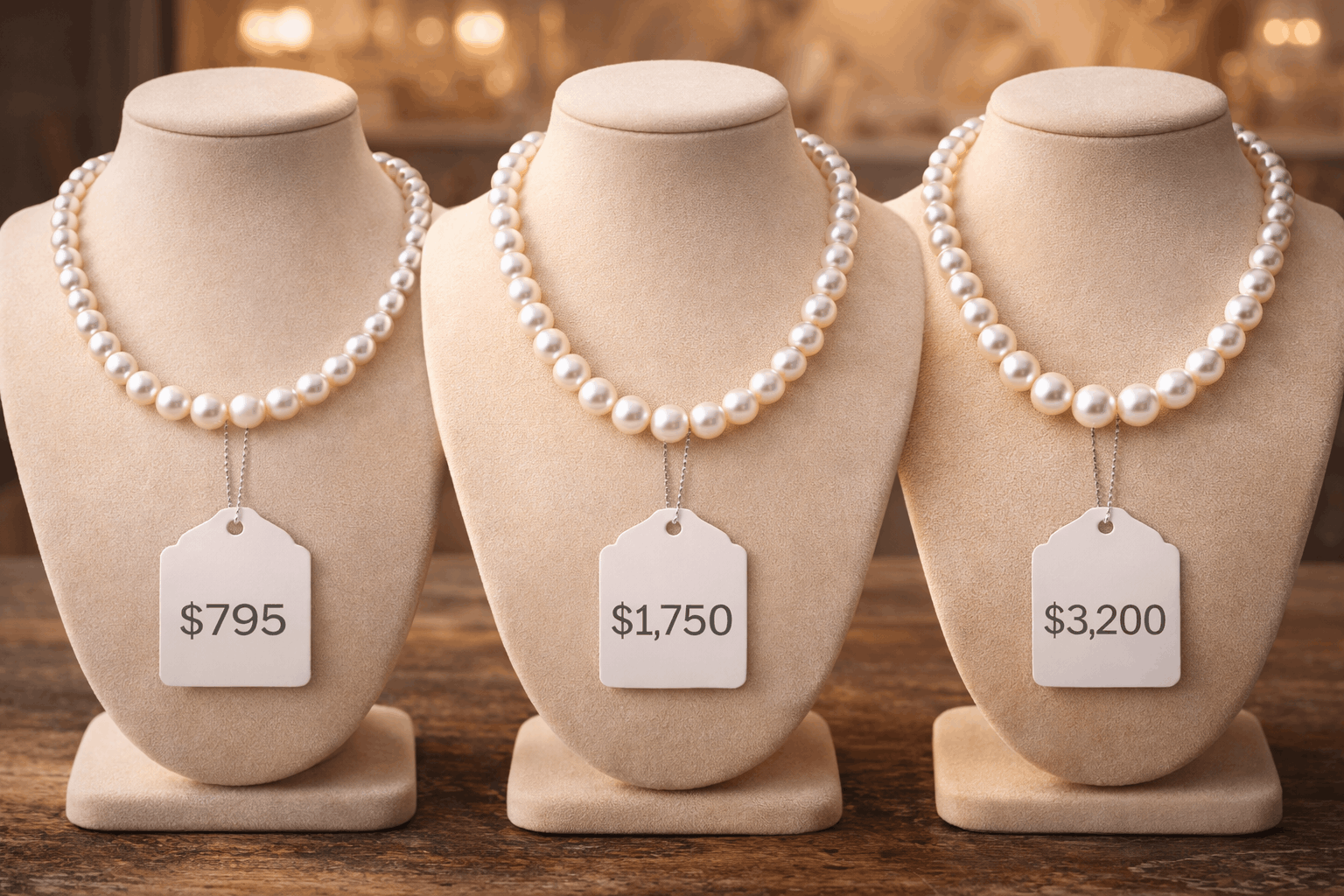
Be suspicious when prices seem too good to be true. Real high-quality pearls cost real money. Someone selling “South Sea pearls” for $100? Probably fake or terrible quality. But don’t overpay either. Compare similar quality across a few sellers before you buy pearl necklace jewelry. You’ll quickly figure out what fair market value looks like for what you want.
Spotting Fake Pearls
Real pearls feel slightly gritty when you rub them gently against your teeth. Fake ones feel smooth like plastic beads. This tooth test works fast for telling real from imitation. Real pearls also feel cool when you first touch them and then warm up against your skin. Fake ones stay room temperature.
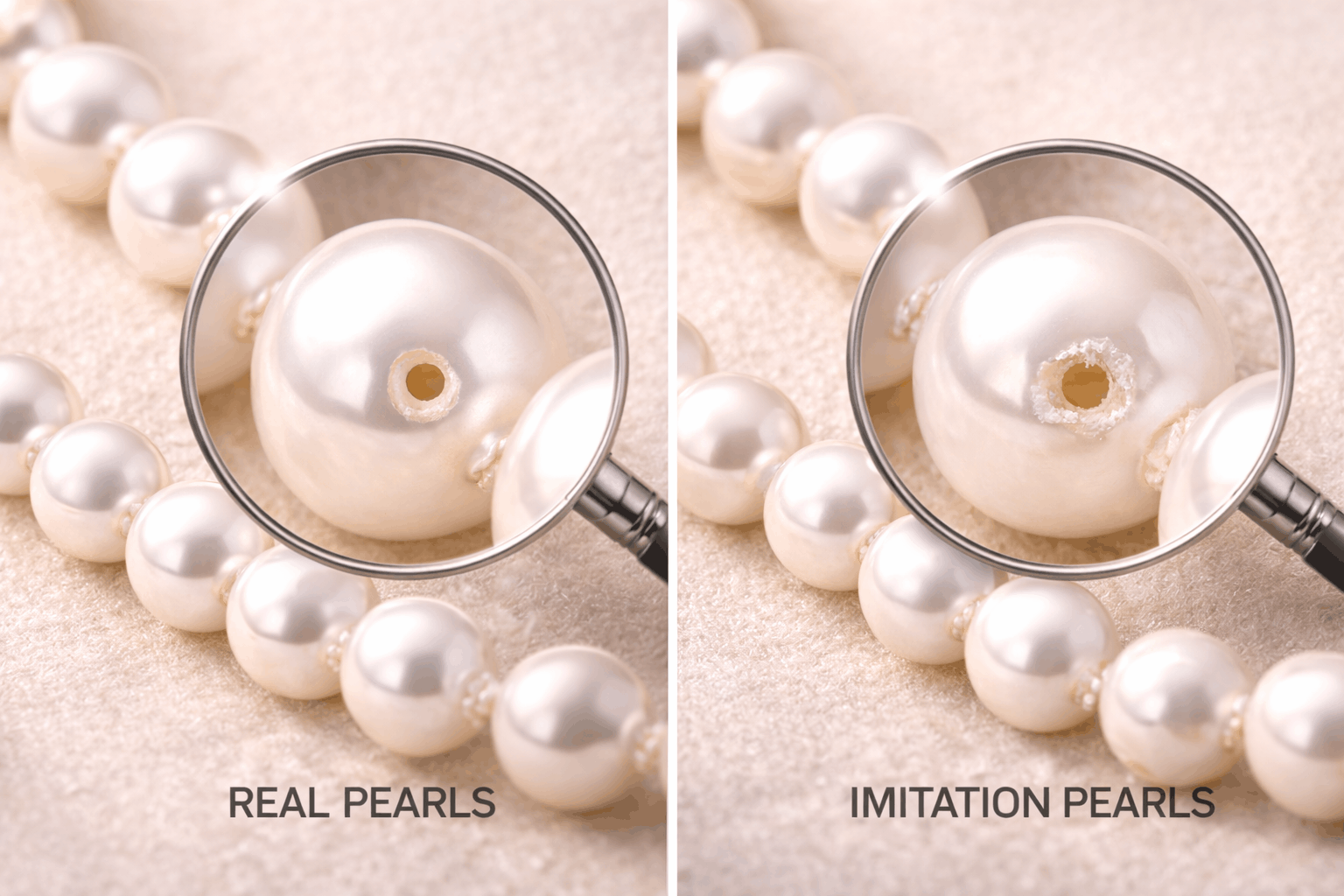
Check the drill holes too. Real pearls have clean, precise holes. Fake ones often have chipped or rough edges around where they’re drilled. Look at the color and shine—real pearls have depth and subtle variations. Fake ones look uniformly perfect with surface shine instead of that inner glow. When you’re ready to buy pearl necklace jewelry, these quick tests help verify what’s real before you hand over money.
Matching Pearls to How You Dress
Think about what you actually wear every day before you buy pearl necklace jewelry. Mostly casual clothes? Smaller pearls in simple designs make more sense than huge formal strands you’ll never wear. Professional corporate job? Classic white Akoya in princess length works perfectly. Creative field? You can experiment with colored pearls or unusual designs.
Consider your existing pearl jewelry if you have any. Building a coordinated collection means pieces that work together. Your necklace should complement your earrings and bracelets. But everything doesn’t need to match exactly either. Mixing different types and colors can look really interesting and personal.
Questions to Ask When Shopping
Always ask about return policies before you buy pearl necklace jewelry, especially online. You need the option to return them if they’re not what you expected when you see them in person. Ask specifically about the pearl type—freshwater, Akoya, South Sea, Tahitian. Don’t let sellers stay vague about where they came from.
Find out about the stringing material and whether there are knots between each pearl. Silk thread with knots between is standard for quality necklaces. Ask if the strand is graduated (larger pearls in center, smaller toward ends) or uniform size throughout. Get info about clasp type and what metal it’s made from. All these details affect quality and price when you’re shopping.
Taking Care of Your Pearls
Once you buy pearl necklace jewelry, proper care keeps it looking good for decades. Put pearls on last after you’ve done makeup, hairspray, perfume—all that stuff. Take them off first before removing makeup at night. Wipe them gently with a soft cloth after wearing to remove oils and dirt. This simple habit prevents most damage.
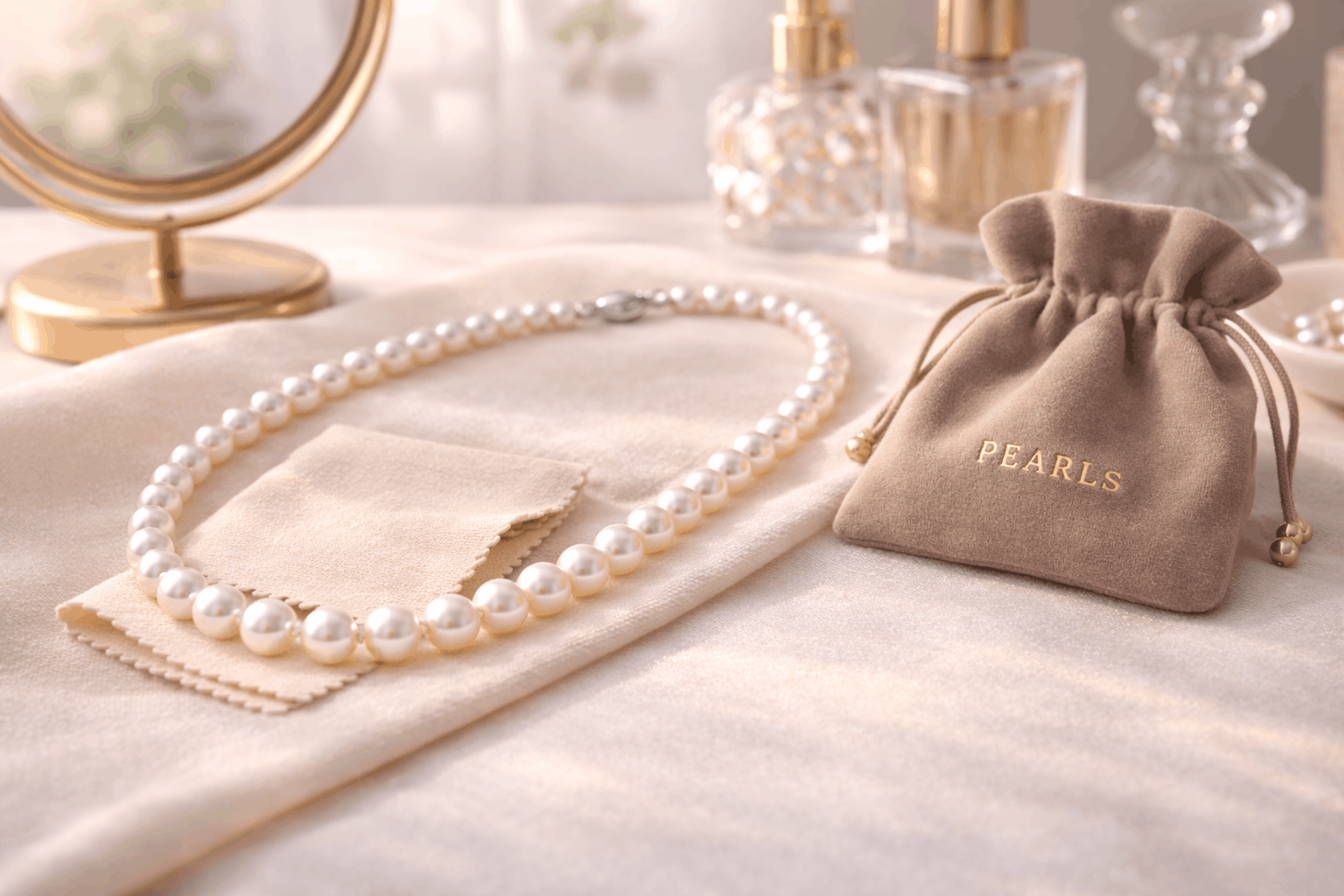
Store your pearl jewelry separately from other pieces in a soft pouch. Hard gemstones will scratch pearls if everything’s jumbled together. Get your necklace restrung every few years if you wear it a lot. The thread weakens over time from oils and wear. Professional restringing runs $50-150 but prevents your necklace from breaking and pearls going everywhere.
