
Spent years buying pearl necklaces without thinking about length at all. Just grabbed whatever looked right in the photo. Ended up with three strands that all sat at basically the same position on my neck. Worn together they looked like one messy pile. Completely avoidable. Once you understand the basic necklace length chart logic, the whole thing clicks immediately. So here’s everything you actually need to know — how lengths sit on different body types, how to layer properly and what mistakes to skip entirely.
The Standard Necklace Length Chart Explained
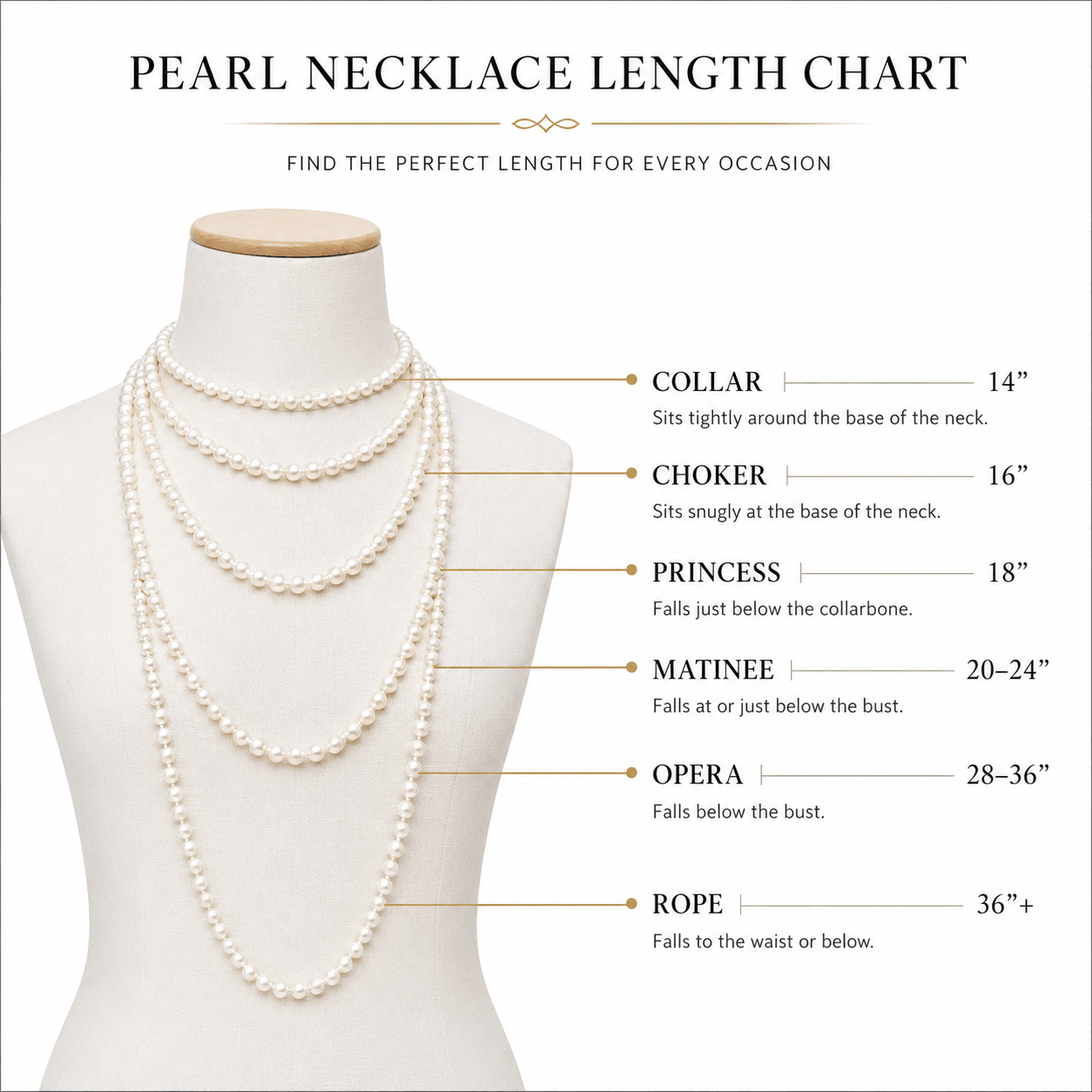
Every necklace length has a standard name tied to a specific measurement. A collar sits at 12 to 13 inches — right at the base of the neck. Striking on open necklines. Quite uncomfortable on high ones. A choker runs 14 to 16 inches and sits just below the collarbone. Most popular short length right now. The typical default for single-pearl pendants and classic strand pairings.
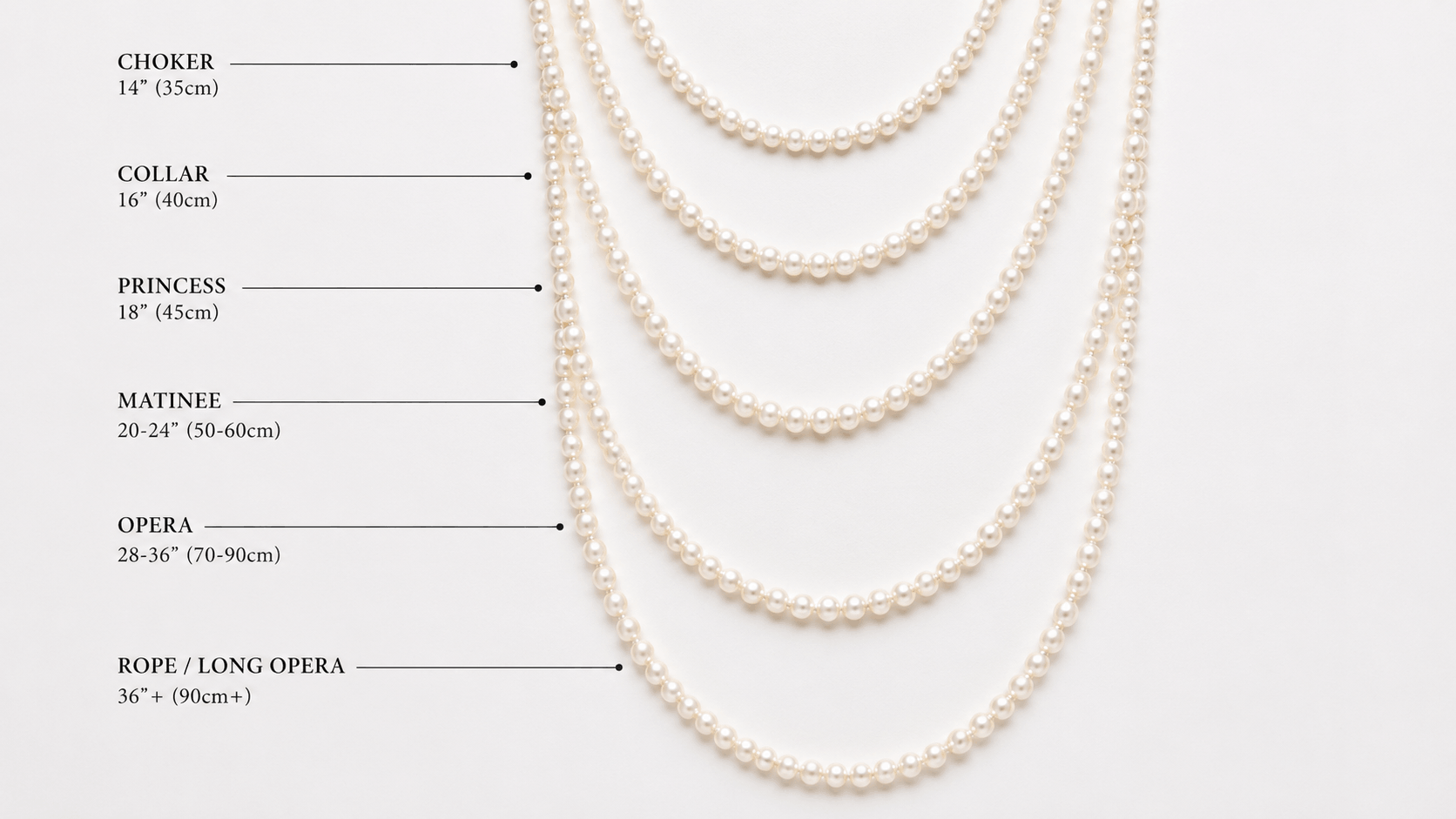
Princess length at 17 to 19 inches is the most universally worn measurement on the necklace length chart. Sits just at or below the collarbone and works across virtually every neckline and body type. Most classic pearl necklaces come in this length as standard. Matinee runs 20 to 24 inches — falls between the collarbone and bust. Strong for business wear and formal occasions. Opera at 28 to 36 inches reaches mid-bust to waist. Enormous styling flexibility — wear it long, doubled up or knotted. And rope at 37 inches and above is the longest category. Dramatic, versatile and particularly effective worn in loops for a layered effect from a single strand.
How Necklace Length Sits on Different Body Types
Length doesn’t just affect where a necklace sits. It affects the visual line it creates on the body. Shorter lengths — choker and princess — draw attention upward toward the face and neck. Particularly flattering on longer necks. And they work well for petite frames where longer necklaces can overwhelm the proportions. So if you’re petite, choker and princess are usually the most flattering starting points on the necklace length chart.
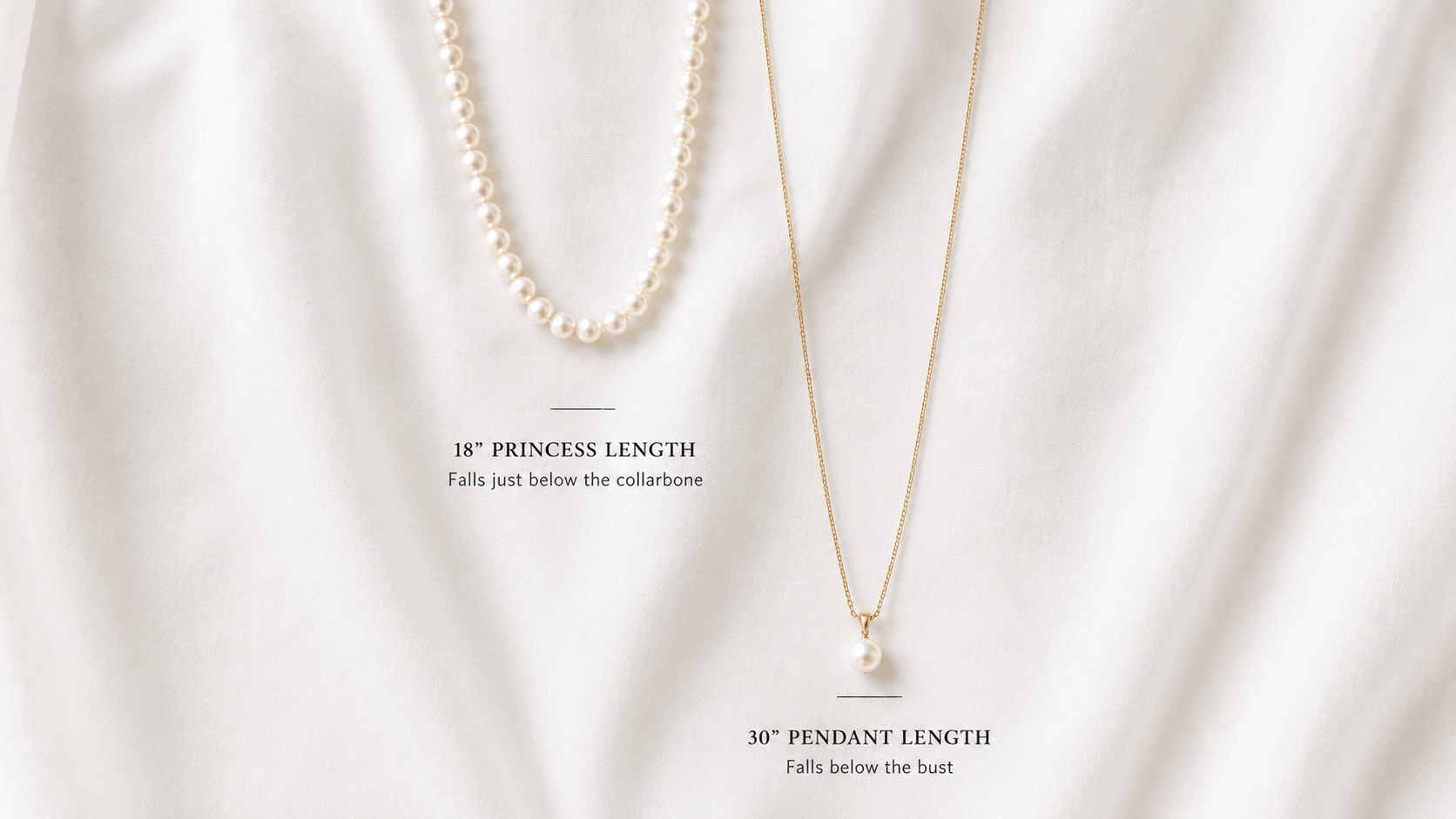
Longer lengths like matinee and opera create a vertical line that elongates the torso visually. For fuller figures or shorter torsos, a longer length is generally more flattering than a short one sitting at the widest part of the chest. V-shaped necklace drops — a pendant on a long chain falling in a V — are one of the most consistently elongating looks across body types. So body shape should genuinely influence your necklace length chart choices, not just neckline or outfit.
Necklace Layering Guide: The Basic Rule
Layering works when each necklace has its own space. That’s the whole rule. When two necklaces sit at the same length they compete for the same visual zone. Ends up looking tangled rather than intentional. The simplest fix is keeping at least 2 inches of gap between each layer. Enough that each piece falls in its own distinct position and creates a clear cascading effect from shortest to longest.
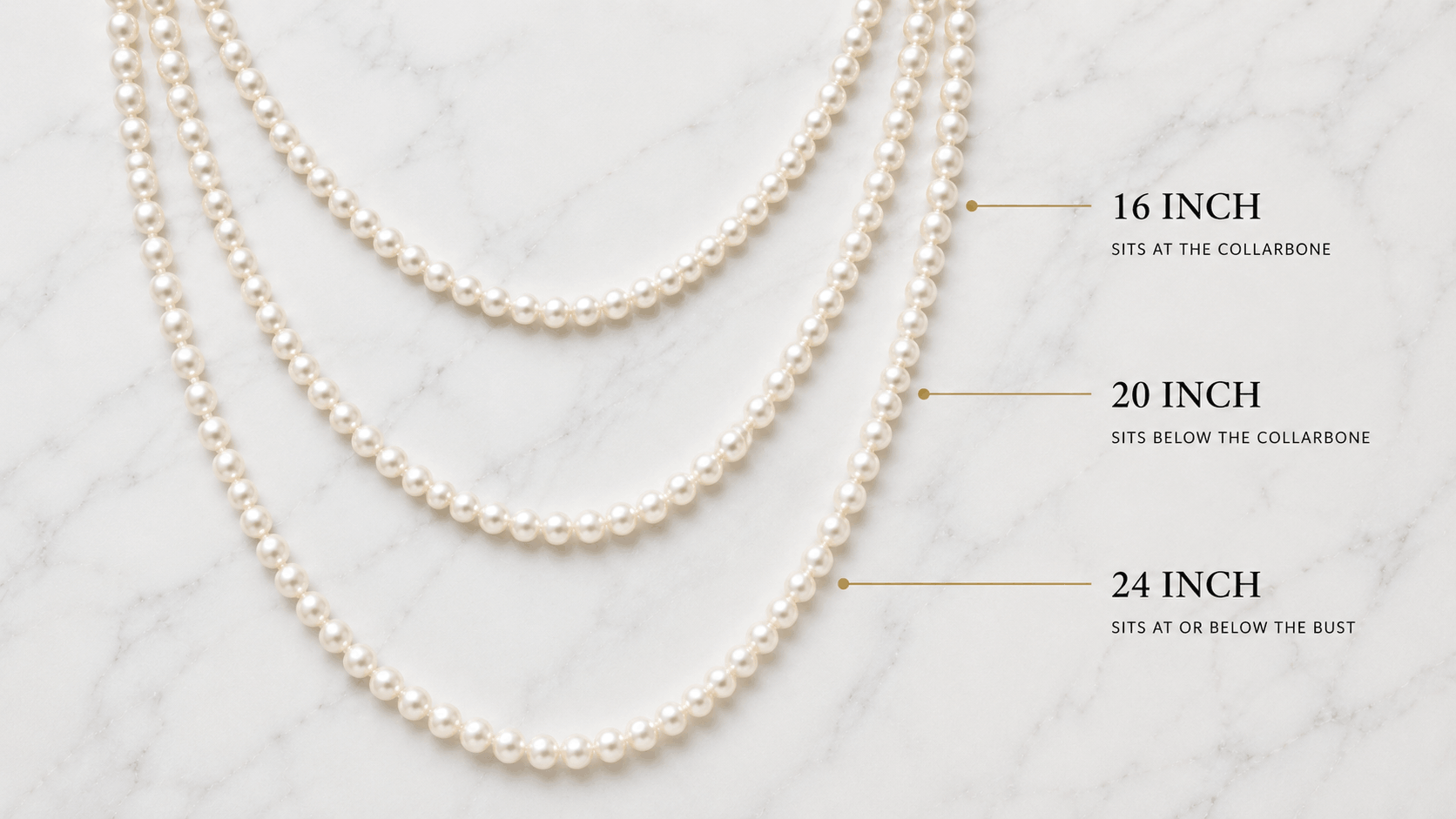
Start with the shortest necklace as your base — typically a choker or 16-inch chain with a small pendant. Add a mid-length piece next at around 18 to 20 inches. Then a longer piece at 22 to 24 inches or beyond. Each layer should sit visibly below the one above it. That three-step cascade is the foundation of every good layered look — whether you’re working with pearl pendants, chains or full strands.
Best Necklace Lengths for Layering with Pearls
Pearl necklaces layer slightly differently from chain necklaces. Strands carry more visual weight per inch than a delicate chain does. So the 2-inch gap rule still applies — but the combination needs a bit more thought. A classic approach that works consistently: a 16-inch Akoya pearl choker as the base, a 20-inch freshwater pearl strand in the middle and a longer 24-inch pendant or chain at the bottom. Each element gets room to show. The combination creates texture and depth without looking crowded.
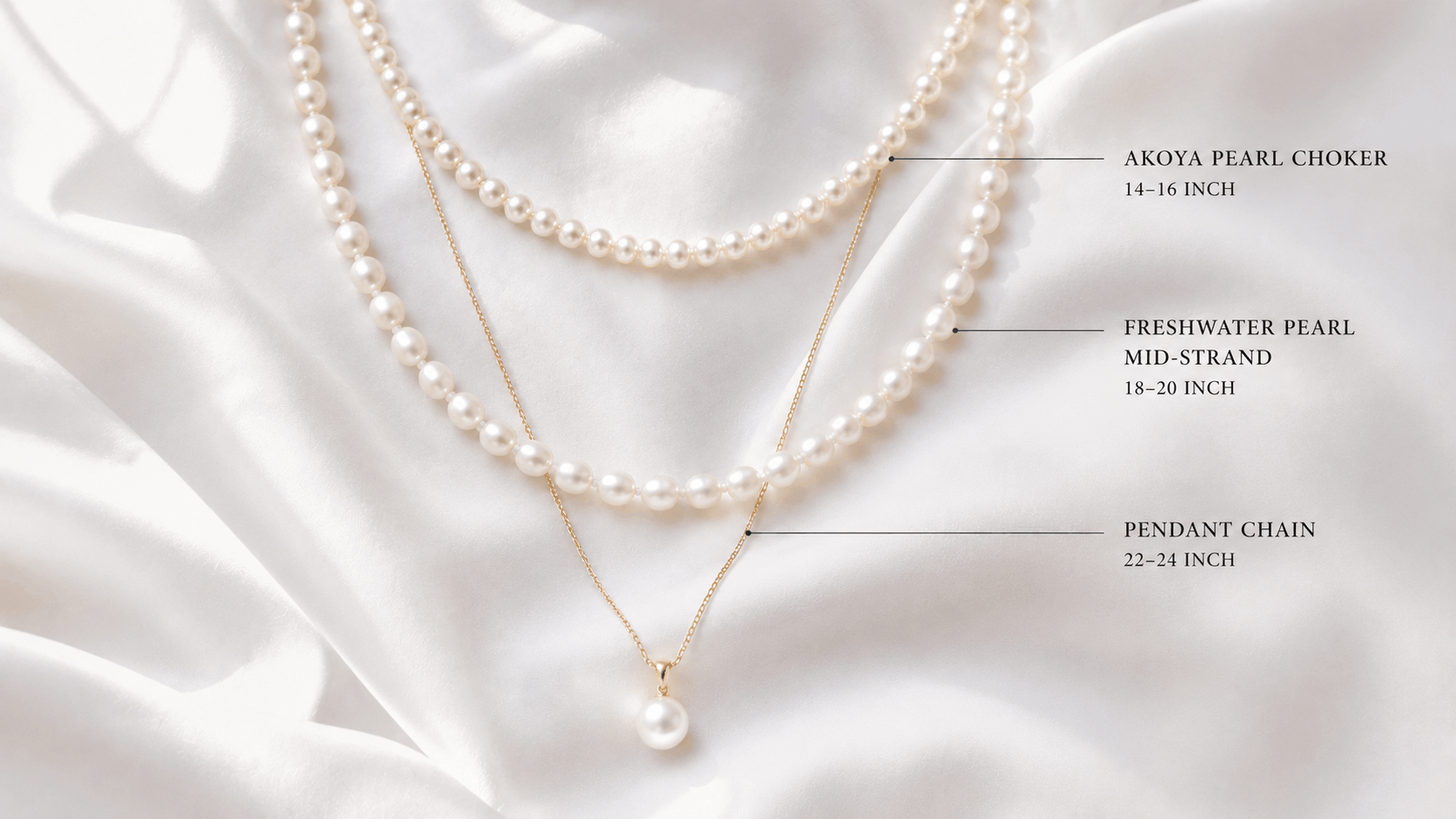
Mixing pearl strand thickness also helps. A delicate single-pearl choker pairs well with a fuller 7mm to 8mm mid-length strand. The contrast in visual weight creates interest that matching thicknesses don’t. And for the longest layer, a chain with a single pearl pendant is often more effective than another full strand. Gives the eye somewhere to land rather than three equally dense horizontal bands sitting on top of each other.
How to Use the Necklace Length Chart for Layering
The necklace length chart becomes most useful when you’re planning a layered look rather than a single piece. Pick your base length first. Then add pieces that sit at least 2 inches apart from each other on the chart. Princess plus matinee plus opera — that’s 18, 22 and 32 inches — gives you a clean cascading trio with plenty of visual separation between each layer.
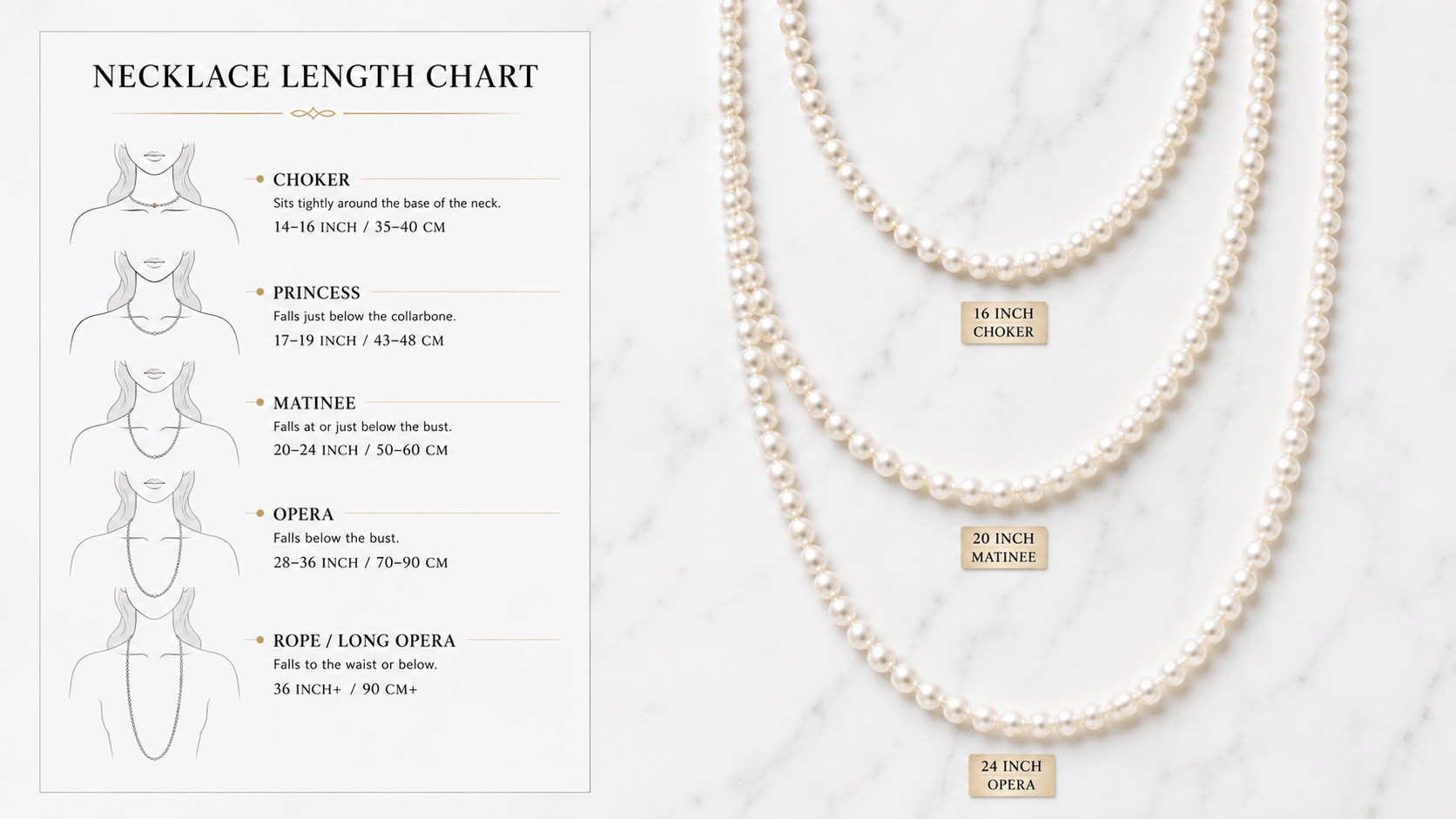
What doesn’t work is ignoring the chart entirely and just guessing. Two princess-length pieces worn together is the most common layering mistake. They sit identically and immediately tangle. So use the necklace length chart as your starting point and treat the 2-inch spacing rule as non-negotiable. Everything else — metal, pearl type, pendant vs strand — is secondary to getting the lengths right first.
How to Layer Necklaces Without Tangling
Tangling is the practical problem that stops most people from actually doing the layered look they want. A few things genuinely help. Flatter chain styles tangle less than round or chunky links. So when mixing pearl strands with chains, go for box chains or snake chains rather than anything with links that catch easily. Keeping lengths well-separated also reduces tangles — necklaces sitting at different positions simply have fewer opportunities to interact.
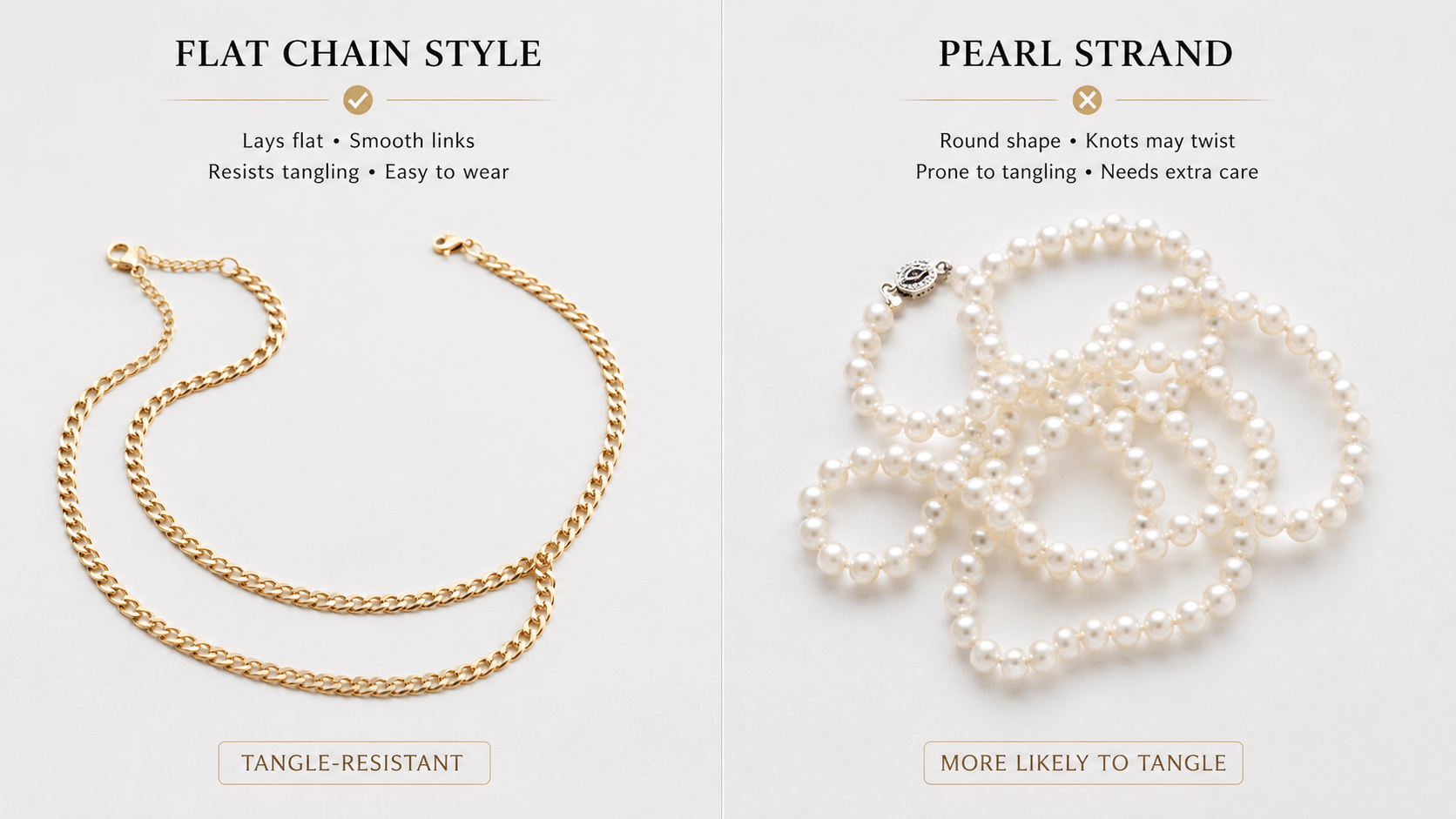
Lobster claw clasps on layered pieces can interlock accidentally. Check that clasps sit at different positions on the neck rather than bunching at the back. And if you regularly wear a specific combination, some jewellers offer a layering clasp that holds multiple necklaces at slightly different positions simultaneously. Worth it if the combination is one you reach for constantly. Browse our full pearl necklace collection to find strands in every standard length — from choker to opera — so you can build your layered look starting from exactly the right foundation.
